


Pricing for CRM and lead nurturing for Invisalign.
Understanding CRM and Lead Nurturing Costs for Invisalign Practices
Pricing for CRM and lead nurturing for Invisalign typically ranges from £150 to £1,500+ per month in the UK, depending on automation depth, integration requirements, and patient volume. Practices treating Invisalign cases worth £2,500 to £5,500 each need systems that justify their cost through measurable conversion gains — not just tidy dashboards.
Key Components of CRM Systems Built for Dental Practices
Dental-specific CRMs differ from generic platforms in ways that matter. They include treatment-stage pipelines, NHS/private segmentation, and GDPR-compliant patient communication logs. For Invisalign practices, the non-negotiables are multi-touch lead tracking, automated consultation reminders, and integration with practice management software such as Dentally or Software of Excellence. A generic sales CRM won’t cut it — you’ll spend months forcing it to do things a dental-built system handles out of the box.
Core Features for Effective Invisalign Lead Nurturing
High-quality lead nurturing sequences for Invisalign prospects need SMS and email automation, personalised treatment-cost messaging, and behavioural triggers based on webpage visits or enquiry form submissions. Miss these and you’re losing high-intent leads within 48 hours of first contact — that’s the window where most conversions happen or die.
Average Pricing Breakdown Across UK Providers
| CRM Tier | Monthly Cost (£) | Key Features Included | Best Suited For |
|---|---|---|---|
| Basic | £150 to £300 | Email sequences, basic pipeline, manual follow-up | Single-site practices, low volume |
| Mid-tier | £300 to £700 | SMS automation, lead scoring, reporting dashboards | Practices with three or more dentists |
| Advanced | £700 to £1,200 | Full-funnel automation, PMS integration, no-show workflows | High-volume Invisalign providers |
| Enterprise | £1,200+ | Multi-site management, custom AI workflows, dedicated support | Mini-DSOs and group practices |
Evaluate CRM investment against case value, not platform cost alone. A mid-tier system converting two additional Invisalign cases monthly at £3,500 each generates £7,000 in revenue against a £500 monthly outlay. Those figures are illustrative — actual results depend on practice volume, team engagement, and local market conditions. Before committing to any platform, request a Free Social Media Report from Dominate Dental to identify where your current patient enquiries are actually coming from.
Pricing Models for CRM and Lead Nurturing Solutions in 2026
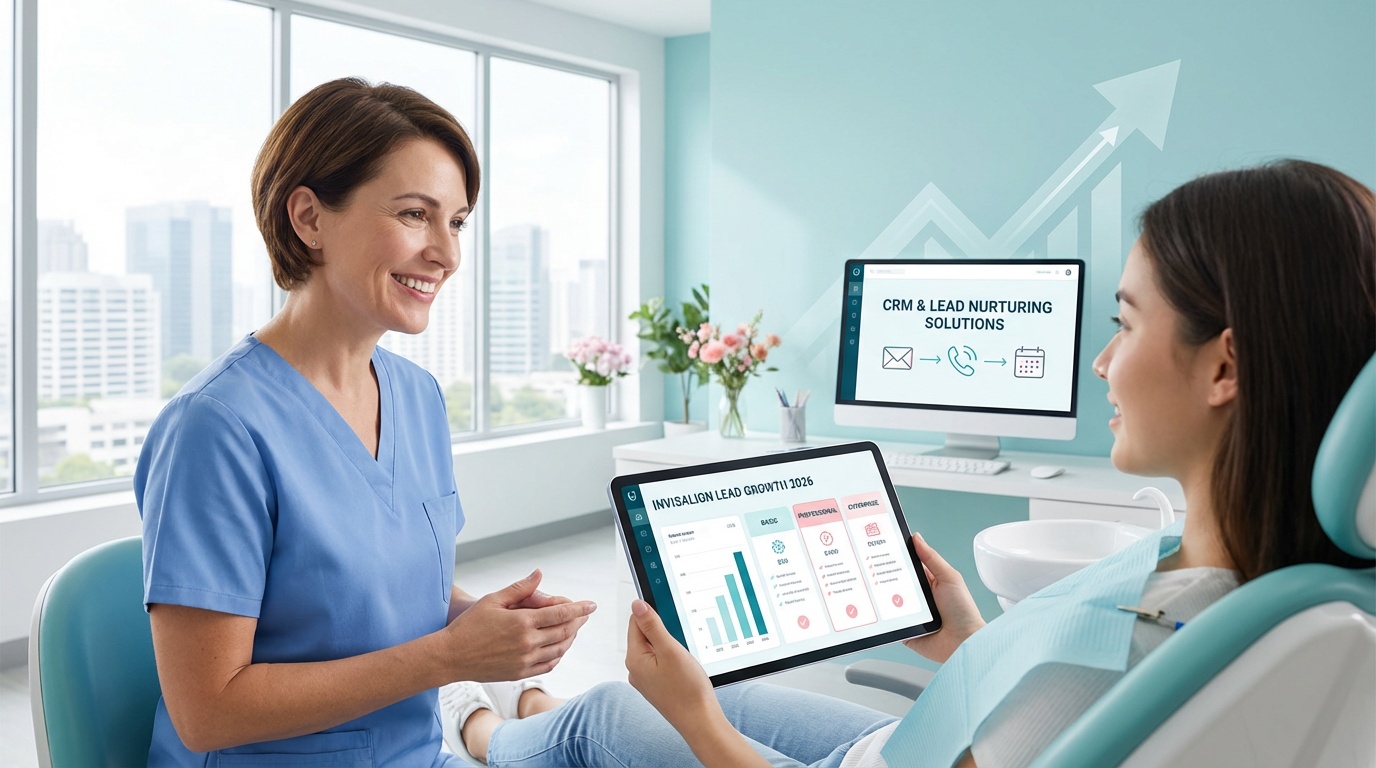
Subscription Tiers: From Basic to Enterprise Plans
CRM billing for Invisalign practices follows three commercial structures in 2026: per-seat licensing, flat monthly subscriptions, and usage-based billing. Per-seat models suit smaller practices where one treatment coordinator manages all Invisalign enquiries — typically £50 to £120 per user each month. Flat subscriptions bundle automation, reporting, and support into a single predictable fee, which most dental practices prefer for budgeting clarity. Usage-based billing fits high-volume practices where SMS and email volumes shift significantly between quiet months and campaign peaks.
Hidden Costs and Add-Ons to Watch
The headline monthly price rarely reflects total spend. Onboarding fees run from £300 to £1,500 depending on how complex your PMS integration is. Custom workflow builds for Invisalign-specific sequences — pre-consultation nurture chains, post-scan follow-ups — attract additional development charges of £200 to £800. GDPR-compliant data migration from legacy systems adds further cost. And don’t forget to budget separately for SMS credits; many platforms cap outbound messages at 500 to 1,000 per month before overage charges kick in. For NHS orthodontic cost guidelines, visit NHS orthodontics.
| Cost Category | Typical Range (£) | Frequency |
|---|---|---|
| Onboarding and set-up | £300 to £1,500 | One-off |
| Custom workflow build | £200 to £800 | Per build |
| SMS overage charges | £0.04 to £0.12 per message | Monthly |
| PMS integration maintenance | £50 to £200 | Monthly |
| Training and onboarding support | £150 to £500 | One-off |
Regional Pricing Variations in London, Manchester, and Birmingham
CRM costs aren’t uniform across the UK. London practices typically pay a 15 to 25 per cent premium on agency-managed services, driven by higher operational costs and stiffer competition for Invisalign patients. Manchester and Birmingham providers access comparable platforms at lower managed-service fees, making mid-tier and advanced systems genuinely accessible outside the capital. Practices in those secondary cities often achieve stronger ROI at equivalent spend — a pattern we see consistently in Dominate Dental’s lead generation data, which shows monthly Invisalign lead costs in Birmingham ranging from £500 to £2,000 depending on campaign scope.
How CRM Drives ROI in Invisalign Lead Conversion
Tracking High-Value Leads from Consultation to Treatment Start
A properly configured CRM assigns a monetary value to each Invisalign enquiry at the point of entry, giving practices real-time visibility of pipeline revenue. With moderate Invisalign cases averaging £3,000 to £4,500, a pipeline of 30 active leads represents £90,000 to £135,000 in potential revenue. That number is meaningless, though, if you can’t see where leads are dropping — whether at consultation booking, post-scan, or after the treatment plan presentation. Stage-by-stage tracking makes those drop-off points visible and fixable.
Automation Strategies for Reducing No-Shows on £3,500+ Cases
Without structured follow-up, Invisalign consultation no-show rates average 20 to 35 per cent. Automated sequences — SMS reminders at 72 hours, 24 hours, and two hours before the appointment — bring that figure down for most practices. On cases worth £3,500 or more, recovering even one additional attended consultation per week produces meaningful incremental monthly revenue. The maths speaks for itself, though individual outcomes will always depend on practice set-up and team engagement.
Real Metrics: Case Studies from UK Dental Rockstars
CRM Benefits Observed in UK Practices
- Consultation attendance rates improved from 65% to 88% within 90 days of CRM deployment
- Invisalign case starts increased by 34% after implementing lead scoring and automated follow-up
- Average response time to new enquiries reduced from six hours to under eight minutes
- Treatment coordinator capacity doubled without additional headcount
Common Implementation Challenges
- Initial set-up requires four to eight weeks before full automation is operational
- Staff adoption rates drop without structured training programmes
- Generic CRM platforms require significant customisation for dental workflows
Selecting the Best CRM for Your Invisalign Marketing Strategy
Top Tools Compared for Dental SEO and Social Media Integration
The right CRM for an Invisalign practice isn’t just about patient management — it’s about closing the loop on your marketing spend. Platforms that connect directly with Google Ads, Meta lead forms, and dental SEO landing pages give you a single view of which channels are delivering the highest-value enquiries. Without that attribution, you’re guessing at where to spend next month’s budget. Pair your CRM strategy with our Dental SEO Services to make sure organic traffic feeds directly into a system that converts it.
Dominate Dental’s Custom CRM Set-Up for Maximum Patient Flow
We build CRM configurations specifically for Invisalign patient acquisition — connecting paid social campaigns, organic search enquiries, and referral sources into one dashboard with clear attribution. Our set-up includes pre-built Invisalign nurture sequences, no-show prevention workflows, and monthly performance reporting so you always know what the system is producing. Start by requesting a Free Social Media Report, which analyses your existing social profiles to identify where patient interest is already being generated before you spend a pound on CRM. For clinical background on the treatment itself, Invisalign’s Wikipedia entry covers the essentials.
Next Steps: Implement CRM and Scale Your Invisalign Practice
Quick-Start Checklist for CRM Deployment
- Audit current enquiry sources and response times
- Define your Invisalign patient pipeline stages
- Select a CRM tier aligned to your monthly case volume
- Build SMS and email sequences before go-live
- Train treatment coordinators on lead scoring protocols
Partnering with Dominate Dental for Real, Measurable Results
Dominate Dental manages the full CRM build, integration, and ongoing optimisation for Invisalign practices across the UK. Start with a Free Social Media Report to establish your baseline patient acquisition data, then book a strategy consultation to map a CRM approach that fits your revenue targets. Or, if you’d rather hit the ground running, our Invisalign Leads Generation Service puts qualified appointments in your diary while the system beds in.
Revenue Illustration: A CRM investment of £500 per month converting three additional Invisalign cases monthly at £3,500 each produces £10,500 in incremental revenue against a low marketing cost ratio. These figures are illustrative — individual results will vary based on practice volume, team engagement, and local market conditions. The system is designed to pay for itself quickly once conversion rates improve. For clinical evidence and research, practitioners can access Invisalign studies on PubMed.
Forecasting Revenue Growth from Nurtured Invisalign Leads
CRM investment becomes self-funding once you model your conversion data honestly. A practice generating 40 monthly Invisalign enquiries with a 15% consultation-to-case conversion rate produces six case starts. Push that rate to 25% through structured nurturing and you’re adding four cases every month. At £3,500 per case, that’s £14,000 in additional monthly revenue — enough to justify enterprise-tier investment with room to spare. Results will vary by practice and are not guaranteed, but the conversion maths rewards practices that act on their data rather than hope for it.
Frequently Asked Questions
What type of CRM do dentists use for Invisalign patients?
Dental practices, especially those offering Invisalign, benefit most from specialized CRM systems. These CRMs include features like treatment-stage pipelines, patient segmentation, and integration with practice management software like Dentally or Software of Excellence. They are designed to track multi-touch leads and automate consultation reminders, which is key for converting Invisalign prospects.
How much does CRM and lead nurturing for Invisalign cost monthly in the UK?
For Invisalign practices in the UK, CRM and lead nurturing solutions generally cost between £150 and £1,500+ per month. This range depends on the level of automation, specific integration needs, and your practice’s patient volume. A mid-tier system, for example, typically runs from £300 to £700 monthly, offering SMS automation and reporting.
What features are essential for effective Invisalign lead nurturing?
Effective lead nurturing for Invisalign prospects relies on SMS and email automation to maintain engagement. Personalized treatment-cost messaging is also important, alongside behavioral triggers that respond to actions like webpage visits or enquiry form submissions. Without these, practices risk losing high-intent leads quickly.
How can a CRM system improve ROI for Invisalign case conversions?
CRM systems drive ROI by tracking high-value Invisalign leads from initial enquiry to treatment acceptance. They assign monetary value to leads, enabling real-time pipeline revenue calculation and identifying drop-off points. Automated reminders also significantly reduce no-show rates for consultations, directly increasing conversion rates for cases valued at £3,500 or more.
What hidden costs should practices consider when investing in Invisalign CRM?
When budgeting for Invisalign CRM, practices should account for potential hidden costs beyond the monthly subscription. These can include one-off onboarding fees, charges for custom workflow builds, and data migration expenses. Additionally, many platforms charge separately for SMS credits once monthly message caps are exceeded.
Do CRM costs for Invisalign vary by UK region?
Yes, pricing for CRM and lead nurturing for Invisalign can vary across UK regions. Practices in London might expect to pay a 15 to 25 percent premium for agency-managed CRM services due to higher operational costs. Conversely, providers in Manchester and Birmingham often find comparable platforms at lower managed-service fees, making advanced systems more accessible.