


Best dental team training programs vs sales training.
Dental Team Training vs. Sales Training: What’s the Real Difference for Your Practice?
When evaluating the Best dental team training programs vs sales training., practice owners often struggle to distinguish between a clinical service mindset and a commercial transaction mindset. Dental team training encompasses the entire patient journey, from the initial phone inquiry to the post-operative follow-up. It focuses on the collective behaviour of the front-of-house staff, dental nurses, and clinicians to ensure a seamless experience. This holistic approach ensures that every touchpoint reinforces the professional reputation of the clinic.
Key Takeaways
- Dental team training covers every patient interaction from the first phone call to post-operative care, not just the moment of sale.
- A service-focused approach across front-of-house staff, nurses, and clinicians builds trust and professional reputation more effectively than isolated sales techniques.
- Shifting from a transaction mindset to a collective service mindset ensures every team member reinforces the clinic’s credibility at each touchpoint.
- Sales training alone misses the broader patient experience that team training addresses, which directly impacts consultation conversion rates.
Defining Dental Team Training: Beyond Clinical Skills
Comprehensive team training involves more than just teaching staff how to use new software or assist in surgery. It focuses on communication protocols, patient empathy, and the internal systems that keep a practice running efficiently. By refining these soft skills, a practice can harmonise its operations, ensuring that the patient feels cared for at every stage. This method prioritises long term retention and word of mouth referrals over immediate financial gains.
Defining Sales Training: The Traditional Approach
Traditional sales training usually focuses on specific techniques to increase conversion rates for high value treatments like dental implants or orthodontics. It often involves scripts for objection handling, closing methods, and urgency creation. While these skills are useful for a treatment coordinator, applying them too aggressively in a clinical setting can sometimes alienate patients who feel pressured into making a decision. The focus here is primarily on the transaction and the immediate revenue it generates.
The Core Distinction: Patient Journey vs. Transaction Focus
The fundamental difference lies in the intent of the interaction. Team training seeks to build a sustainable environment where patients choose treatments because they understand the value and trust the provider. Sales training often targets the final decision point, aiming to remove barriers to purchase. For a private practice in the UK, balancing these two is necessary to maintain ethical standards while achieving growth targets.
| Feature | Dental Team Training | Traditional Sales Training |
|---|---|---|
| Primary Focus | Whole Patient Experience | Case Acceptance Rate |
| Key Metric | Patient Lifetime Value | Monthly Production Value |
| Staff Involved | Entire Practice Team | Dentists and TCOs |
| Patient Perception | Supportive and Caring | Professional and Persuasive |
Why This Matters for Case Acceptance and Patient Trust
Trust is the primary currency within a dental surgery. If a patient senses that a recommendation is driven by a sales quota rather than a clinical need, the relationship is damaged. Conversely, when a well-trained team provides clear education and demonstrates genuine care, case acceptance happens as a natural byproduct of the consultation. This is why many principals find that the Best dental team training programs vs sales training. debates usually conclude that a foundation of team excellence must precede advanced sales tactics.
The ‘Patient Advocate’ Approach: Building Trust, Not Just Closing Deals

At Dominate Dental, we advocate for a shift in perspective where the team acts as a guide for the patient. This “Patient Advocate” model moves away from the high pressure tactics associated with car showrooms and instead positions the dental professional as a partner in the patient’s health and aesthetics journey. When your team adopts this mindset, the need for “hard selling” disappears because the value of the treatment becomes self-evident.
Shifting from ‘Selling’ to ‘Serving’: The Power of Patient Advocacy
Serving a patient means identifying their underlying motivations for seeking treatment. Perhaps they are embarrassed by their smile at social events or struggle with discomfort while eating. By addressing these personal concerns, the team demonstrates that they are listening. This service-oriented approach builds a level of rapport that makes the financial investment in treatments like the Dominate Dental Invisalign Marketing System feel like a logical step for the patient to take.
Essential Skills for Dental Advocates: Communication, Empathy, and Education
Effective advocacy requires three core pillars. First, communication must be jargon-free and accessible. Second, empathy allows the team to acknowledge the anxieties many people feel regarding dental work. Third, education ensures the patient understands the long term benefits of the proposed plan. When these elements are present, the team can successfully navigate the Best dental team training programs vs sales training. landscape by providing a superior level of care that naturally leads to higher revenue.
How to Train Your Team to Recommend Treatments Naturally
Natural recommendations stem from a deep belief in the clinical outcomes the practice provides. If a dental nurse truly understands how the Dominate Dental Invisalign Marketing System can transform a person’s confidence, they will mention it with genuine enthusiasm. Training should focus on identifying “buying signals” or expressions of dissatisfaction from the patient and responding with helpful information rather than a sales pitch. This creates an environment where patients feel informed rather than targeted.
Addressing the Fear of Being ‘Pushy’
- Focus on the “Why”: Remind the team that recommending necessary treatment is a form of care, not an imposition.
- Ask, Don’t Tell: Use open-ended questions to let the patient discover their own need for the service.
- Provide Options: Presenting different tiers of treatment allows the patient to feel in control of the decision.
- Silence is Golden: Give the patient time to process information without rushing to fill the gap with more sales points.
Addressing Common Fears: ‘We Don’t Want to Be Pushy!’
The fear of appearing pushy is the most significant barrier to case acceptance in UK practices. Many clinicians worry that discussing fees or promoting private options will undermine their professional integrity. However, failing to offer the best possible solution is actually a disservice to the patient. By reframing the conversation as an educational opportunity, the team can discuss high-value options with confidence and honour. This transition is a hallmark of the Best dental team training programs vs sales training. strategies that we implement for our most successful clients.
When to Invest: Choosing the Right Training for Your Practice’s Growth Stage (UK Focus)
Determining the appropriate investment for your clinic requires an honest assessment of your current operational maturity. For many UK principals, the struggle to grow private revenue stems from a mismatch between marketing efforts and internal readiness. If your phone is ringing but the diary remains empty, the issue often lies in the foundational skills of your front-of-house team. At this stage, seeking the Best dental team training programs vs sales training. often reveals that basic communication and patient journey mapping are the most urgent priorities.
Is Your Practice Ready for Dedicated Sales Training?
Dedicated sales training is most effective for practices that already possess a stable patient flow and a cohesive team. If you have a designated Treatment Coordinator (TCO) who manages high-value consultations for implants or Invisalign, targeted sales training can provide the specific conversion techniques required to maximise ROI. However, introducing advanced sales tactics to a team that lacks basic empathy or administrative efficiency can lead to internal friction and a disjointed patient experience.
The Case for Comprehensive Dental Team Training First
Foundational team training ensures that every staff member understands their role in the patient’s decision-making process. This includes how a receptionist handles a price inquiry or how a nurse prepares a patient for a consultation. By establishing these protocols early, you create a professional environment where patients feel safe and valued. This stability is the prerequisite for any successful growth strategy, as it ensures that the leads generated by your marketing efforts are not wasted through poor first impressions. For further insight, explore our case studies on lead generation to see how aligned teams convert effectively.
Bridging the Gap: Integrating Marketing with Team Readiness
Marketing and training must work in tandem to produce measurable results. When you launch a high-performance campaign like the Dominate Dental Invisalign Marketing System, your team must be prepared to handle an influx of specific inquiries. Readiness involves understanding the nuances of the offer, the clinical benefits of the treatment, and the internal steps to move a prospect from a lead to a booked consultation. Without this alignment, even the most sophisticated marketing will fail to deliver its full potential.
UK Specifics: Navigating NHS vs. Private Patient Expectations
The UK dental market presents unique challenges, particularly for practices transitioning from NHS-heavy models to private growth. Patients accustomed to the NHS framework often require more education regarding the value of private options. Training your team to navigate these conversations without sounding elitist or dismissive is essential. They must be able to articulate why a private investment is beneficial while maintaining the professional standards expected by the General Dental Council. This cultural shift is a key component when comparing the Best dental team training programs vs sales training. for the British market.
Training Investment Decision Framework
Use these criteria to determine your practice’s immediate training needs:
- Operational Stability: If your team turnover is high or protocols are inconsistent, prioritise foundational team training.
- Lead Conversion: If you are generating leads but failing to book consultations, focus on front-desk communication training.
- Case Acceptance: If consultations are happening but patients are not proceeding, invest in TCO-specific sales and advocacy training.
- Marketing Synergy: Ensure your team is fully briefed on current campaigns, such as the Dominate Dental Invisalign Marketing System, to provide a consistent message.
Top UK Dental Team Training Programs: Focus on Confidence and Case Acceptance
Selecting a training partner is a significant decision that impacts your practice culture and financial trajectory. The Best dental team training programs vs sales training. options in the UK focus on practical application rather than abstract theory. Look for providers who offer bespoke onsite sessions, as these allow the trainer to observe your team in their actual working environment and address specific bottlenecks in your patient journey.
Evaluating ‘Best Of’ Programs: What to Look For
When evaluating potential programs, prioritise those with a proven track record in the dental sector. General sales training often fails because it does not account for the clinical and ethical constraints of dentistry. The ideal program should offer a blend of communication psychology, system implementation, and role-play exercises. Furthermore, ensure the training includes follow-up support to help the team implement new habits over the long term, rather than just providing a single day of inspiration. For a deeper understanding of how marketing supports training, check our digital marketing services for dental practices.
Program Spotlight 1: Emphasising Communication & Patient Journey
The most effective programs for general practice growth focus heavily on the “soft skills” of the patient journey. These modules typically cover active listening, building rapport, and the art of the clinical hand-over. By mastering these elements, the team creates a seamless experience that reduces patient anxiety and builds the trust necessary for high-value treatment acceptance. This approach is particularly effective for practices looking to increase their volume of cosmetic and restorative cases.
Program Spotlight 2: Focusing on Objection Handling & Value Proposition
For practices that are already performing well but want to scale their specialised services, programs that focus on the value proposition are invaluable. These sessions teach the team how to confidently discuss fees and handle common objections regarding time, cost, and fear. Rather than using aggressive closing techniques, these programs empower staff to provide clear, evidence-based answers that help patients make informed choices for their oral health and self-esteem.
| Training Focus | Best For | Key Outcome |
|---|---|---|
| Patient Journey Mapping | New or Reorganising Practices | Consistent Patient Experience |
| Front-of-House Excellence | Practices with Low Lead-to-Booking Rates | Increased Consultation Volume |
| Treatment Coordinator Mastery | Practices Scaling Invisalign or Implants | Higher Case Acceptance Rates |
| Ethical Sales Psychology | Clinicians Hesitant to Discuss Fees | Increased Private Revenue |
Beyond Program Names: Key Training Components for Success
Success in training is rarely about the specific brand and more about the commitment to implementation. The Best dental team training programs vs sales training. outcomes occur when the principal dentist actively participates and leads by example. Key components for success include regular team meetings to review progress, clear Key Performance Indicators (KPIs) to track improvements, and a culture of continuous learning. Without these internal structures, the benefits of even the most expensive training program will quickly fade.
Dominate Dental’s Approach: Seamless Growth Through Smart Marketing and Empowered Teams
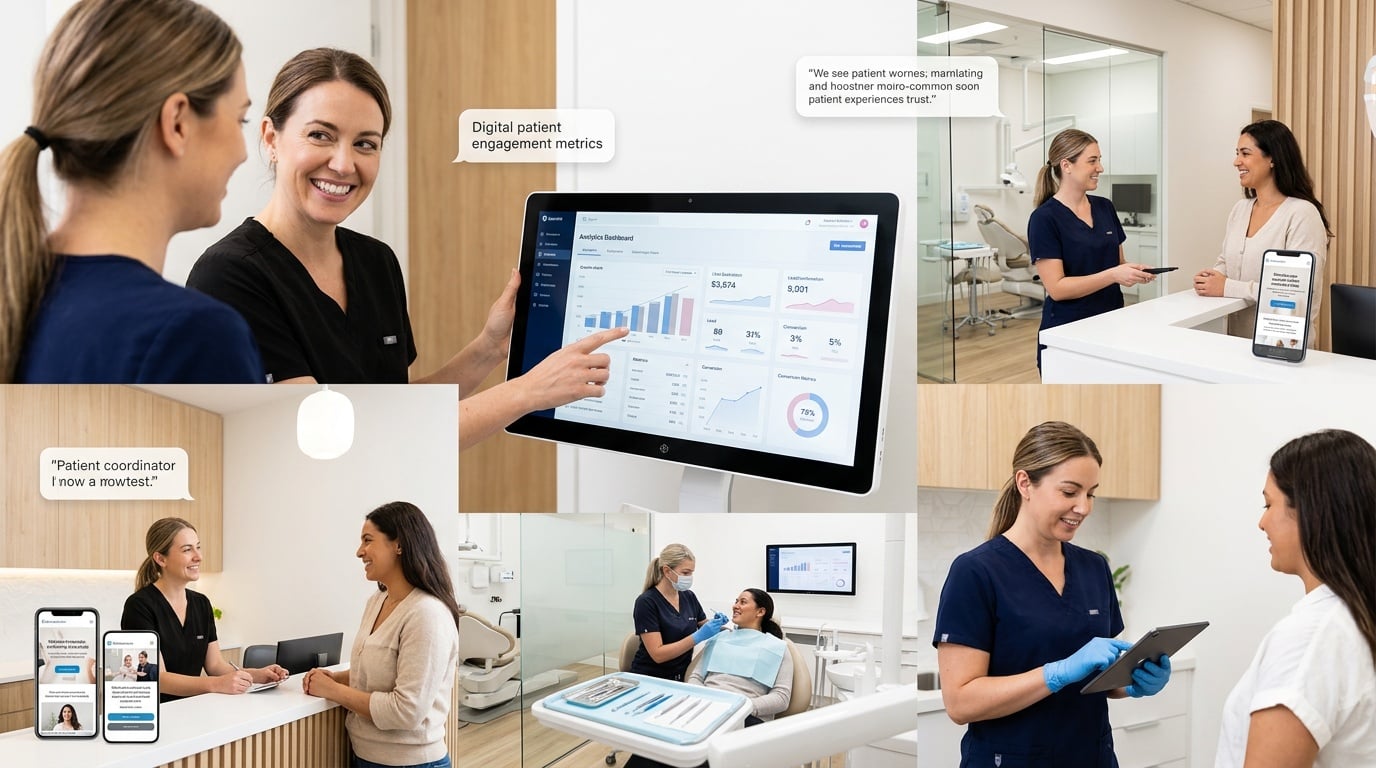

At Dominate Dental, we recognise that the Best dental team training programs vs sales training. debate is only one part of the growth equation. Our philosophy integrates high-performance digital marketing with a deep understanding of practice operations. We do not just send you leads; we provide the strategic framework that allows your team to convert those leads into loyal, high-value patients.
The Dominate Dental Difference: Where Marketing Meets Training
Our approach is unique because we focus on the quality of the inquiry. By using data-driven strategies to target patients who are actively seeking private treatments, we reduce the “sales” burden on your team. When your staff interacts with a qualified lead who already understands the value of your services, the conversation naturally shifts from price to clinical outcomes. This synergy between marketing and team readiness is the most efficient path to sustainable practice growth.
How Our Digital Marketing Fuels Patient Inquiries
We specialise in generating high-intent inquiries for treatments such as dental implants, composite bonding, and orthodontics. Our systems are designed to position your practice as the local authority, ensuring that the patients who contact you are already predisposed to trust your expertise. This pre-qualification process is a core benefit of working with an agency that understands the specific needs of the UK dental sector.
Empowering Your Team with High-Quality, Qualified Leads
When your team is equipped with the Dominate Dental Invisalign Marketing System, they gain the confidence that comes from a consistent pipeline of opportunities. We provide the tools and data insights your staff needs to manage these inquiries effectively, ensuring that no lead is overlooked. This empowerment leads to higher job satisfaction and a more motivated team, which in turn creates a better experience for your patients.
Generating New Patients: Your Next Step to Practice Dynamo Status
If you are ready to move beyond the frustration of poor-quality leads and stagnant growth, it is time to align your marketing with a high-performing team. By combining the Best dental team training programs vs sales training. insights with our proven digital strategies, you can transform your practice into a thriving private clinic. Contact Dominate Dental today to discover how we can help you achieve your revenue goals through intelligent patient acquisition.
References
Scale Your Private Practice Today
Ready to see how the Dominate Dental Invisalign Marketing System can revolutionise your case acceptance? Book your strategy consultation with our experts.
Frequently Asked Questions
What is the 3-3-3 dental rule?
The 3-3-3 rule is a guideline for patient follow up: contact a new patient within 3 days of their visit, again at 3 weeks, and then at 3 months. This consistent, caring touchpoint schedule builds long term trust and keeps your practice top of mind. It supports a team training mindset where education and relationship building replace high pressure sales tactics.
What is the 50-40-30 rule in dentistry?
The 50-40-30 rule is a financial benchmark for dental practices: 50% of revenue goes to overhead, 40% to staff salaries, and 30% to lab and supply costs. Understanding this breakdown helps owners see that investing in team training can improve efficiency and case acceptance without needing aggressive sales methods. A patient advocate approach naturally boosts revenue while keeping costs in line.
What is the 80 20 rule in dentistry?
The 80-20 rule, or Pareto principle, states that roughly 80% of your practice’s revenue comes from 20% of your patients. This makes retention and word of mouth referrals critical. A team training program that emphasizes empathy and clear communication helps nurture that top 20% far more effectively than transactional sales training, leading to sustainable growth.
What is the 2 2 2 rule in dentistry?
The 2-2-2 rule is a recall scheduling suggestion that recommends a check up every 2 years, though many practices adapt it to 6 months. More importantly, it highlights the need for ongoing patient education between visits. A well trained team uses these regular touchpoints to share treatment value naturally, making case acceptance a byproduct of consistent care.
What is the rule of 7 in dentistry?
The rule of 7 in marketing says a prospect needs to hear your message seven times before deciding. In a dental practice, this means multiple supportive interactions from your team, not a single hard sell. A patient advocate approach delivers those touchpoints through education and genuine concern, building trust so patients feel confident in their treatment choices.