


dentist website content
Why Dentist Website Content Drives Patient Bookings in the UK
Your website content is your silent salesperson. It works 24/7, answering patient questions, showcasing your expertise, and turning curious browsers into booked consultations. Strategic dentist website content converts because it addresses what patients actually search for at 11pm: “Will implants hurt?”, “How much does Invisalign cost?”, “Can I afford this treatment?”
Practices investing in optimised content see 3-5x more qualified enquiries for high-value treatments like Invisalign and implants. That’s not luck–it’s understanding patient psychology and giving them exactly what they need to say “yes.”
Common Challenges UK Dental Practices Face with Online Content
Most dental websites read like medical journals. Vague treatment descriptions. Missing testimonials. No pricing. Zero personality.
This ambiguity sends patients straight to competitors who actually answer their questions. You’re spending £2,000+ monthly on Google Ads, but when people click through, they bounce because your landing page doesn’t address what they’re anxious about: pain levels, recovery time, whether they can afford it.
Generic content wastes ad spend and loses patients who were ready to book.
How Top-Performing Content Generates High-Value Leads
High-converting dentist website content follows a proven formula. Answer the biggest question in the first paragraph. Show GDC-compliant before-and-after results. Give transparent pricing brackets. Make booking ridiculously easy.
Your Invisalign page should answer “Am I suitable?” within three seconds. Your implant page must tackle bone loss concerns before patients even scroll. We’ve seen practices increase consultation bookings by 40% just by restructuring their treatment pages around what patients actually ask.
Dominate Dental’s Proven Results for Invisalign and Implant Practices
Case Study: A Manchester practice implemented our bespoke dental website designs with treatment-specific content strategies. Within 90 days, Invisalign enquiries jumped 220%, with a 32% consultation-to-treatment conversion rate. Average treatment value? £4,200. That’s £126,000 in additional private revenue.
We don’t guess what patients want–we know. Our data-driven approach identifies exactly what your ideal patients type into Google when they’re ready to book. Then we answer those questions with authority, positioning your practice as the obvious choice.
Features like DenGro Lead Capture and Interactive Smile Galleries turn passive readers into active enquirers who actually show up.
| Content Element | Standard Approach | Dominate Dental Method |
|---|---|---|
| Homepage Message | Generic “quality care” statements | Treatment-specific value propositions within five seconds |
| Treatment Pages | Clinical descriptions only | Patient journey mapping with anxiety-reduction content |
| Calls-to-Action | Single “Contact Us” button | Multiple conversion paths: book online, live chat, phone |
| Trust Signals | GDC logo only | Integrated social reviews, team credentials, real patient stories |
Core Pages Every High-Converting Dentist Website Needs

Homepage Structure: Capture Attention in Five Seconds
You’ve got five seconds. That’s it.
Your homepage must instantly communicate who you help, what you specialise in, and why someone should choose you over the practice down the road. Put your strongest differentiator above the fold–same-day appointments, specialist-led care, 0% finance available.
Ditch the rotating banners. They dilute your message and confuse visitors. Use one static hero section with a compelling headline and a prominent booking button. Include trust signals like your GDC registration number and recent Google review scores where people can actually see them.
Treatment Pages for Invisalign Marketing and Dental Implant Marketing
Each high-value treatment deserves its own dedicated page. Not a paragraph buried in a services list–an entire page optimised for patient questions and search visibility.
Your Invisalign page should cover suitability, duration, and payment options in the first 200 words. Include an Interactive Smile Gallery showing real patient transformations (with consent, of course). Your implant page needs to explain procedure stages, address surgery fears, and provide transparent pricing brackets.
Our bespoke dental website designs incorporate Interactive Service Gateways that guide patients through treatment decision trees, qualifying leads before they book. For tailored Invisalign campaigns, our Invisalign marketing services help grow patient enquiries efficiently.
About and Team Pages That Build Instant Trust
Patients don’t choose practices with good locations. They choose dentists they trust.
Your About page should tell your story through what matters to patients: why you focus on nervous patients, your commitment to pain-free dentistry, or your investment in the latest technology. Make it about them, not you.
Team pages need professional photography–real photos, not stock images. Write individual bios highlighting qualifications, special interests, and personality. Include GDC registration numbers for compliance and credibility. Let patients see the humans behind the masks.
GDC-Compliant Content Strategies for UK Dental Websites
Accurate Claims and Ethical Messaging Rules
The General Dental Council doesn’t mess around. All website content must be accurate, verifiable, and avoid misleading claims.
You can’t guarantee treatment outcomes. You can’t call yourself “London’s best dentist” without evidence. You can’t show before-and-after comparisons without proper documentation. Every clinical claim needs backing.
Focus on process and typical results rather than promises. “Most patients experience minimal discomfort” complies. “Completely painless procedure” doesn’t. Include your GDC registration number prominently on every page, and ensure all practising dentists list their individual registration details on team pages.
Accessibility Features That Boost SEO and Inclusivity
Accessible websites serve two masters: legal compliance under the Equality Act 2010 and Google’s ranking algorithm.
Alt text on images helps visually impaired users and tells Google what your treatment galleries show. Proper heading hierarchy (H1, H2, H3) structures content for screen readers whilst signalling topic relevance to search engines. Minimum 16px fonts, sufficient colour contrast, and keyboard navigation make your site usable for elderly patients and those with disabilities.
These technical improvements lower bounce rates and increase engagement–metrics Google rewards with better rankings.
Privacy Policies and Clear Practice Details
UK dental websites must display comprehensive privacy policies explaining how patient data is collected, stored, and used under GDPR. Include explicit consent mechanisms for contact forms, newsletter sign-ups, and booking systems.
Your contact page needs complete details: full address with postcode, phone number, email, and opening hours. Multi-location practices benefit from a Location Finder showing patients their nearest branch. Add transparent cancellation policies, complaint procedures, and fee structures.
These elements protect your practice legally and reassure prospective patients about your professionalism.
Compliance Checklist: Verify GDC numbers are visible, all treatment claims reference clinical standards, images have descriptive alt text, privacy policy links appear in the footer, and practice details match your Google Business Profile exactly. Non-compliant sites risk regulatory action and damage patient confidence.
Blog and Supporting Content to Dominate Local Search
High-Engagement Blog Topics for UK Dental Practices
Write blog posts that answer specific questions driving treatment decisions.
“How much do dental implants cost in Manchester?” and “Invisalign vs traditional braces for adults” attract high-intent searchers ready to book. Address common anxieties: pain management during root canals, recovery timelines after extractions, financing options for cosmetic treatments.
Local content performs exceptionally well. “Emergency dentist in Birmingham: what to do when you chip a tooth” targets patients in crisis mode. Each post should link to relevant treatment pages, turning educational readers into qualified leads. For detailed insights on dental implants, connect to our dental implants marketing strategies for targeted results.
Seasonal Content Calendar for Peak Booking Periods
Timing matters. A lot.
January content should focus on smile makeovers and New Year dental health resolutions when enquiries peak. Pre-summer months (April-May) see increased interest in teeth whitening and cosmetic bonding before holidays. Back-to-school periods (August-September) attract parents seeking children’s orthodontic assessments. December content about emergency dental care addresses holiday anxieties when regular surgeries close.
Plan content six weeks ahead of these periods to build search visibility before demand surges.
FAQs and Guides Optimised for Long-Tail Queries
Comprehensive FAQ pages capture voice search queries and featured snippet opportunities.
Structure answers around natural questions: “Can I get dental implants if I have gum disease?” or “How long does Invisalign treatment take?” Each answer should be 60-80 words, direct, and link to detailed treatment pages.
Treatment-specific guides work brilliantly: “Complete guide to composite bonding in London” or “What to expect during your first implant consultation.” These long-form resources establish authority, keep visitors engaged longer, and generate backlinks from other health websites seeking credible dental information.
Actionable Steps to Optimise Your Dentist Website Content Today

Audit Your Site with Our Free Checklist
Download our comprehensive website audit tool to identify content gaps costing you bookings.
Check whether treatment pages answer patient questions in the first paragraph. Verify calls-to-action appear above the fold. Confirm GDC compliance across all claims. Assess loading speeds, mobile responsiveness, and whether your booking system actually works.
This self-assessment reveals quick wins and strategic priorities. Our free online reviews reputation report helps ensure your social proof is maximised to build trust.
Integrate Calls-to-Action for Immediate Conversions
Every page needs clear next steps.
Treatment pages should offer “Book Free Consultation”, “Check Availability”, or “Speak to Our Team” buttons in prominent positions. Use contrasting colours that stand out. Include multiple contact methods: online booking for convenience-focused patients, phone numbers for those wanting immediate answers, and live chat for quick questions.
Test different CTA copy to find what resonates with your audience.
Partner with Dominate Dental for Seamless Results
Dominate Dental delivers complete content solutions that convert visitors into booked consultations. We’re not just writers–we’re dental marketing experts who combine industry knowledge with technical SEO expertise to build sites that rank highly and generate qualified leads.
We handle content creation, GDC compliance, accessibility standards, and ongoing optimisation. Book your free strategy session to discover how our proven approach can transform your private patient revenue.
Measuring Content Performance and Continuous Improvement
Key Metrics to Track Website Success
You can’t improve what you don’t measure.
Track conversion rate (visitors who complete contact forms or phone calls), bounce rate on treatment pages, and average session duration. Google Analytics reveals which blog posts generate enquiries and which pages lose visitors immediately.
Monitor organic search positions for target treatments. If your Invisalign page ranks on page two, you’re invisible to most searchers. Set up goal tracking for specific actions: “Book Consultation” clicks, phone number taps on mobile, live chat initiations. Review these metrics monthly to spot trends and opportunities.
A/B Testing Content Elements
Small changes produce measurable booking increases.
Test different headline formulations: “Dental Implants from £2,400” versus “Replace Missing Teeth with Confidence.” Experiment with CTA button colours, placement, and wording. Try video testimonials against written reviews. Test longer versus shorter treatment descriptions.
Run tests for a minimum of two weeks with sufficient traffic before drawing conclusions. Winning variations often increase conversions by 15-30% without additional marketing spend.
Refresh Outdated Content Regularly
Search engines favour fresh, current information.
Review all treatment pages quarterly to update pricing, add new patient testimonials, and incorporate the latest clinical techniques. Blog posts older than 18 months need refreshing with updated statistics and current best practices. Remove references to outdated technology or superseded treatment methods. Add new FAQ answers based on recent patient enquiries.
This maintenance signals to Google that your content remains relevant and authoritative, protecting your rankings whilst ensuring patients receive accurate information.
Integration with Wider Marketing Strategy
Content Supports Paid Advertising
Strong dentist marketing services maximise return on Google Ads and social media campaigns.
You’re paying £8-12 per click. When patients land on your page, they must immediately see what they clicked for. Treatment pages optimised for conversion turn expensive traffic into booked consultations. Weak content wastes ad spend–visitors leave within seconds if they don’t find clear answers.
Align landing page headlines with ad copy to maintain message consistency. Include the same benefit-focused language that attracted the click. Practices with conversion-optimised content typically achieve 40% lower cost per lead than those directing ads to generic pages.
Social Media Content Amplification
Blog content provides months of social posts.
Transform comprehensive guides into Instagram carousel posts highlighting key points. Share patient success stories (with consent) that link back to treatment pages. Create short video snippets answering common questions from FAQ content. LinkedIn posts targeting corporate clients can promote teeth whitening and cosmetic services for professionals.
Each social post should drive traffic to specific website pages designed to convert that audience. Integrated social review feeds on your site build credibility by displaying real patient feedback where prospective patients make decisions.
Email Nurture Sequences
Captured leads need systematic follow-up to convert into booked appointments.
Create email sequences that deliver valuable content whilst moving prospects towards consultation. Send new enquirers a welcome email linking to treatment-specific pages matching their interest. Follow with educational content addressing common concerns: financing options, what to expect at the first visit, pain management approaches. Include patient testimonials and limited-time booking incentives.
Well-crafted sequences convert 20-25% of leads who weren’t ready to book immediately, recovering revenue that would otherwise disappear.
| Marketing Channel | Content Type Needed | Primary Goal |
|---|---|---|
| Google Ads | Conversion-focused landing pages with clear CTAs | Immediate consultation bookings |
| SEO | Comprehensive guides, FAQs, treatment pages | Long-term organic visibility and authority |
| Social Media | Visual stories, quick tips, patient transformations | Brand awareness and website traffic |
| Educational sequences, appointment reminders | Lead nurture and conversion recovery |
Future Trends in Dental Website Content
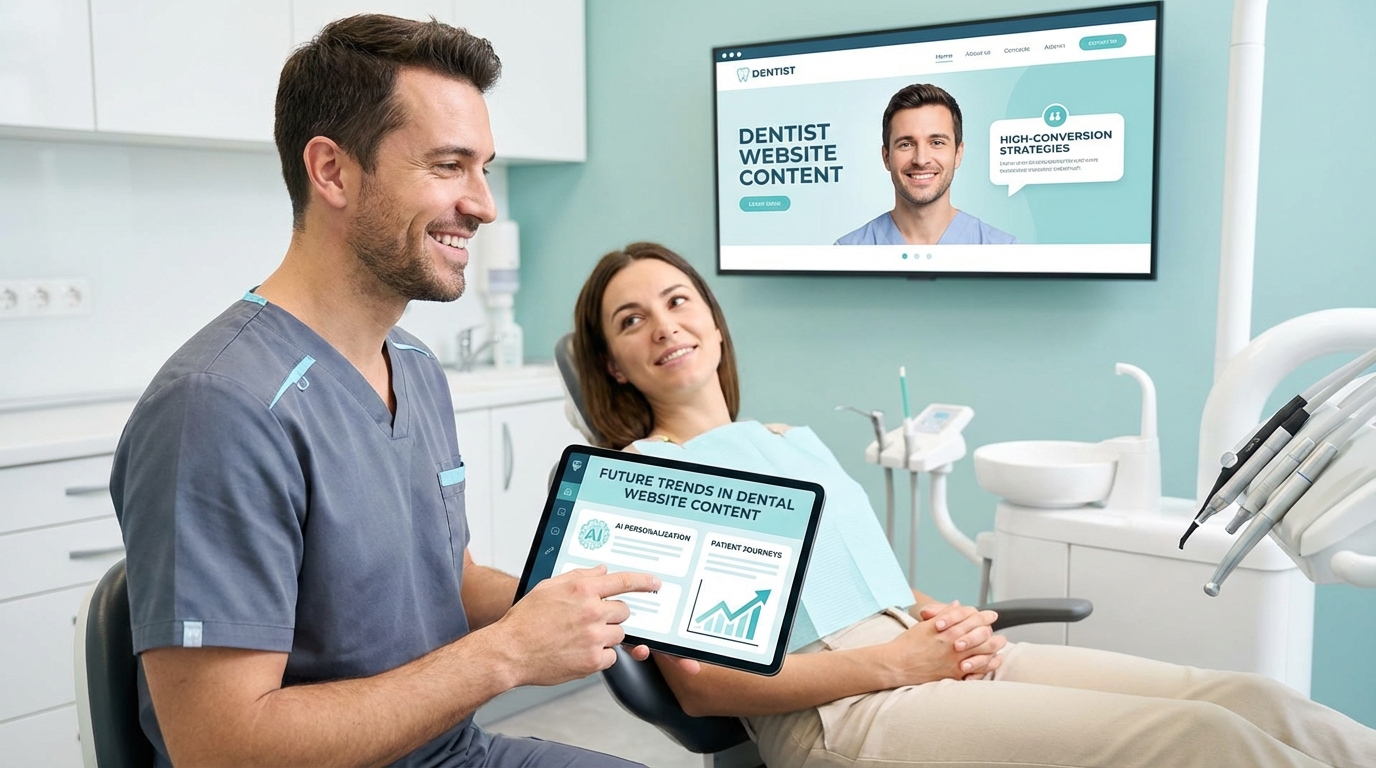
AI Personalisation of Patient Journeys
Advanced websites now adapt content based on visitor behaviour and demographics. AI-powered systems detect whether someone’s researching cosmetic treatments versus emergency care, then prioritise relevant information.
Chatbots answer initial questions 24/7, qualifying leads before human contact. Personalised treatment recommendations based on browsing patterns increase engagement. These technologies will become standard expectations within two years, making early adoption strategically valuable.
Video Content Dominance
Patients increasingly prefer video explanations over text. Treatment walkthroughs showing procedure steps reduce anxiety more effectively than written descriptions.
Virtual practice tours help nervous patients familiarise themselves with your environment before visiting. Dentist-to-camera explanations build personal connection and trust. Video content ranks prominently in search results and keeps visitors engaged longer.
Practices investing in professional video production now will lead local search results as Google prioritises rich media experiences.
Voice Search Optimisation
Smart speaker usage continues rising, changing how patients find dental services.
Voice queries use natural language: “Where can I get same-day emergency dental treatment near me?” rather than typed keywords. Content must answer conversational questions directly and concisely. Featured snippet optimisation becomes more important as voice assistants read these results aloud.
Structure content with clear question-and-answer formats. Include location-specific information that matches how people speak about areas rather than formal place names.
Strategic Recommendation: Dominate Dental stays ahead of these trends, integrating emerging technologies into client websites before they become industry standard. Our approach combines proven conversion strategies with forward-looking innovations, ensuring your practice maintains competitive advantage as patient expectations evolve.
Frequently Asked Questions
How does good website content help UK dentists get more patients?
Strategic dentist website content is designed to convert browsers into booked consultations. It achieves this by directly addressing patient concerns, clearly showcasing your treatment expertise, and building trust even before a patient makes their first call. Practices investing in optimized content often see a significant increase in qualified enquiries for high-value treatments.
What are common mistakes UK dental practices make with their online content?
Many UK dental practices struggle with generic content that fails to differentiate their services. Websites often feature vague treatment descriptions, lack patient testimonials, and omit clear pricing information. This ambiguity can drive potential patients to competitors who provide more transparent and detailed answers.
What elements make dentist website content truly effective for generating leads?
High-converting dentist website content follows a proven structure, starting with clear treatment benefits in the first paragraph. It includes GDC-compliant before-and-after visuals, transparent pricing brackets, and immediate booking options. Pages targeting specific treatments should quickly answer key patient questions, such as suitability or recovery timelines.
Why are dedicated treatment pages important for high-value services like Invisalign or implants?
Each high-value treatment deserves a dedicated page optimized for both patient questions and search visibility. For example, Invisalign pages should address suitability, duration, and payment options within the first 200 words, often with an Interactive Smile Gallery. This approach leads to significantly higher consultation booking rates compared to single-service pages.
How can a dentist's About and Team pages build patient trust?
Patients choose dentists they trust, not just practices with good locations. Your About page should tell your practice story through the lens of patient benefit, highlighting your commitment to patient care or advanced technology. Team pages need professional photography and individual bios, including GDC registration numbers, to build credibility and connection.
What are the GDC rules for dental website content in the UK?
The General Dental Council mandates that all website content must be accurate, verifiable, and avoid misleading claims. This means you cannot guarantee treatment outcomes or use unsubstantiated superlatives. Every clinical claim requires supporting documentation, and GDC registration numbers must be prominently displayed.
How does Dominate Dental help practices improve their website content?
At Dominate Dental, we combine data-driven keyword research with patient psychology to identify the exact questions ideal patients search for. Our bespoke dental website designs and content strategies answer these queries with authority, positioning your practice as the clear choice. We integrate features like DenGro Lead Capture and Interactive Smile Galleries to convert readers into active enquirers, as demonstrated by our case studies showing significant increases in enquiries and revenue.