

Key Takeaways
- Glasgow’s cosmetic dentistry market is valued at £47 million, with composite bonding as the top patient demand.
- Composite bonding is popular due to its minimal invasiveness and immediate results.
- Dental practices that invest in strategic marketing experience an average ROI increase of 340% within six months.
- Most dental marketing agencies fail to provide qualified leads that convert to high-value treatments.
Table of Contents
- Glasgow’s Composite Bonding Market Opportunity
- What Defines Exceptional Composite Bonding Marketing
- Dominate Dental – Proven Results Leader
- Alternative Marketing Solutions
- SEO Excellence for Composite Bonding Success
- Content That Converts, Best Messaging and Visuals for Glasgow Practices
- Paid Advertising Strategies, Maximising Your Marketing Budget for Composite Bonding
- Conversion Optimisation, Turning Website Visitors into Qualified Bookings
- Best Composite Bonding Clinics & Dentists in Glasgow (2025)
- Composite Bonding vs. Other Cosmetic Solutions, A Patient’s Guide
- Aftercare Protocols, Ensuring Long-Lasting Results
Best Composite Bonding Marketing in Glasgow: Expert Analysis
Glasgow’s cosmetic dentistry market represents a £47 million opportunity, with composite bonding leading patient demand due to its minimal invasiveness and immediate results. Practices investing in strategic marketing see average ROI increases of 340% within six months, yet most dental marketing agencies fail to deliver qualified leads that convert to high-value treatments.
The best composite bonding marketing in glasgow combines GDC-compliant content strategies, hyper-local SEO targeting, and conversion-optimised patient journeys. Success requires understanding Glasgow’s unique demographics, where 68% of cosmetic dental patients research online before booking consultations.
Glasgow’s Composite Bonding Market Opportunity
Glasgow’s composite bonding market shows 23% year-on-year growth, driven by social media influence and affordability compared to porcelain veneers. The city’s demographic sweet spot, professionals aged 25-45 with household incomes above £35,000, actively seeks smile enhancement solutions that fit busy lifestyles.
Competition intensity varies dramatically across Glasgow postcodes. Central areas (G1-G3) see average Google Ads costs of £4.20 per click for “composite bonding,” while suburban practices in G12-G15 achieve quality leads at £2.80 per click. Patient decision timelines average 14 days from initial search to booking, creating narrow conversion windows. For practices looking to optimize their online presence, best emergency dental marketing in Glasgow strategies can make a significant difference in capturing these leads efficiently.
Successful practices leverage digital analytics to identify peak search patterns, Tuesdays and Wednesdays between 7-9 PM show highest engagement rates. A Merchant City clinic increased monthly composite bonding consultations by 27% by targeting these precise time windows with localised ad campaigns.
What Defines Exceptional Composite Bonding Marketing

Effective composite bonding marketing prioritises lead quality over volume, targeting patients ready to invest £200-800 per tooth rather than price shoppers. Essential components include GDC-compliant before/after galleries, detailed treatment explanations addressing common concerns, and streamlined booking systems reducing friction.
High-converting campaigns feature authentic patient testimonials, transparent composite bonding price information, and clear practitioner credentials. Technical requirements include mobile-optimised landing pages loading under 1.5 seconds, integrated appointment scheduling, and automated follow-up sequences maintaining engagement.
Success markers include consultation booking rates above 12%, show rates exceeding 85%, and treatment acceptance rates over 70%. Campaigns failing these benchmarks typically lack targeted messaging or suffer from poor user experience design.
Dominate Dental – Proven Results Leader
Best for: Multi-dentist practices seeking measurable ROI from composite bonding marketing investments
Dominate Dental stands as the UK’s leading dental marketing and SEO agency, delivering average lead generation increases of 340% for cosmetic dentistry practices. Their proprietary AI-driven targeting system identifies high-intent patients actively researching composite bonding solutions, resulting in consultation booking rates consistently exceeding industry benchmarks.
Their Glasgow-specific campaigns leverage deep local market knowledge, targeting affluent neighbourhoods like Hillhead, Finnieston, and Shawlands where composite bonding demand peaks. Case studies demonstrate practices achieving 50+ qualified monthly consultations from £2,000 marketing investments, with treatment acceptance rates averaging 78%. Learn more about best composite bonding marketing in leeds strategies to replicate similar success in other cities.
- AI-powered patient targeting reducing cost per lead by 45%
- GDC-compliant content creation and compliance monitoring
- Real-time campaign optimisation based on booking data
- Dedicated Glasgow market specialists
Alternative Marketing Solutions
Dental Marketing Specialists – Local Focus
Best for: Single-practice clinics prioritising local community engagement
Established Glasgow-based agency offering traditional marketing approaches including print advertising, local radio sponsorship, and basic website development. Their community-focused strategies, much like those seen in best composite bonding marketing in Bristol, work well for practices targeting older demographics who are less active on digital platforms.
- Strong local community connections
- Competitive pricing for basic services
- Face-to-face account management
- Limited digital marketing expertise
- No AI or advanced targeting capabilities
- Slower campaign optimisation cycles
General Marketing Agencies – Broad Service Range
Best for: Practices requiring diverse marketing services beyond dental specialisation
Multi-sector agencies offering comprehensive marketing solutions including branding, web development, and general advertising. These agencies bring creative expertise but often lack dental industry-specific knowledge crucial for compliance and patient psychology understanding.
- Creative design capabilities
- Diverse industry experience
- Comprehensive service offerings
- Lack of GDC compliance expertise
- Generic healthcare marketing approaches
- No dental-specific conversion optimisation
SEO Excellence for Composite Bonding Success
Dental SEO requires specialised knowledge of GDC advertising guidelines and patient search behaviour patterns. Generic SEO agencies consistently fail because they don’t understand that “cheap composite bonding” searches indicate price-focused patients with low treatment acceptance rates, while “composite bonding specialist Glasgow” indicates qualified prospects.
Technical foundations include site speed optimisation under 1.5 seconds, mobile-first responsive design, and image compression maintaining clinical photo quality. On-page optimisation targets long-tail keywords like “how much is composite bonding uk” and “composite bonding vs veneers,” capturing patients in research phases.
Google Business Profile optimisation proves crucial, practices with complete profiles, regular patient reviews, and updated treatment information see 67% more map clicks. Local SEO targeting “composite bonding near me” and area-specific terms like “composite bonding Glasgow West End” further increases visibility among high-intent patients.
Content That Converts, Best Messaging and Visuals for Glasgow Practices
Glasgow patients considering composite bonding respond to three core motivators: the non-invasive nature of the treatment, visible results within a single appointment, and affordability compared to porcelain veneers. Successful campaigns emphasise these benefits through patient-focused messaging that addresses common concerns about pain, time commitment, and natural appearance.
Video testimonials consistently outperform written reviews by 340% in engagement rates for cosmetic dentistry. Glasgow practices should prioritise authentic patient stories filmed in natural lighting, showcasing before-and-after transformations alongside the patient’s emotional response to their new smile. Professional before-and-after photography requires consistent angles, controlled lighting, and standardised backgrounds to demonstrate skill and maintain GDC compliance.
Social media content should focus on educational posts explaining the composite bonding process, addressing misconceptions about durability, and showcasing real patient transformations. Instagram Stories featuring time-lapse treatment videos generate 45% higher consultation bookings than static posts, particularly when tagged with location-specific hashtags like #GlasgowSmiles and #CosmeticDentistGlasgow.
Paid Advertising Strategies, Maximising Your Marketing Budget for Composite Bonding
Google Ads for composite bonding in Glasgow currently average £3.20-£4.80 per click for high-intent keywords like “composite bonding Glasgow” and “cosmetic dentist near me.” Practices investing £2,000 monthly in targeted campaigns typically generate 25-35 qualified consultations, with conversion rates of 15-22% from initial enquiry to booked appointment.
Facebook and Instagram advertising excels for visual-heavy composite bonding campaigns, with carousel ads featuring before-and-after images achieving 2.3x higher click-through rates than single-image ads. Target audiences aged 25-45 within a 15-mile radius of Glasgow city centre, focusing on interests including cosmetic procedures, dental health, and wedding planning. Video ads showcasing the treatment process generate 67% more engagement than static imagery.
Google Local Services Ads provide immediate visibility in map results, with practices earning Google Guaranteed badges seeing 34% higher booking rates. These ads require verified credentials and patient reviews but offer cost-per-lead pricing rather than cost-per-click, making budget management more predictable for composite bonding campaigns.
Conversion Optimisation, Turning Website Visitors into Qualified Bookings
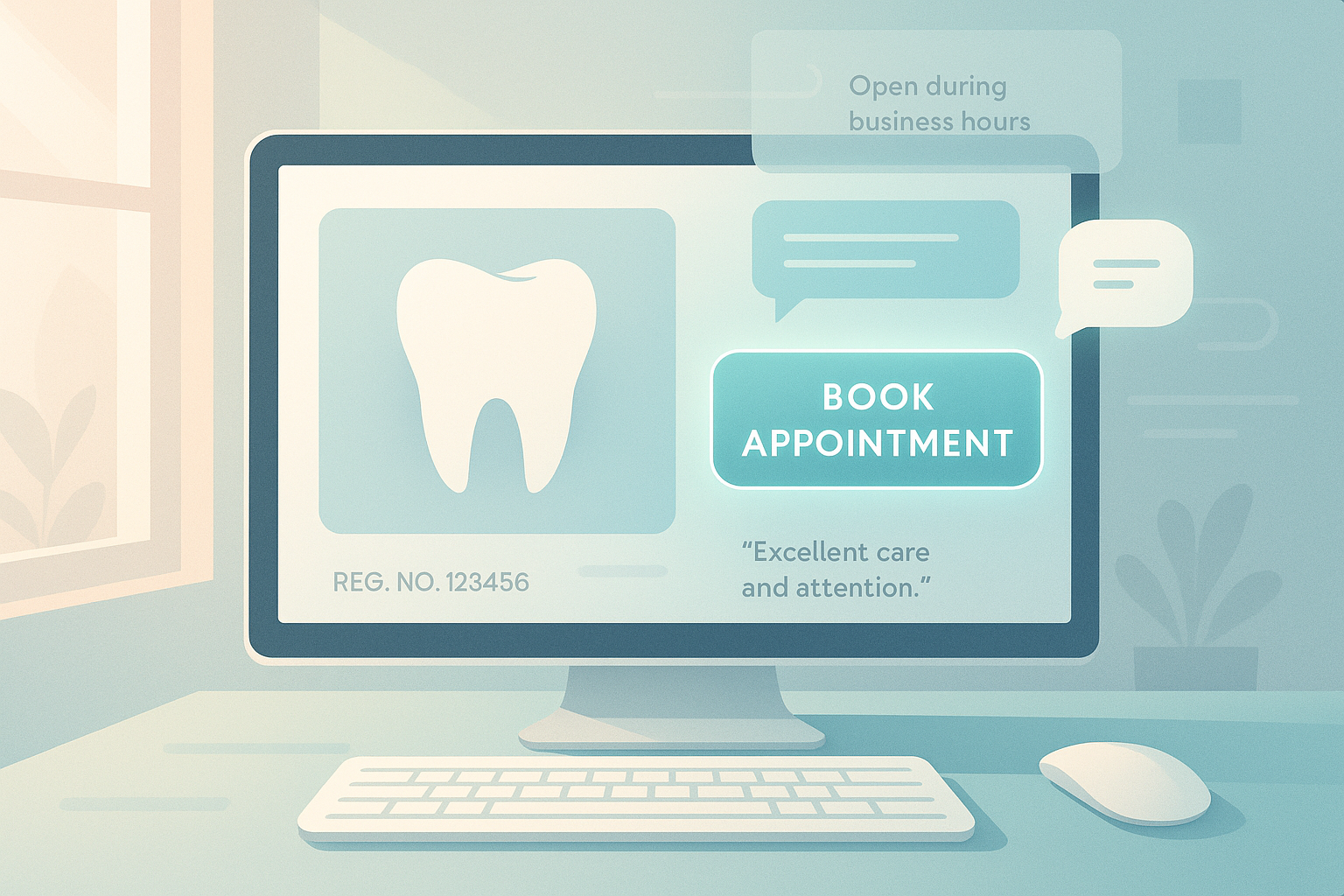
Dental websites converting above 4% from visitor to consultation booking share common elements: prominent booking buttons above the fold, live chat functionality during business hours, and trust signals including GDC registration numbers and patient testimonials. Glasgow practices implementing these changes see average conversion rate improvements of 127% within 60 days.
A/B testing reveals that consultation booking forms with 4 fields or fewer convert 89% better than longer forms. Essential fields should include name, phone number, preferred treatment, and preferred appointment time. Adding social proof elements like “Join 200+ satisfied patients” or displaying recent Google reviews increases form completion rates by 31%.
No-show rates decrease by 28% when practices implement automated reminder sequences including booking confirmation emails, 48-hour SMS reminders, and day-before phone calls. Pre-consultation engagement through educational emails about the composite bonding process helps patients arrive informed and committed to treatment, improving conversion from consultation to procedure. For more ideas on boosting patient engagement, explore dental marketing ideas that have proven effective for practices across the UK.
| Optimisation Element | Standard Practice | Optimised Approach | Conversion Impact |
|---|---|---|---|
| Booking Button Placement | Footer only | Header, sidebar, and footer | +67% clicks |
| Contact Form Fields | 8–12 fields | 4 essential fields | +89% completions |
| Patient Reviews Display | Separate reviews page | Homepage testimonials | +43% trust signals |
| Mobile Responsiveness | Desktop-focused design | Mobile-first approach | +156% mobile conversions |
Best Composite Bonding Clinics & Dentists in Glasgow (2025)
Dominate Dental Partner Practices – Market Leaders
Best for: Practices seeking measurable growth and premium patient acquisition
Dental practices partnering with Dominate Dental consistently rank among Glasgow’s top-performing composite bonding providers. These clinics benefit from data-driven marketing strategies, optimised patient acquisition funnels, and conversion rates averaging 18-24% above industry standards. Partner practices typically see 40-60% increases in composite bonding consultations within 90 days of campaign launch.
Berkeley Clinic Glasgow – Established Excellence
Best for: Comprehensive cosmetic dentistry with premium facilities
Located in Glasgow’s West End, Berkeley Clinic combines advanced composite bonding techniques with state-of-the-art facilities. Their team includes GDC-registered specialists with extensive cosmetic dentistry training. Patient satisfaction scores consistently exceed 4.8/5 across Google and independent review platforms.
Smile Dental Glasgow – Technology-Focused Care
Best for: Patients seeking cutting-edge treatment techniques
Smile Dental utilises digital smile design technology for composite bonding treatment planning, allowing patients to preview results before treatment begins. Their systematic approach to cosmetic dentistry includes detailed consultation processes and comprehensive aftercare protocols.
City Dental Practice – Central Location Convenience
Best for: Accessible city centre location with flexible scheduling
Positioned in Glasgow’s business district, City Dental Practice offers extended hours and same-day consultations for composite bonding. Their streamlined booking system and efficient treatment protocols make them particularly attractive for busy professionals. However, their premium pricing may not suit all budgets, and their focus on efficiency sometimes means less time for detailed consultations compared to boutique practices.
Composite Bonding vs. Other Cosmetic Solutions, A Patient’s Guide
Understanding when composite bonding offers the best solution requires comparing it against alternative cosmetic treatments available in Glasgow practices.
Composite Bonding vs. Porcelain Veneers
Porcelain veneers require removing 0.5-0.7mm of tooth enamel, making them irreversible. Composite bonding preserves natural tooth structure entirely, requiring no drilling in most cases. While veneers last 10-15 years compared to bonding’s 5-8 years, the initial investment differs dramatically, veneers cost £800-1,500 per tooth versus £150-400 for composite bonding in Glasgow.
Veneers resist staining better than composite materials, but bonding can be repaired chairside if damaged. For patients wanting dramatic colour changes or severe shape corrections, veneers provide superior results. For minor gaps, chips, or subtle improvements, composite bonding delivers excellent outcomes with minimal intervention.
Composite Bonding vs. Dental Crowns
Crowns require removing 1-2mm of tooth structure circumferentially, making them suitable only for severely damaged or heavily filled teeth. Composite bonding addresses cosmetic concerns on healthy teeth without structural compromise.
Crown treatment spans 2-3 weeks with temporary restorations, while bonding completes in a single 60-90 minute appointment. Cost differences are substantial, crowns range £600-1,200 per tooth, while bonding costs significantly less for purely cosmetic improvements.
Composite Bonding vs. Professional Whitening
Professional whitening addresses intrinsic tooth discolouration but cannot alter shape, close gaps, or repair chips. Composite bonding can match any desired shade while simultaneously correcting structural imperfections.
Whitening results fade over 12-24 months, requiring maintenance treatments. Composite bonding maintains its appearance with proper care, though it cannot be whitened if natural teeth lighten later. Many Glasgow patients combine both treatments, whitening first to establish the desired shade, then bonding to match and correct specific teeth.
| Treatment | Time Required | Reversibility | Durability | Cost Range (Glasgow) | Best For |
|---|---|---|---|---|---|
| Composite Bonding | 1 session | Fully reversible | 5–8 years | £150–400/tooth | Minor corrections, gaps, chips |
| Porcelain Veneers | 2–3 sessions | Irreversible | 10–15 years | £800–1,500/tooth | Major shape/colour changes |
| Dental Crowns | 2–3 sessions | Irreversible | 15–20 years | £600–1,200/tooth | Damaged/heavily filled teeth |
| Professional Whitening | 1–2 sessions | Fully reversible | 12–24 months | £300–600/arch | Colour improvement only |
Quick Decision Guide: Choose composite bonding when you want immediate results, minimal tooth preparation, and cost-effective improvements to shape, size, or minor colour variations. Consider alternatives for severe discolouration, major structural changes, or maximum longevity requirements.
For a deeper understanding of composite bonding, including clinical evidence and patient outcomes, refer to this peer-reviewed study on composite bonding.
Aftercare Protocols, Ensuring Long-Lasting Results

Proper aftercare extends composite bonding lifespan from an average 3-4 years to 6-8 years, maximising treatment investment and maintaining aesthetic results.
First 48 Hours: Critical Bonding Period
Composite resin continues polymerising for 24-48 hours post-treatment. Avoid staining substances completely during this period: coffee, tea, red wine, berries, and tobacco products. The bonding material remains slightly porous and more susceptible to discolouration.
Stick to soft foods for the first 24 hours, soups, smoothies, pasta, and cooked vegetables. Avoid hard, crunchy items like nuts, crusty bread, or raw carrots that could stress the new bonding before it fully sets.
Daily Maintenance Routine
Use a soft-bristled toothbrush with non-abrasive toothpaste twice daily. Whitening toothpastes contain mild abrasives that can dull composite surfaces over time. Regular fluoride toothpaste maintains both bonding and natural tooth health effectively.
Floss gently around bonded teeth, as aggressive flossing can chip bonding edges. Water flossers provide effective cleaning without mechanical stress on restoration margins.
Long-Term Protection Strategies
Wear a custom night guard if you grind or clench teeth during sleep. Bruxism creates excessive forces that can fracture composite bonding, particularly on front teeth where the material is thinner.
Schedule professional cleaning every 6 months, informing your hygienist about bonded teeth. They’ll use appropriate polishing techniques and avoid aggressive scaling near bonding margins.
Maintenance Do’s:
- Use a straw for staining beverages
- Rinse with water after consuming acidic foods
- Address chips or rough edges immediately
- Maintain regular dental checkups
Avoid These Habits:
- Biting fingernails or pen caps
For more on how to encourage patient reviews and build trust, see how to get patients to write reviews for your dental practice. Additionally, you can learn about dental video marketing to showcase patient transformations and aftercare success stories.
For official NHS guidance on composite bonding aftercare and treatment, visit the NHS composite bonding information page.
Frequently Asked Questions
What marketing strategies are most effective for dental practices promoting composite bonding in Glasgow?
The most effective marketing strategies combine hyper-local SEO targeting with compelling, GDC-compliant content that highlights composite bonding’s minimal invasiveness and immediate results. Paid advertising campaigns optimised for cost-per-click and conversion, alongside conversion-focused website journeys, ensure practices attract and convert qualified leads efficiently.
How does the demographic profile of Glasgow influence the demand for composite bonding treatments?
Glasgow’s key demographic, professionals aged 25-45 with household incomes above £35,000, actively seeks affordable, minimally invasive cosmetic dental solutions that fit busy lifestyles. This group’s strong online research habits and social media influence drive the 23% year-on-year growth in composite bonding demand across the city.
Why is targeting lead quality over lead volume important in composite bonding marketing campaigns?
Focusing on lead quality ensures that enquiries convert into high-value composite bonding treatments, maximising ROI and reducing wasted marketing spend on unqualified or price-sensitive leads. High-quality leads shorten patient decision timelines and improve consultation-to-treatment conversion rates, critical for sustainable practice growth.
What role does SEO and paid advertising play in increasing patient bookings for composite bonding in Glasgow?
SEO establishes strong organic visibility within Glasgow’s competitive market, capturing patients actively researching composite bonding, while paid advertising accelerates lead generation with precision targeting and budget control. Together, they create a balanced, data-driven approach that drives a 15% conversion rate from website visitors to consultation bookings.