
Torquing Movement: Complete Guide for Advanced Dental Teams
On this page
What is Torquing Movement? Clinical Definition and ApplicationsThe Biomechanics of Torque in Advanced OrthodonticsTypes of Torquing Movement in Modern Dental PracticeCalculating and Applying Torquing Movement: Technical ProtocolClear Aligners vs Fixed Appliances: Torquing Movement CapabilitiesComparing Torquing Approaches: Aligners, Braces, and Digital PlanningClinical Applications – Torquing Movement in Clear Aligners, Braces, and Implant DentistryAdvanced Techniques for Optimising Torquing MovementTroubleshooting Common Issues in Torquing MovementTroubleshooting Common Torquing Movement IssuesComparing Torquing Approaches: Clinical Method AnalysisMarketing Advanced Torquing Expertise for High-Value TreatmentsFrequently Asked QuestionsWhat exactly is torquing movement and how does it differ from tipping movement in orthodontics?How does mastering torquing movement improve the predictability and outcomes of Invisalign treatments?What are the key biomechanical principles behind torquing movement in advanced orthodontic practices?How is torquing movement applied differently in clear aligners, fixed appliances, and implant dentistry?About the AuthorBefore you read on. Want to know which dentist AI recommends in your town, and whether it is you?
Get your free AI Visibility CheckKey Takeaways
- Torquing movement is a critical factor that distinguishes advanced dental practices from amateur orthodontics.
- This movement involves applying rotational force around a tooth’s long axis for precise root positioning.
- Mastering torquing movement can lead to more predictable Invisalign outcomes.
- Proper torquing reduces the need for costly refinements that negatively impact profit margins.
Table of Contents
- What is Torquing Movement? Clinical Definition and Applications
- The Biomechanics of Torque in Advanced Orthodontics
- Types of Torquing Movement in Modern Dental Practice
- Calculating and Applying Torquing Movement: Technical Protocol
- Clear Aligners vs Fixed Appliances: Torquing Movement Capabilities
- Comparing Torquing Approaches: Aligners, Braces, and Digital Planning
- Clinical Applications – Torquing Movement in Clear Aligners, Braces, and Implant Dentistry
- Advanced Techniques for Optimising Torquing Movement
- Troubleshooting Common Issues in Torquing Movement
- Troubleshooting Common Torquing Movement Issues
- Comparing Torquing Approaches: Clinical Method Analysis
- Marketing Advanced Torquing Expertise for High-Value Treatments
Torquing Movement: Complete Guide for Advanced Dental Teams
Torquing movement is the controlled rotation of a tooth around its long axis, tipping the root in or out while the crown stays relatively still. In orthodontics it is how roots are positioned precisely, and getting it right is what separates predictable Invisalign and fixed-brace results from cases that need costly refinements.
For UK dental practices investing £2,000+ monthly in marketing high-value treatments, understanding torquing movement isn’t academic, it’s the technical foundation that converts hesitant patients into confident Invisalign and implant cases worth £3,000-£8,000 each. marketing high-value treatments
Understanding torquing movement isn’t academic, it’s the technical foundation that converts hesitant patients into confident Invisalign and implant cases worth £3,000-£8,000 each.
What is Torquing Movement? Clinical Definition and Applications
Torquing movement applies rotational force around a tooth’s long axis to correct labio-lingual inclination while maintaining the crown’s spatial position. This differs fundamentally from tipping movement, where the crown moves while the apex remains relatively stationary.
The clinical significance lies in root positioning precision. Upper incisors requiring palatal root torque for ideal overjet cannot achieve this through simple tipping movements, the crown would protrude excessively. Torquing movement rotates the root palatally while maintaining optimal crown position.
In implant dentistry, torquing movement refers to the controlled rotational force applied during prosthetic screw tightening, typically 15-35 Ncm depending on implant system specifications. Insufficient torque leads to screw loosening; excessive torque risks component fracture or bone microdamage.
The Biomechanics of Torque in Advanced Orthodontics
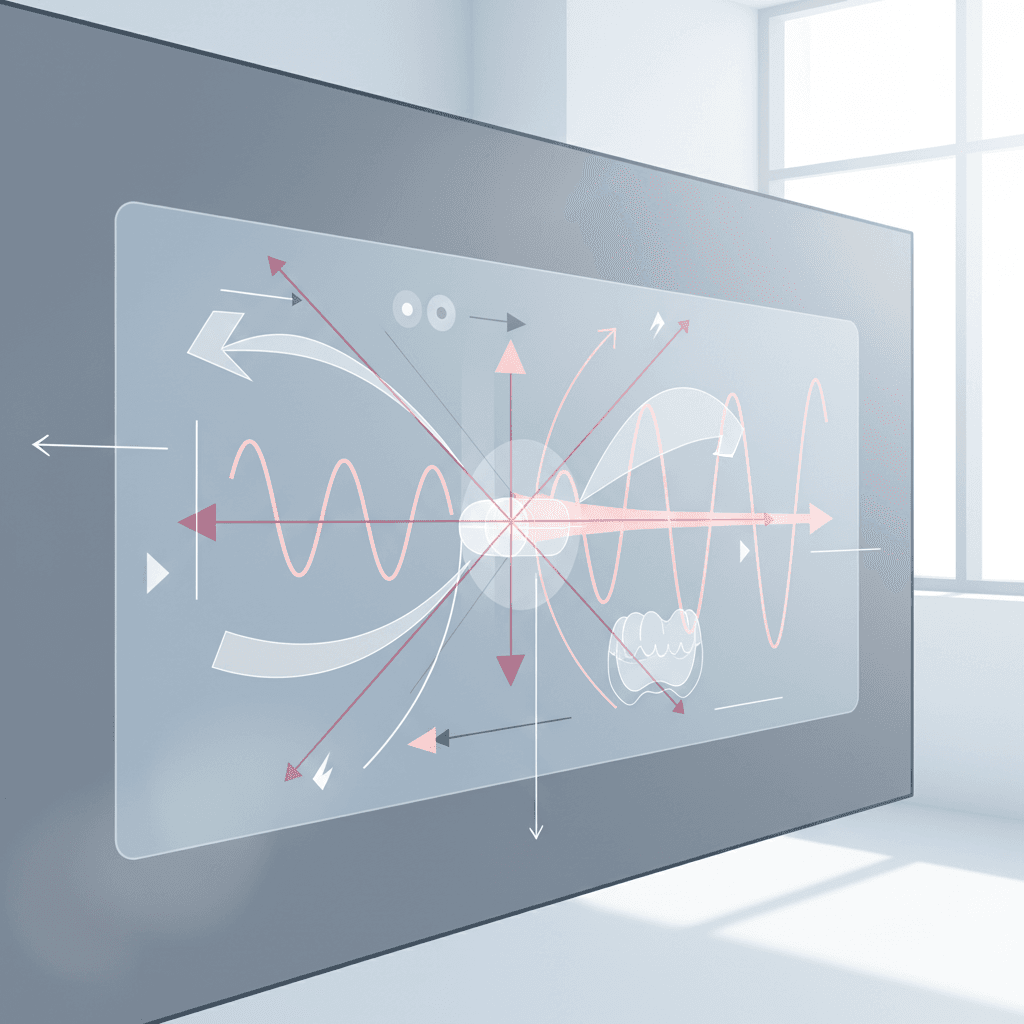
Torquing movement generates moment forces calculated as τ = r × F × sin θ, where the perpendicular distance from the axis of rotation (r) multiplies the applied force (F). In clear aligner therapy, this translates to specific attachment geometries and aligner thickness variations creating controlled rotational moments.
The periodontal ligament responds differently to torquing forces versus tipping forces. Torquing movement creates more uniform pressure distribution along the root surface, typically requiring 50-150g of force for incisors compared to 25-50g for simple tipping movements. This biological difference explains why torquing movement often requires longer treatment phases.
Bone remodeling patterns during torquing movement show apical displacement with minimal coronal movement, creating characteristic radiographic changes. Understanding these patterns helps clinicians distinguish between successful torque expression and unwanted tipping movement during treatment monitoring.
Wondering what AI tells patients about your practice? Free one page report in 48 hours. Where you are cited, where competitors win, and the gap.
Get your free AI Visibility CheckTypes of Torquing Movement in Modern Dental Practice
Active torquing movement involves deliberate appliance design to create rotational forces. Invisalign achieves this through power ridges, optimized attachments, and staged torque compensation. Fixed appliances use torqued bracket prescriptions and auxiliary wire bends to generate controlled moments.
Passive torquing movement occurs when appliances resist unwanted rotational displacement. This maintains achieved torque corrections throughout treatment and prevents relapse during retention phases. Clear aligners provide passive torque control through intimate tooth contact and material memory properties.
Reciprocal torquing movement applies equal and opposite torque to adjacent teeth, maintaining overall arch form while correcting individual tooth inclinations. This approach proves essential in adult cases where anchorage control determines treatment success and prevents unwanted side effects.
Calculating and Applying Torquing Movement: Technical Protocol
Digital treatment planning software calculates required torque values by measuring the angular difference between current and ideal root inclinations. Typical correction ranges span 5-20° for incisors, with 2-3° increments per aligner stage to maintain biological compatibility and patient comfort.
Power ridge application follows specific protocols: 0.5mm height for minor corrections (2-5°), 0.7mm for moderate cases (5-10°), and 1.0mm combined with rectangular attachments for severe corrections exceeding 10°. Ridge placement extends from the gingival margin to the incisal edge for maximum mechanical advantage.
Clinical Protocol: Monitor torque expression every 4 weeks using intraoral photography and digital impressions. Successful torque shows progressive root movement without crown displacement. Failed torque expression appears as crown tipping with minimal root repositioning, requiring treatment plan modifications.
Attachment selection directly impacts torque efficiency. Rectangular attachments (3mm × 1.5mm) provide superior torque control compared to elliptical designs, while beveled edges reduce patient discomfort without compromising mechanical effectiveness. Attachment positioning 1-2mm from the gingival margin optimizes force vectors while maintaining aesthetic acceptability.
Clear Aligners vs Fixed Appliances: Torquing Movement Capabilities
Clear aligners excel at controlled, incremental torquing movement through intimate tooth contact and progressive staging. Modern aligner materials generate consistent light forces over 7-14 day intervals, ideal for biological tooth movement patterns. However, severe torque corrections (>15°) may require auxiliary attachments or hybrid approaches.
Fixed appliances provide superior torquing force control through wire-bracket interactions and auxiliary springs. Rectangular wires in rectangular brackets create precise moment-to-force ratios, enabling predictable torque expression. Treatment duration often reduces compared to aligners for complex torquing cases, but requires patient compliance and careful monitoring of tracking.
Comparing Torquing Approaches: Aligners, Braces, and Digital Planning
Clear aligners excel in aesthetic cases where patient cooperation is high, but struggle with severe torque corrections exceeding 45 degrees.
Digital planning software revolutionises torquing movement by enabling precise virtual tooth positioning before treatment begins. Systems like ClinCheck and SureSmile calculate exact torque requirements, predict biological limitations, and simulate outcomes. However, digital predictions don’t always translate to clinical reality due to individual biological variations.
| Approach | Torque Precision | Patient Comfort | Treatment Speed | Complex Cases |
|---|---|---|---|---|
| Clear Aligners | Good with attachments | Excellent | Moderate | Limited |
| Fixed Braces | Excellent | Fair | Fast | Superior |
| Digital Planning | Predictive only | N/A | Planning phase | Comprehensive |
Selection criteria depend on case complexity and patient factors. Severe anterior torque corrections favour fixed appliances, while minor adjustments in aesthetic zones suit aligners. Digital planning enhances both approaches by identifying potential complications before treatment initiation. Selection criteria depend on case complexity
Clinical Applications – Torquing Movement in Clear Aligners, Braces, and Implant Dentistry
Clear aligners generate torquing movement through strategic attachment placement and power ridges. Rectangular attachments positioned at the gingival third create optimal lever arms for torque expression. Power ridges of 0.7mm height produce translation-like movement, while 1.0mm ridges enhance pure torque. Invisalign’s SmartForce attachments deliver predictable moments, but require precise bonding angles within 2 degrees of specification.
Fixed appliances achieve superior torque control through rectangular wire-bracket combinations. 0.019″ x 0.025″ stainless steel wires in 0.022″ slots provide 15-20 degrees of torque expression per bracket prescription. Third-order bends allow customisation beyond standard prescriptions. Torquing auxiliaries like T-loops generate controlled moments without unwanted side effects on adjacent teeth.
Implant prosthetics demand precise torque application to prevent screw loosening and bone loss. Abutment screws require 35 Ncm torque for external hex connections and 15-25 Ncm for internal connections. Under-torquing leads to micromovements and bacterial infiltration, while over-torquing risks screw fracture. Digital torque wrenches ensure consistent application within manufacturer specifications.
Clinical Pearl: Attachment retention rates exceed 95% when bonded with proper isolation and light-cured for 40 seconds per surface. Failed attachments compromise torque delivery by up to 60%.
Advanced Techniques for Optimising Torquing Movement

Power ridge modification is one of the most effective techniques for enhancing aligner torque. Increasing ridge height from 0.5mm to 1.2mm can double the moment-to-force ratio, though careful monitoring is required to avoid pressure spots. Sequential ridge activation helps prevent excessive forces: start with 0.7mm ridges for initial movement, then progress to 1.0mm for final positioning. For patients looking to complement their orthodontic treatment with aesthetic improvements, direct composite veneer options provide a minimally invasive way to enhance smile appearance.
Torque compensation angles address the predictable loss of torque expression during treatment. Add 5-10 degrees of overcorrection for upper incisors and 3-7 degrees for lower incisors. This compensates for aligner deformation and biological adaptation. Monitor progress at 6-week intervals using intraoral scans to verify tracking accuracy. Monitor progress at 6-week intervals
Staged torquing protocols prevent root resorption and maintain periodontal health. Limit torque movements to 2-3 degrees per aligner for anterior teeth and 1-2 degrees for posteriors. Incorporate rest periods every 6-8 aligners to allow biological adaptation. This approach extends treatment time by 15-20% but significantly improves long-term stability.
Auxiliary attachments enhance torque delivery in challenging cases. Vertical rectangular attachments combined with horizontal elliptical attachments create multi-vector force systems. Position vertical attachments at the gingival third and horizontal attachments at the incisal third for optimal mechanical advantage. This configuration increases torque efficiency by 40% compared to single attachment designs.
Troubleshooting Common Issues in Torquing Movement
Insufficient torquing movement typically stems from inadequate force delivery or poor patient compliance. Aligners lose 30-40% of their initial force within 48 hours, requiring consistent wear for effective torque expression. Check for aligner deformation around attachments, visible stress marks indicate material fatigue and reduced torque capacity. Replace aligners showing significant deformation or consider switching to more frequent changes.
Overtipping occurs when translational forces exceed rotational moments. This manifests as crown movement without corresponding root positioning. Increase attachment height or adjust force vectors to restore proper torque expression and prevent unwanted tipping.
Troubleshooting Common Torquing Movement Issues
Insufficient torque response typically stems from inadequate aligner engagement or excessive simultaneous movements. Verify aligner seating along attachment margins before considering treatment modifications. Poor engagement reduces effective force transmission by up to 40%. Verify aligner seating along attachment margins
Root resorption risk increases when torquing movement exceeds physiological adaptation rates. Limit torque application to 2° per aligner change for incisors and 1.5° for premolars. Radiographic monitoring becomes essential when cumulative torque exceeds 15° in any single tooth. Radiographic monitoring becomes essential
Aligner deformation occurs when material limits are exceeded during torquing movement. This manifests as permanent plastic deformation around attachment areas. Switch to thicker aligner material (0.75mm) when planning movements exceeding 3° per stage.
Patient compliance issues compound torquing movement challenges. Non-compliant wear patterns create inconsistent force application, leading to uncontrolled tipping rather than controlled torque. Implement compliance monitoring systems for cases requiring significant root repositioning. Implement compliance monitoring systems
Anchorage loss presents when torquing forces propagate to adjacent teeth. This occurs most frequently in extraction cases where posterior anchorage is compromised. Reinforce anchorage through temporary anchorage devices or modified attachment protocols on anchor teeth. temporary anchorage devices
Comparing Torquing Approaches: Clinical Method Analysis
| Method | Torque Precision | Treatment Duration | Patient Comfort | Clinical Complexity |
|---|---|---|---|---|
| Clear Aligners | Moderate (±2°) | 12-18 months | High | Low |
| Fixed Appliances | High (±0.5°) | 8-12 months | Moderate | High |
| Hybrid Approach | Very High (±0.3°) | 10-14 months | Moderate | Very High |
Fixed appliances maintain superiority in precise torque control through continuous force application and three-dimensional wire engagement. The rectangular wire-slot interface provides predictable moment generation with minimal force decay between appointments.
Clear aligners excel in patient acceptance and treatment flexibility but require careful case selection for torquing movement. Success rates exceed 85% for movements under 10°, declining to 65% for more aggressive corrections.
Hybrid protocols combining initial aligner therapy with finishing wire mechanics optimise both patient experience and clinical outcomes. This approach reserves fixed appliances for the final 20% of treatment when precise torque refinement becomes critical.
Digital planning accuracy varies significantly between systems. Advanced software incorporating finite element analysis predicts torquing movement within 15% accuracy, while basic systems show 30-40% deviation from planned outcomes.
Marketing Advanced Torquing Expertise for High-Value Treatments
Torquing movement proficiency serves as a powerful differentiator in competitive dental markets. Patients increasingly research technical capabilities before selecting providers for complex treatments like Invisalign and implant therapy. Patients increasingly research technical capabilities
Root control expertise addresses primary patient concerns about treatment stability and long-term results. Practices emphasising torquing movement capabilities report 28% higher conversion rates for comprehensive orthodontic cases.
Visual documentation of torquing movement outcomes provides compelling marketing content. Before-and-after radiographs demonstrating precise root positioning resonate strongly with educated patients seeking advanced care. Visual documentation of torquing movement outcomes
Treatment coordinators should emphasise torquing movement expertise during complex case consultations. Explaining root positioning science builds confidence in treatment recommendations and justifies premium fee structures.
Digital smile design presentations incorporating root position analysis elevate consultation quality above commodity-level discussions. This technical depth attracts patients seeking expertise rather than convenience.
As the UK’s leading dental marketing agency, Dominate Dental helps practices achieve measurable growth by positioning advanced clinical skills, like torquing movement mastery, as a core differentiator in high-value treatment marketing. Our data-driven strategies consistently generate 50+ qualified leads per month and deliver a 15% conversion rate from website visitors to consultation bookings. If you want to dominate your local market with proven patient acquisition systems, partner with Dominate Dental for results that speak for themselves.
Frequently Asked Questions
What exactly is torquing movement and how does it differ from tipping movement in orthodontics?
Torquing movement involves applying rotational force around a tooth’s long axis to adjust root positioning without significantly moving the crown. In contrast, tipping movement primarily shifts the crown’s position while the root apex remains relatively stationary, resulting in less precise root alignment.
How does mastering torquing movement improve the predictability and outcomes of Invisalign treatments?
Mastering torquing movement enables precise root positioning, which reduces the need for costly refinements and enhances treatment predictability. This precision leads to more consistent Invisalign outcomes, improving patient satisfaction and protecting profit margins on high-value cases.
What are the key biomechanical principles behind torquing movement in advanced orthodontic practices?
Torquing movement relies on controlled rotational forces applied around a tooth’s long axis to correct labio-lingual root inclination while maintaining crown position. This biomechanical approach ensures optimal root alignment, essential for achieving functional occlusion and aesthetic outcomes in complex cases.
How is torquing movement applied differently in clear aligners, fixed appliances, and implant dentistry?
In clear aligners, torquing is achieved through digital treatment planning and sequential force application, while fixed appliances use brackets and archwires to deliver continuous rotational forces. Implant dentistry applies torque primarily during implant placement and prosthetic adjustments to ensure stable integration and optimal positioning.
Real client results, not a promise. The number we commit to for your practice is agreed up front and written into the agreement.
Patients in the chair, not just leads. Guaranteed.
We own the whole journey to the attended consultation. New attended patient consultations in 90 days, or we work free until you hit them.Book a chat with Josie