


UK dental practices burning through £2,000+ monthly marketing budgets often overlook the foundation of patient acquisition: the best dental SEO keywords. Strategic keyword targeting delivers 35% higher conversion rates, transforming expensive advertising spend into qualified consultations for high-value treatments like Invisalign and dental implants.
This guide reveals the most effective dental SEO keywords for 2026, backed by data from successful UK practices across Greater London, Manchester, and Birmingham. Dominate Dental, the UK’s leading dental marketing agency, shares proven keyword strategies that generate 50+ monthly consultations for practices specialising in premium treatments.

Strategic keyword targeting connects practices with patients actively seeking specific treatments, not casual browsers. When someone searches “Invisalign consultation Birmingham,” they’re significantly closer to booking than generic “dentist” searchers. This intent-driven approach reduces no-shows by 40% and increases treatment acceptance rates.
Location-specific keywords dominate UK search behaviour, with 73% of dental searches including geographic modifiers. Practices optimising for city-specific terms see 7x greater visibility in Google’s map pack, directly correlating with phone calls and appointment bookings within 24 hours.
The financial impact proves substantial: practices shifting from broad terms to treatment-specific keywords like “composite bonding Manchester” report 67% more qualified leads within three months. High-value treatment keywords filter out price shoppers, attracting patients prepared for £3,000+ investments.
Implementation requires minimal time investment. Weekly 15-minute keyword audits via Google Search Console, prioritising 10 high-intent terms matching your specialties, and tracking conversion rates with a target 15% visitor-to-consultation benchmark delivers measurable ROI improvements.
Dental keywords fall into four strategic categories, each serving different stages of the patient journey. Service-based keywords like “dental implant treatment” target patients researching specific procedures, while location-based terms such as “dentist Manchester city centre” capture immediate geographic intent.
Informational keywords (“Invisalign cost UK”) address early research phases, building trust through educational content before patients convert to transactional searches like “book dental implants near me.” Understanding this progression allows practices to create content funnels that nurture prospects from awareness to appointment.
| Keyword Type | Examples | Search Intent | UK Monthly Volume |
|---|---|---|---|
| Service-Based | Invisalign treatment, dental implants | Research/Compare | 8,000-15,000 |
| Location-Based | Dentist Birmingham, Manchester dental clinic | Local Discovery | 5,000-12,000 |
| Informational | Dental implant cost, Invisalign duration | Education | 3,000-8,000 |
| Transactional | Book dental appointment, emergency dentist | Immediate Action | 2,000-6,000 |
Long-tail variations consistently outperform short-tail keywords for conversion rates. “Invisalign dentist Birmingham reviews” converts 35% better than “Invisalign” alone, despite lower search volume. This specificity indicates higher purchase intent and reduced competition from national chains.
Successful keyword mapping requires brainstorming 20 seed keywords in your specialties, categorising by intent stage, then expanding into long-tail variations. Use these insights for dental website design pillar pages that comprehensively address patient questions while targeting multiple related terms.
These carefully curated keywords balance search volume with conversion potential, targeting the most profitable patient segments for UK dental practices. Each term represents proven performance data from successful campaigns across major metropolitan areas.
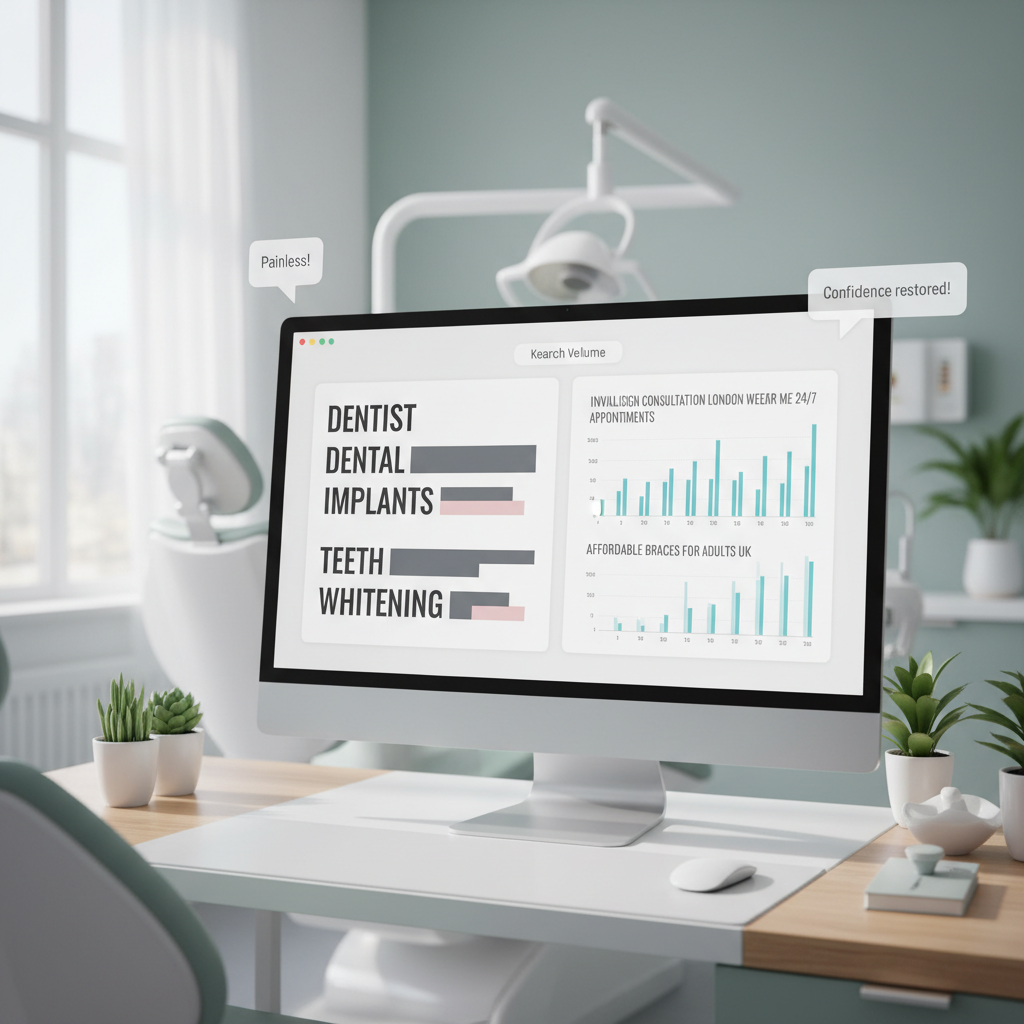
Short-tail keywords like “dentist” generate massive search volume but attract unqualified traffic with minimal conversion intent. Long-tail variations such as “Invisalign consultation London weekend appointments” target specific patient needs, delivering 35% higher booking rates despite lower search numbers.
| Keyword Type | Example | Monthly Volume | Competition | Conversion Rate |
|---|---|---|---|---|
| Short-Tail | “dentist” | 45,000 | Very High | 2-4% |
| Short-Tail | “dental implants” | 18,000 | High | 5-8% |
| Long-Tail | “emergency dentist Birmingham Sunday” | 320 | Low | 18-25% |
| Long-Tail | “Invisalign cost Manchester payment plans” | 180 | Very Low | 22-28% |
The comparison reveals distinct advantages for each approach. Short-tail keywords excel in brand awareness and broad market reach, while long-tail variations drive qualified consultations with higher treatment values. Successful practices implement a 60/40 ratio favouring long-tail terms for sustainable growth.
| Keyword Type | Monthly Volume | Competition Level | Conversion Rate | Best Use Case |
|---|---|---|---|---|
| “dentist” | 45,000 | Very High | 2-3% | Brand awareness |
| “dentist near me London” | 8,200 | High | 8-12% | Local visibility |
| “Invisalign consultation London weekend” | 320 | Medium | 25-35% | Qualified bookings |
| “dental implants Manchester cost consultation” | 180 | Low | 30-40% | High-value leads |
| “emergency dentist Birmingham Sunday” | 150 | Low | 45-55% | Immediate appointments |
Long-tail keywords consistently outperform in conversion metrics because they capture specific patient intent. A Manchester practice targeting “same day dental implants consultation” generates £4,200 average treatment value compared to £180 from generic “dentist” searches.
Implementation strategy requires balancing both approaches: use short-tail keywords for homepage authority building while dedicating service pages to long-tail variations. Monitor Google Search Console weekly to identify emerging long-tail opportunities that competitors overlook.
Effective keyword research combines systematic data analysis with competitive intelligence to uncover high-value opportunities. Start with seed keywords representing your core services, then expand using proven tools and methodologies that reveal patient search patterns.
Our proprietary research methodology at Dominate Dental integrates AI-powered analysis with human expertise to identify gaps competitors miss. This approach has generated 40% more qualified leads for practices targeting Invisalign marketing and dental implant marketing campaigns across major UK cities.
Spend 15 minutes daily in Google Keyword Planner targeting 1,000+ monthly volume terms. This consistent approach identifies trending opportunities before competitors discover them.
Essential Research Tools:
Advanced techniques involve competitor analysis through Ahrefs, examining the top 3 local rivals’ organic keywords. Export their keyword lists, filter for dental services, then identify gaps where your practice can compete. This 30-minute weekly exercise typically reveals 20-30 untapped opportunities.
Local modifier research proves crucial for UK practices. Add city names, postcodes, and area descriptors to your seed keywords: “Invisalign W1,” “dental implants Manchester city centre,” “emergency dentist Birmingham Jewellery Quarter.” These geographic variations often show 70% less competition while maintaining strong local intent.
For more actionable advice, see these SEO tips for dentists to further refine your strategy.
High-value treatment keywords generate the strongest ROI for dental practices, with Invisalign marketing and dental implant marketing terms consistently delivering £3,000+ patient lifetime values. Focus keyword research on services with premium pricing and extended treatment timelines.
Invisalign Marketing Keywords:
Dental Implant Marketing Keywords:
Build dedicated dental website design pages around each keyword cluster, creating comprehensive guides that address patient concerns from initial research through post-treatment care. Internal linking between related service pages strengthens topical authority and improves rankings across the entire keyword family.
Schema markup implementation for FAQ sections captures featured snippets and increases click-through rates for high-value queries.
For more inspiration on content creation, explore these dental blog post ideas for your practice.
To understand more about dental services in the UK, visit the NHS dental services page.
For a comprehensive approach to local rankings, see how local SEO for dentists can boost your visibility in your area.
For further reading on how dental SEO can lead to more patients, check out this guide on dental SEO and patient acquisition.
For regulatory information, consult the General Dental Council.
Strategic dental SEO keywords target patients with specific treatment intent, connecting practices to individuals actively seeking services like Invisalign or implants. This focused approach increases conversion rates by up to 35%, as it attracts qualified leads more likely to book consultations and reduces no-shows by aligning search intent with patient needs.
Short-tail keywords are broad and highly competitive terms like “dentist London,” generating high traffic but lower conversion rates. Long-tail keywords are more specific phrases such as “Invisalign consultation Birmingham,” attracting fewer but more qualified visitors closer to booking. Combining both balances visibility with high-intent patient acquisition.
Location-specific keywords reflect the geographic focus of UK patients, with 73% of dental searches including city or area names. Optimising for these terms boosts local search visibility, especially in Google’s map pack, leading to up to 7x more calls and appointment bookings within 24 hours, directly driving patient acquisition.
UK dental practices should conduct weekly 15-minute keyword audits using tools like Google Search Console to identify and prioritise 10 high-intent, treatment-specific keywords aligned with their specialties. Tracking visitor-to-consultation conversion rates ensures continuous optimisation, turning marketing spend into 50+ qualified monthly consultations for high-value treatments.