
The Complete Guide to Alternatives to basic review apps for dental practice SEO?
On this page
What is Alternatives to basic review apps for dental practice SEO??Benefits of Alternatives to basic review apps for dental practice SEO?How to Choose Alternatives to basic review apps for dental practice SEO?Essential checks before committingFrequently Asked QuestionsWhat should a dental practice use beyond a basic review collection app?How do reviews affect local search rankings for dentists?Which review platforms should dentists prioritise?What is the most cost-effective way to manage reviews?What should UK practices consider under GDC expectations?Before you read on. Want to know which dentist AI recommends in your town, and whether it is you?
Get your free AI Visibility Check
Alternatives to basic review apps for dental practice SEO?
For practices investing in Invisalign, implants and private dentistry, Alternatives to basic review apps for dental practice SEO? should be considered as part of a wider patient acquisition system, not just a request for feedback. A simple review tool may send an SMS after an appointment, but it often stops before review profile management, local search signals, response workflows, conversion tracking and treatment-led content are addressed.
Key Takeaways
- For practices investing in Invisalign , implants and private dentistry, Alternatives to basic review apps for dental practice SEO?
- should be considered as part of a wider patient acquisition system, not just a request for feedback.
- A simple review tool may send an SMS after an appointment, but it often stops before review profile management, local search signals, response workflows, conversion tracking and treatment-led content are addressed.
The stronger approach connects patient feedback with Google Business Profile activity, location pages, reputation management, enquiry handling and consultation booking data. That gives a dental practice a clearer view of which marketing activity generates qualified patients, rather than counting review volume alone. The linked Dominate Dental treatment-specific marketing service is relevant to treatment-specific marketing. It may be useful for dental teams considering how to measure marketing activity, not simply more online activity.
What is Alternatives to basic review apps for dental practice SEO??
Alternatives to basic review apps for dental practice SEO? are broader systems that help a practice generate authentic patient feedback, manage its reputation across relevant platforms, publish useful local content, monitor search visibility and turn positive sentiment into consultation enquiries. They can include review request automation, response support, customer relationship management, artificial intelligence chat, local SEO reporting and staff workflows for resolving negative experiences.
Reviews matter because they influence how prospective patients judge trust, relevance and service quality before making contact. Research from Yooooga identifies Google Reviews as the leading review platform for dental practices, with a strong relationship to local visibility. That does not mean asking every patient for a five-star rating. UK practices must invite genuine feedback, respond professionally and remain mindful of General Dental Council standards around communication, confidentiality and misleading claims. A credible system supports the whole process while keeping clinical judgement and patient consent at the centre.
Key insight: Review generation creates the raw material. Reputation management turns that material into useful evidence for patients, search engines and your front-of-house team.
Benefits of Alternatives to basic review apps for dental practice SEO?
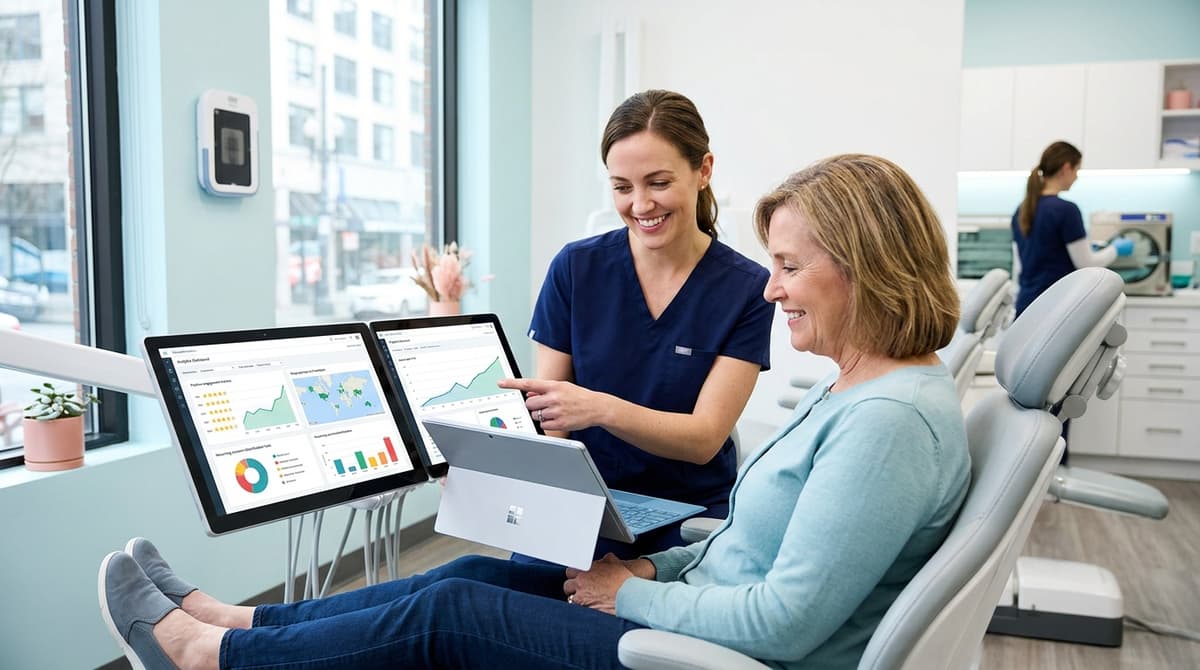
The main benefit is wider coverage. A practice can monitor Google feedback alongside other relevant profiles, identify recurring concerns and give the team a consistent process for replies. This matters for multi-dentist practices, where an inconsistent response or unanswered complaint can affect confidence across the whole practice rather than one clinician. Review themes can also inform service pages, frequently asked questions, before-and-after explanations and treatment coordinator scripts. Used responsibly, patient language reveals the concerns that prospective patients already have about cost, discomfort, appointment availability and outcomes.
Advanced systems also reduce administrative pressure. Automated requests can be timed after suitable appointments, while dashboards show invitation rates, response volume, sentiment, reply times and referral activity. Practices should assess available features and operating costs with each provider. Another source describes a review-generation service, though every provider claim should be checked against its current terms, data handling and contract conditions before purchase.
The commercial value comes from connecting reputation activity with patient acquisition. A review is not the final objective if the visitor cannot find a relevant treatment page, understand the next step or book a consultation. Treatment-specific marketing can connect search intent, landing page structure, enquiry capture and follow-up. For dental dynamos, that connection makes it easier to distinguish vanity metrics, such as total reviews, from meaningful indicators including consultation requests, attended appointments and private treatment revenue.
These systems can also provide a more efficient route for practices with limited budgets. A full platform containing review management, artificial intelligence chat, CRM functions and local SEO features is listed from $399 per month by Local Impact. The right investment depends on practice size, enquiry volume, staff capacity and existing software. A smaller clinic may need focused reputation workflows, while a larger London, Manchester or Birmingham practice may gain more from central reporting, call tracking, lead attribution and integration with its booking process.
Wondering what AI tells patients about your practice? Free one page report in 48 hours. Where you are cited, where competitors win, and the gap.
Get your free AI Visibility CheckHow to Choose Alternatives to basic review apps for dental practice SEO?
Choose a system by starting with the patient journey, not the feature list. The right solution should request genuine feedback after suitable appointments, direct patients towards the platforms that matter locally, monitor new reviews and give your team a clear process for responding. Google Reviews should usually receive priority because research from Yooooga identifies Google as the leading review platform for dental practices and links it closely with local search visibility. Check whether the system supports your Google Business Profile, multiple practice locations, clinician profiles and appropriate review invitations without pressuring patients to provide positive feedback.
Next, assess how well the platform connects reputation activity with acquisition data. A useful dashboard should show invitation delivery, review volume, response times, sentiment themes, website visits, telephone enquiries and consultation bookings. CRM integration, call tracking, booking software compatibility and source attribution help reveal whether reviews contribute to Invisalign, implant or general private dentistry enquiries. Without those connections, your team may see a growing review count but remain unable to identify which activity produces attended consultations and treatment acceptance.
Budget needs to be judged against workload and opportunity, rather than a monthly licence alone. A practice with one site may need automated invitations, review monitoring and response prompts. A multi-dentist group may require permissions, location-level reporting, artificial intelligence assistance, patient data controls and central oversight. Research from The Stacc lists automated review requests and artificial intelligence responses from $299 per month, while Local Impact reports full bundles containing reviews, chat, CRM and local SEO from $399 per month. Treat these figures as market references, then confirm current pricing, implementation fees, user limits and contract terms.
Essential checks before committing
Pros
- Automated, permission-based review invitations reduce front-of-house administration.
- Review monitoring supports faster, more consistent responses across locations.
- CRM and call tracking connect reputation work with consultation enquiries.
- Review themes can inform local landing pages, treatment content and staff training.
Cons
- Advanced features can exceed the needs of a smaller practice.
- Automation still requires human oversight and careful message approval.
- Migration may involve data mapping, staff training and workflow changes.
- Review software cannot correct weak service delivery or poor enquiry handling.
Compliance should form part of the buying decision. Ask where patient information is stored, how consent is recorded and whether staff can prevent confidential clinical details from appearing in public replies. Responses should remain factual, courteous and consistent with General Dental Council expectations. The linked Dominate Dental treatment-specific marketing service can be considered alongside other marketing options. Practices considering treatment-led marketing should ensure that review workflows, website content and treatment coordinator follow-up are managed as one commercial process.
Frequently Asked Questions
What should a dental practice use beyond a basic review collection app?
A broader reputation management system can combine review invitations, Google Business Profile monitoring, response workflows, local SEO reporting, enquiry tracking and CRM connections. This gives the practice a clearer process from patient feedback through to consultation booking. The right setup depends on your location count, appointment volume, staff capacity and treatment focus. A simple system may suit one surgery, while a larger private practice may need central reporting and role-based access.
How do reviews affect local search rankings for dentists?
Reviews contribute to the trust and relevance signals that patients and search engines assess when local dental services appear in search results. Google Reviews are widely regarded as the priority platform for dental practices, according to Yooooga’s review platform research. Review quantity alone is not a guarantee of visibility. Recency, authenticity, patient sentiment, profile completeness, local relevance and the quality of your website content also matter.
Which review platforms should dentists prioritise?
Start with Google Business Profile because it is closely connected to local discovery and map visibility. Then review the platforms that prospective patients in your area actually use, taking account of your practice location, specialty and patient demographics. Keep profiles accurate, use consistent contact details and respond without revealing confidential information. A focused presence on relevant platforms is more useful than spreading staff effort across profiles that receive little attention.
What is the most cost-effective way to manage reviews?
Begin with a documented workflow: request genuine feedback at an appropriate stage, monitor new reviews, assign response responsibility and record recurring patient concerns. Automation can reduce administration, but staff approval remains necessary for sensitive replies. Assess monthly cost against response time saved, consultation enquiries, attended appointments and treatment acceptance, rather than review totals alone. Also check data processing, consent records, integrations and cancellation terms before signing.
What should UK practices consider under GDC expectations?
Review requests must not pressure patients into positive feedback, and public responses should protect confidentiality. Avoid discussing identifiable clinical details, promising outcomes or making claims that cannot be supported. Ask your compliance adviser to review invitation wording and response templates, particularly for complaints or clinical concerns. Reputation software supports communication, but it does not replace professional judgement or a suitable complaints process.
Real client results, not a promise. The number we commit to for your practice is agreed up front and written into the agreement.
Patients in the chair, not just leads. Guaranteed.
We own the whole journey to the attended consultation. New attended patient consultations in 90 days, or we work free until you hit them.Book a chat with Josie