
Apnea Appliance: UK Dental Practice Guide 2026 – Dominate Dental
On this page
What is an Apnea Appliance? Understanding the BasicsWhy Oral Appliances? Clinical & Business Impact for UK Dental TeamsTypes of Apnea Appliances: Options, Innovations & Brands in the UKOral Appliance Therapy vs. CPAP vs. Surgery: Evidence-Based ComparisonBest Option For…Getting Fitted: Clinical Workflow and Patient Experience in the UKMaintenance, Adjustments & Patient Adherence: Maximising Long-Term OutcomesTop 5 Tips To Boost Appliance Success RatesTroubleshooting & Side Effects: Addressing Patient Concerns ProactivelyInsurance, Pricing & NHS vs. Private Pathways for Apnea Appliances in the UKFrequently Asked QuestionsWhat are the key benefits of offering apnea appliances in a UK dental practice?How do oral appliance therapy, CPAP, and surgery compare in treating sleep apnea?What is the typical clinical workflow for fitting and maintaining apnea appliances in the UK?How can dental practices effectively identify and screen patients who may benefit from apnea appliances?About the AuthorBefore you read on. Want to know which dentist AI recommends in your town, and whether it is you?
Get your free AI Visibility CheckKey Takeaways
- Sleep apnea affects over 1.5 million adults in the UK, with 85% remaining undiagnosed.
- Dental practices offering apnea appliance solutions can tap into a significant unmet patient need.
- Custom oral devices for sleep apnea generate average case values between £1,200 and £3,500 in major UK cities.
- Incorporating apnea appliances positions sleep dentistry as a high-value service.
- Providing apnea appliance treatments benefits both patient health and practice revenue.
Table of Contents
- What is an Apnea Appliance? Understanding the Basics
- Why Oral Appliances? Clinical & Business Impact for UK Dental Teams
- Types of Apnea Appliances: Options, Innovations & Brands in the UK
- Oral Appliance Therapy vs. CPAP vs. Surgery: Evidence-Based Comparison
- Getting Fitted: Clinical Workflow and Patient Experience in the UK
- Maintenance, Adjustments & Patient Adherence: Maximising Long-Term Outcomes
- Troubleshooting & Side Effects: Addressing Patient Concerns Proactively
- Insurance, Pricing & NHS vs. Private Pathways for Apnea Appliances in the UK
Apnea Appliance: Advanced Solutions for Sleep Apnea in UK Dentistry
Sleep apnea affects over 1.5 million UK adults, yet 85% remain undiagnosed, creating a massive opportunity for dental practices offering apnea appliance solutions. These custom oral devices generate average case values of £1,200-£3,500 across major UK cities, positioning sleep dentistry as a high-value service that transforms both patient health and practice revenue. Dental practices offering apnea appliance solutions can tap into a significant unmet patient need by leveraging targeted marketing strategies.
UK dental practices integrating apnea appliance services report 40% higher treatment acceptance rates and significantly improved patient retention, as these devices address a critical health need while establishing long-term care relationships. Integrating apnea appliance services into your dental practice can also enhance your clinic’s visibility and patient acquisition.
What is an Apnea Appliance? Understanding the Basics
Why Oral Appliances? Clinical & Business Impact for UK Dental Teams
Sleep apnea represents an untapped £2.8 billion private healthcare market in the UK, with prevalence rates of 13% in men and 6% in women aged 30-70. Current diagnosis rates sit at just 15%, leaving 1.3 million potential patients seeking solutions outside traditional sleep clinics. Dental practices positioned in this space capture high-value cases with minimal competition. Dental practices positioned in this space can further benefit from strategic marketing in dentistry to reach these patients.
Private apnea appliance cases generate substantial ROI: London practices report average case values of £2,800, Manchester £2,200, and Birmingham £1,900. Treatment acceptance rates exceed 78% when properly presented, with 92% of patients completing treatment, significantly higher than complex restorative cases.
| UK City | Average Case Value | Typical Consultation Fee | Follow-up Revenue (Annual) |
|---|---|---|---|
| London | £2,800 | £150 | £280 |
| Manchester | £2,200 | £120 | £220 |
| Birmingham | £1,900 | £110 | £190 |
Three immediate implementation strategies maximise success: First, integrate OSA screening into routine examinations using the STOP-Bang questionnaire, patients scoring 3+ warrant further evaluation. Second, identify candidate patients through visual indicators: scalloped tongue edges, worn teeth, enlarged tonsils, and narrow airways. Third, position consultations alongside high-value treatments like Invisalign, as both address functional concerns with custom appliances.
Wondering what AI tells patients about your practice? Free one page report in 48 hours. Where you are cited, where competitors win, and the gap.
Get your free AI Visibility CheckTypes of Apnea Appliances: Options, Innovations & Brands in the UK
Mandibular Advancement Devices (MADs) dominate UK practice applications, representing 85% of prescribed sleep appliances. Leading brands include SomnoDent (continuous adjustment, 5-year warranty), ProSomnus EVO (precision milling, 95% patient acceptance), and Herbst Advance (dual-mechanism design). These devices offer 0.1mm adjustment precision and typically last 3-5 years with proper maintenance.
Tongue-Retaining Devices (TRDs) serve patients unsuitable for MADs due to insufficient teeth or TMJ concerns. The AveoTSD utilises suction to hold the tongue forward, eliminating dental anchorage requirements. Clinical success rates reach 68% in mild-moderate OSA, though patient adaptation periods extend 2-3 weeks longer than MADs.
| Device Type | Mechanism | Success Rate | Ideal Candidates | Average Lifespan | |||||||||||||||||||||||||||||||||||||||||||||||||||||||||||||||||||||||||||||||||||||||||||||
|---|---|---|---|---|---|---|---|---|---|---|---|---|---|---|---|---|---|---|---|---|---|---|---|---|---|---|---|---|---|---|---|---|---|---|---|---|---|---|---|---|---|---|---|---|---|---|---|---|---|---|---|---|---|---|---|---|---|---|---|---|---|---|---|---|---|---|---|---|---|---|---|---|---|---|---|---|---|---|---|---|---|---|---|---|---|---|---|---|---|---|---|---|---|---|---|---|---|
| SomnoDent MAD | Mandibular advancement | 89% (mild-moderate OSA) | Good dentition, no TMJ | 5 years | |||||||||||||||||||||||||||||||||||||||||||||||||||||||||||||||||||||||||||||||||||||||||||||
| ProSomnus EVO | Precision jaw positioning | 91% patient tolerance | Complex cases, bruxers | 4-5 years |
| Device Type | Mechanism | Best For | Adjustment Method | Average Lifespan |
|---|---|---|---|---|
| SomnoDent (MAD) | Mandibular advancement | Mild-moderate OSA | Continuous titration | 5 years |
| ProSomnus EVO | Precision jaw positioning | High compliance needs | Digital calibration | 4-5 years |
| AveoTSD (TRD) | Tongue suction retention | Limited dentition | Single size | 12-18 months |
| Herbst Advance | Dual-mechanism MAD | Severe bruxism patients | Incremental advancement | 3-4 years |
Tongue muscle stimulation devices like the eXciteOSA represent emerging technology, requiring 20 minutes daily use for 6 weeks to strengthen genioglossus muscles. UK regulatory approval through MHRA allows private prescription, though clinical adoption remains limited pending long-term efficacy data. Success rates of 41% AHI reduction show promise for mild OSA cases. For more on the clinical evidence supporting oral appliances, see this comprehensive review of oral appliance therapy.
Oral Appliance Therapy vs. CPAP vs. Surgery: Evidence-Based Comparison
Clinical effectiveness varies significantly by OSA severity: oral appliances achieve 68% success rates (AHI reduction >50%) in mild OSA, 52% in moderate cases, while CPAP maintains 85%+ efficacy across all severities. However, real-world outcomes favour appliances due to superior compliance, UK studies report 85% nightly use vs. 65% for CPAP therapy.
| Treatment | Mild OSA Success | Patient Compliance | Average UK Cost | Portability | Side Effects |
|---|---|---|---|---|---|
| Oral Appliance | 68% effective | 85% nightly use | £1,200-£3,500 | Excellent | Jaw discomfort, bite changes |
| CPAP | 85%+ effective | 65% nightly use | £400-£1,200 | Poor | Mask irritation, claustrophobia |
| Surgery (UPPP) | 60% effective | N/A (permanent) | £8,000-£15,000 | N/A | Pain, infection risk |
Patient selection criteria determine optimal outcomes: Mrs Smith, 52, with mild OSA (AHI 12) and frequent business travel benefits from a custom MAD offering portability and silent operation. Conversely, Mr Jones, 45, with severe OSA (AHI 38) requires CPAP therapy initially, potentially transitioning to combination therapy after weight loss.
Best Option For…
Oral Appliance: Mild-moderate OSA, CPAP intolerant, frequent travellers, claustrophobic patients
CPAP: Severe OSA, central sleep apnea, immediate maximum efficacy required
Surgery: Anatomical obstruction, failed conservative treatments, young patients
Getting Fitted: Clinical Workflow and Patient Experience in the UK
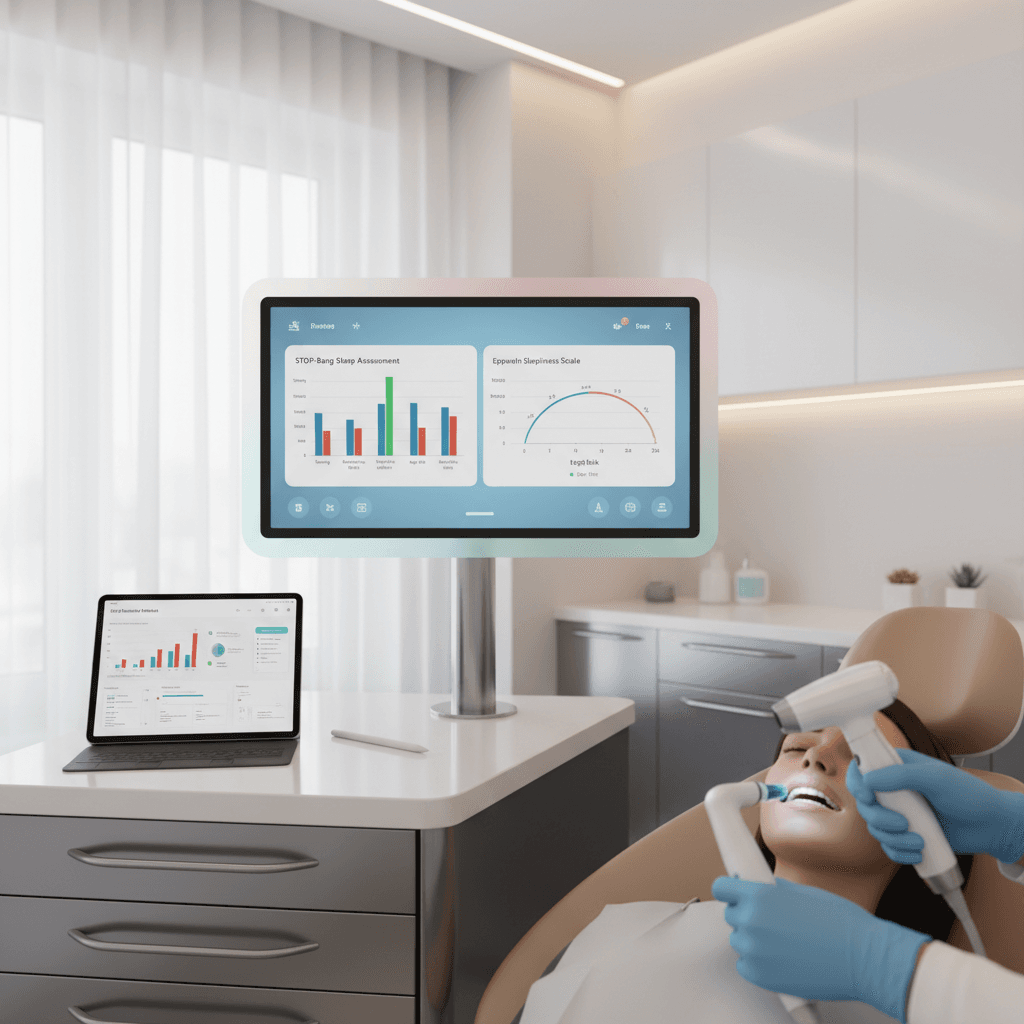
The UK fitting process spans 2-4 weeks across six defined stages: Initial consultation includes STOP-Bang screening and Epworth Sleepiness Scale assessment, followed by referral for sleep study or home sleep apnea testing. Digital impressions using intraoral scanners improve accuracy by 23% compared to traditional moulds, enabling precise appliance fabrication at specialist UK laboratories. Enabling precise appliance fabrication can be further supported by a robust dental marketing plan to educate patients about advanced technology.
Manufacturing requires 7-10 working days for custom MADs, with chairside adjustments scheduled at fitting appointments. Initial appliance delivery involves bite registration verification, comfort assessment, and titration protocol explanation, advancing 0.5mm every 3-7 days until symptom resolution or maximum therapeutic position.
Follow-up scheduling optimises outcomes: 2-week comfort check, 6-week efficacy assessment, and 3-month objective sleep study validation. Treatment coordinators manage appointment sequences while principal dentists handle clinical adjustments and patient education regarding realistic adaptation timelines.
Practice workflow efficiency is critical for patient satisfaction and business growth. For actionable ideas on improving your dental practice’s outreach, explore these dental marketing ideas.
Maintenance, Adjustments & Patient Adherence: Maximising Long-Term Outcomes
Proper maintenance extends apnea appliance lifespan to 3-5 years while preventing bacterial buildup that compromises oral health. Daily cleaning requires gentle brushing with non-abrasive toothpaste and lukewarm water, followed by weekly soaking in denture cleaning tablets. Store devices in ventilated cases to prevent moisture retention, and inspect monthly for cracks, loose screws, or worn adjustment mechanisms that signal replacement needs. For NHS guidance on oral appliance care, see this patient information leaflet on mandibular advancement appliances.
Titration protocols vary by device type but follow systematic advancement patterns. MADs typically advance 0.25-0.5mm every 3-7 days until optimal jaw positioning eliminates snoring without causing TMJ discomfort. Maximum safe advancement ranges from 6-10mm depending on individual anatomy. Patients experiencing persistent jaw pain beyond 10 days, tooth mobility, or bite changes require immediate clinical review and potential appliance modification.
Top 5 Tips To Boost Appliance Success Rates
- Implement graduated wear schedules: 2-4 hours nightly for week one, increasing by 2 hours weekly
- Provide jaw exercise protocols to reduce morning stiffness and improve adaptation
- Schedule mandatory 2-week and 6-week follow-ups to address early compliance barriers
- Utilise smartphone apps for sleep quality tracking and adherence monitoring
- Establish clear emergency contact protocols for urgent adjustment needs
Modern compliance monitoring integrates Bluetooth sensors tracking wear time and jaw positioning accuracy. Studies demonstrate 23% higher adherence rates when patients receive weekly progress reports compared to traditional follow-up schedules. Digital platforms enable remote titration guidance and early intervention for emerging comfort issues. For more on how digital tools can help attract and retain patients, read about SEO for dentists and its impact on patient engagement.
Troubleshooting & Side Effects: Addressing Patient Concerns Proactively
Initial adaptation involves predictable side effects affecting 60-80% of users during the first month. Jaw muscle soreness peaks at days 3-7 before gradually subsiding as neuromuscular adaptation occurs. Excessive salivation affects 45% of patients initially but typically resolves within 2-3 weeks through reduced appliance contact with tongue surfaces.
| Side Effect | Frequency | Duration | Management Protocol |
|---|---|---|---|
| Jaw muscle discomfort | 75% of users | 7-14 days | Reduce advancement by 1mm, jaw exercises, warm compress |
| Excessive salivation | 45% of users | 2-3 weeks | Gradual wear increase, tongue positioning exercises |
| Dry mouth | 30% of users | Ongoing | Humidifier use, saliva substitutes, hydration protocols |
| Tooth sensitivity | 25% of users | 1-2 weeks | Pressure point adjustment, desensitising toothpaste |
| Morning bite changes | 20% of users | 30-60 minutes | Morning jaw exercises, bite registration review |
Escalation criteria include persistent pain beyond 14 days, tooth mobility, significant bite alterations lasting over 2 hours morning, or appliance breakage. These situations require immediate dental evaluation and potential referral to sleep medicine specialists for alternative therapy consideration. Emergency protocols should include after-hours contact information and interim management instructions. For more tips on engaging patients and encouraging feedback, see how to get patients to write reviews.
Insurance, Pricing & NHS vs. Private Pathways for Apnea Appliances in the UK
NHS provision of oral appliances remains limited to severe OSA cases where CPAP therapy has failed or proven unsuitable, following strict clinical commissioning group criteria. Private treatment dominates the UK market, with custom MADs ranging from £800-2,500 depending on geographic location and device complexity. London practices typically charge £1,500-2,500, while regional centres average £800-1,500 for equivalent appliances. Private treatment dominates the UK market and can benefit from effective dental practice SEO to reach more patients.
| City | Basic MAD Cost | Premium Device Cost | Average Consultation Fee |
|---|---|---|---|
| London | £1,200-1,800 | £2,000-2,500 | £150-250 |
| Manchester | £900-1,400 | £1,600-2,000 | £100-180 |
| Birmingham | £850-1,300 | £1,500-1,900 | £90-160 |
| Edinburgh | £950-1,450 | £1,700-2,100 | £110-190 |
Private medical insurance coverage varies significantly between providers, with
Frequently Asked Questions
What are the key benefits of offering apnea appliances in a UK dental practice?
Offering apnea appliances allows UK dental practices to address a significant unmet patient need, tapping into a £2.8 billion private healthcare market. These custom devices generate high-value cases averaging £1,200 to £3,500, improve patient retention through long-term care relationships, and enhance practice revenue while positioning the clinic as a leader in sleep dentistry.
How do oral appliance therapy, CPAP, and surgery compare in treating sleep apnea?
Oral appliance therapy offers a non-invasive, custom-fitted solution that improves airway patency and is often preferred for mild to moderate cases due to comfort and compliance. CPAP remains the gold standard for severe cases but faces adherence challenges, while surgery is typically reserved for specific anatomical issues. Dental practices can leverage oral appliances as an effective, patient-friendly alternative within a comprehensive treatment pathway.
What is the typical clinical workflow for fitting and maintaining apnea appliances in the UK?
The clinical workflow begins with patient screening and diagnosis, followed by custom impressions and device fabrication. After fitting, dentists provide adjustments and follow-up appointments to optimise comfort and efficacy. Ongoing maintenance and patient adherence monitoring are essential to maximise long-term outcomes and ensure sustained treatment success.
How can dental practices effectively identify and screen patients who may benefit from apnea appliances?
Practices can implement targeted screening protocols using validated questionnaires and patient history during routine exams to identify sleep apnea risk factors. Integrating digital tools and AI-driven assessments enhances accuracy, while educating staff to recognise symptoms ensures timely referrals for diagnosis and appliance fitting, ultimately increasing qualified consultation bookings.
Real client results, not a promise. The number we commit to for your practice is agreed up front and written into the agreement.
Patients in the chair, not just leads. Guaranteed.
We own the whole journey to the attended consultation. New attended patient consultations in 90 days, or we work free until you hit them.Book a chat with Josie