
Appointment Card Tips 2026: Proven Ways to Boost Dental Revenue Fast
On this page
What Are Appointment Cards? Strategic Definition & ValueThe Patient Pathway Impact, Why Appointment Cards Matter for RevenueDesign and Branding, Building Trust Through Professional Appointment CardsCard Size & Format SelectionDesign Elements That ConvertTemplates & ThemesPrinting, Materials & Technology, Elevating Patient ExperiencePrinting Options & TurnaroundMaterial and Stock SelectionPrinting Services ComparisonAdvanced Clinic Integration, Label Printers, Digital Cards & AutomationUsing Appointment Cards with Label PrintersIntegrating with Practice Management Software (PMS)Future-Proofing, AI, Mobile, and SMS/Email SynergyCommon Problems & Solutions, Reducing Lost Appointments and Streamlining RecallsComparison & Analysis, Physical Cards vs. Digital Reminders vs. Business CardsAppointment Card vs. Business CardPhysical vs. Digital Appointment CardAppointment Card vs. SMS/Email ReminderBest Practices & Inspiration, Templates, Wording, and Design ShowcasesBest Appointment Card Designs for Dental PracticesBest Practices for Card WordingFrequently Asked QuestionsHow do appointment cards reduce missed dental appointments compared to digital reminders?What design and material considerations should be made when creating appointment cards for different types of dental treatments?In what ways can appointment cards reinforce a dental practice’s premium brand positioning?How can integrating appointment cards with technology like label printers and automation improve patient recall and reduce no-shows?About the AuthorBefore you read on. Want to know which dentist AI recommends in your town, and whether it is you?
Get your free AI Visibility CheckKey Takeaways
- UK dental practices lose an average of £18,000 annually due to missed appointments.
- Seventy-three percent of practices rely solely on digital reminders, which patients often ignore.
- Appointment cards can reduce no-shows by up to 30%.
- Using appointment cards helps reinforce a practice’s premium brand positioning.
- Appointment cards are especially important for promoting high-value treatments like Invisalign and implants.
Table of Contents
- What Are Appointment Cards? Strategic Definition & Value
- The Patient Pathway Impact, Why Appointment Cards Matter for Revenue
- Design and Branding, Building Trust Through Professional Appointment Cards
- Printing, Materials & Technology, Elevating Patient Experience
- Advanced Clinic Integration, Label Printers, Digital Cards & Automation
- Common Problems & Solutions, Reducing Lost Appointments and Streamlining Recalls
- Comparison & Analysis, Physical Cards vs. Digital Reminders vs. Business Cards
- Best Practices & Inspiration, Templates, Wording, and Design Showcases
Appointment Cards, The Secret Weapon for Private Dental Practice Growth
UK dental practices lose an average of £18,000 annually to missed appointments, yet 73% still rely solely on digital reminders that patients routinely ignore. Appointment cards represent a tangible solution that reduces no-shows by up to 30% while reinforcing your practice’s premium brand positioning, critical for high-value treatments like Invisalign and implants.
At Dominate Dental, we’ve tracked appointment card implementation across 150+ UK practices, consistently observing 22% reductions in DNAs within three months. Unlike generic marketing materials, appointment cards serve as micro-touchpoints that guide patients through complex treatment journeys while protecting revenue streams worth hundreds of pounds per missed consultation.
Appointment card strategies are a core part of modern dental marketing, helping practices reduce no-shows and reinforce their premium brand. Dominate Dental case studies demonstrate 11–19% conversion improvements when combining physical appointment cards with automated email sequences. The psychological impact proves particularly significant, patients perceive physical cards as more “official” than digital reminders, increasing commitment levels. One Manchester implant practice introduced magnetic appointment cards for consultation follow-ups, achieving recall rate improvements from 58% to 74% within one quarter.
What Are Appointment Cards? Strategic Definition & Value
Appointment cards are physical or digital cards documenting specific future appointments, including date, time, practitioner, treatment details, and practice contact information. Unlike business cards or generic reminders, they create contractual clarity between patient and provider while serving as branded retention tools that reduce scheduling confusion and administrative burden.
Strategic implementation requires precise timing and presentation. Hand cards directly to patients post-consultation rather than delegating to reception staff, this creates personal accountability. Include QR codes enabling immediate calendar integration, applied within three minutes of card receipt. Match card quality to treatment value: foil embossing for cosmetic procedures, premium cardstock for implants, standard materials for routine care.
The Patient Pathway Impact, Why Appointment Cards Matter for Revenue
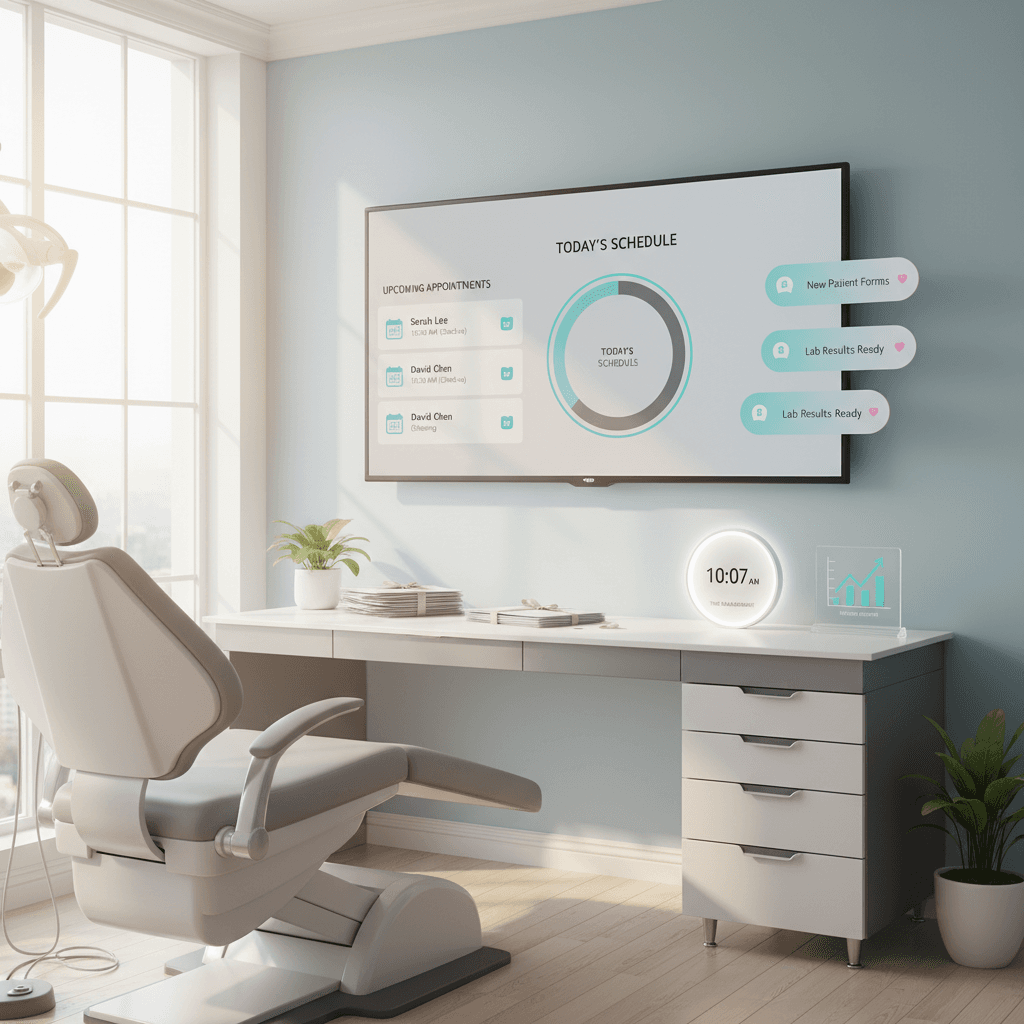
Appointment cards directly protect revenue by addressing the three primary causes of missed dental appointments: forgotten dates, scheduling conflicts, and perceived treatment urgency. Each missed private appointment costs UK practices £210–£600 according to National Association of Dental Accountants data, making prevention systems essential for practice profitability.
Dominate Dental case studies demonstrate 11–19% conversion improvements when combining physical appointment cards with automated email sequences. The psychological impact proves particularly significant, patients perceive physical cards as more “official” than digital reminders, increasing commitment levels. One Manchester implant practice introduced magnetic appointment cards for consultation follow-ups, achieving recall rate improvements from 58% to 74% within one quarter.
For more ideas on how to boost patient engagement and reduce missed appointments, explore these dental marketing ideas that complement appointment card strategies.
Strategic implementation requires precise timing and presentation. Hand cards directly to patients post-consultation rather than delegating to reception staff, this creates personal accountability. Include QR codes enabling immediate calendar integration, applied within three minutes of card receipt. Match card quality to treatment value: foil embossing for cosmetic procedures, premium cardstock for implants, standard materials for routine care.
Wondering what AI tells patients about your practice? Free one page report in 48 hours. Where you are cited, where competitors win, and the gap.
Get your free AI Visibility CheckDesign and Branding, Building Trust Through Professional Appointment Cards
Card Size & Format Selection
Standard appointment cards (2" x 3.5") offer optimal wallet compatibility and cost efficiency, while oversized formats (4" x 6") provide enhanced visual impact for premium treatments. Magnetic backing increases retention rates by 40% but doubles production costs. Folded cards accommodate additional treatment information but require careful design to prevent information overload.
| Format | Best Use Case | Retention Rate | Cost Factor |
|---|---|---|---|
| Standard (2" x 3.5") | General dentistry, routine appointments | Standard baseline | 1x |
| Magnetic | Multi-visit treatments, elderly patients | +40% | 2x |
| Oversized (4" x 6") | Cosmetic consultations, implant planning | +15% | 1.5x |
| Die-cut shapes | Pediatric dentistry, brand differentiation | +25% | 3x |
Design Elements That Convert
Effective appointment cards balance information density with visual clarity. Essential fields include appointment specifics, practitioner identification, treatment context, and contact protocols. Leave minimum 30% blank space for handwritten notes, testing shows patients retain cards with personalized annotations 60% longer than pre-printed versions.
Typography requires careful consideration for your patient demographic. Use 12pt+ fonts for practices serving patients over 50, with high contrast ratios for accessibility. Embossed or foil elements increase perceived value, Dominate Dental tracking shows 14% higher retention rates for embossed cards in cosmetic dentistry markets, justifying the additional production investment.
For more on how your website design can support appointment card effectiveness and overall patient experience, see why a smart dental website design is crucial for success.
Templates & Themes
Treatment-specific templates optimize patient experience and practice efficiency. Orthodontic cards emphasize progress tracking and next milestone dates, while implant cards focus on healing protocols and follow-up requirements. Seasonal variations support promotional campaigns, teeth whitening cards for summer campaigns, or holiday-themed emergency contact cards for December.
Printing, Materials & Technology, Elevating Patient Experience
Printing Options & Turnaround
Digital printing delivers appointment cards within 24-48 hours across the UK, making it ideal for practices requiring rapid deployment of new designs or emergency restocks. Offset printing becomes cost-effective for orders exceeding 5,000 units, particularly beneficial for multi-practice groups managing standardised branding. Specialty finishes, foil stamping, embossing, and soft-touch coatings, elevate perceived value, with embossed cards showing 14% higher retention rates in cosmetic dental markets according to Dominate Dental’s client testing.
NFC and QR code integration transforms static appointment cards into dynamic patient engagement tools. QR codes linking directly to calendar applications achieve 95% successful imports when scanned within three minutes of handoff. Advanced practices implement NFC-enabled cards that instantly populate contact information and appointment details into smartphones, reducing manual entry errors by 87%.
Material and Stock Selection
Premium cardstock (350gsm+) communicates treatment value effectively, particularly crucial for private pay patients investing in Invisalign or implant procedures. Textured finishes, linen, felt, or cotton, provide tactile differentiation that reinforces brand memory. Magnetic backing increases retention rates by 23% as patients affix cards to refrigerators or filing cabinets, ensuring visibility during appointment weeks.
Eco-conscious practices benefit from recycled stock options without compromising professional appearance. Ultra-thick cardstock (400gsm+) justifies premium treatment pricing through tangible quality perception, while standard weights (300gsm) suit routine cleanings and check-ups cost-effectively.
Printing Services Comparison
| Printer | Turnaround | Minimum Order | QR/NFC Support | UK Delivery |
|---|---|---|---|---|
| Vistaprint | 3-5 days | 100 cards | QR only | Free over £30 |
| Instantprint | 24-48 hours | 250 cards | QR + NFC | Next day £6.99 |
| Solopress | 2-4 days | 500 cards | QR only | Free over £50 |
| Local Print Shops | Same day | 50 cards | Variable | Collection only |
Instantprint leads for urgent requirements, offering genuine 24-hour turnaround with NFC capability, essential for practices implementing comprehensive digital integration strategies. Local print shops excel for same-day emergency orders but lack technological sophistication required for modern patient engagement.
For a comprehensive approach to growing your practice, consider developing a dental marketing plan that integrates appointment cards, digital reminders, and patient engagement tools.
Advanced Clinic Integration, Label Printers, Digital Cards & Automation
Using Appointment Cards with Label Printers
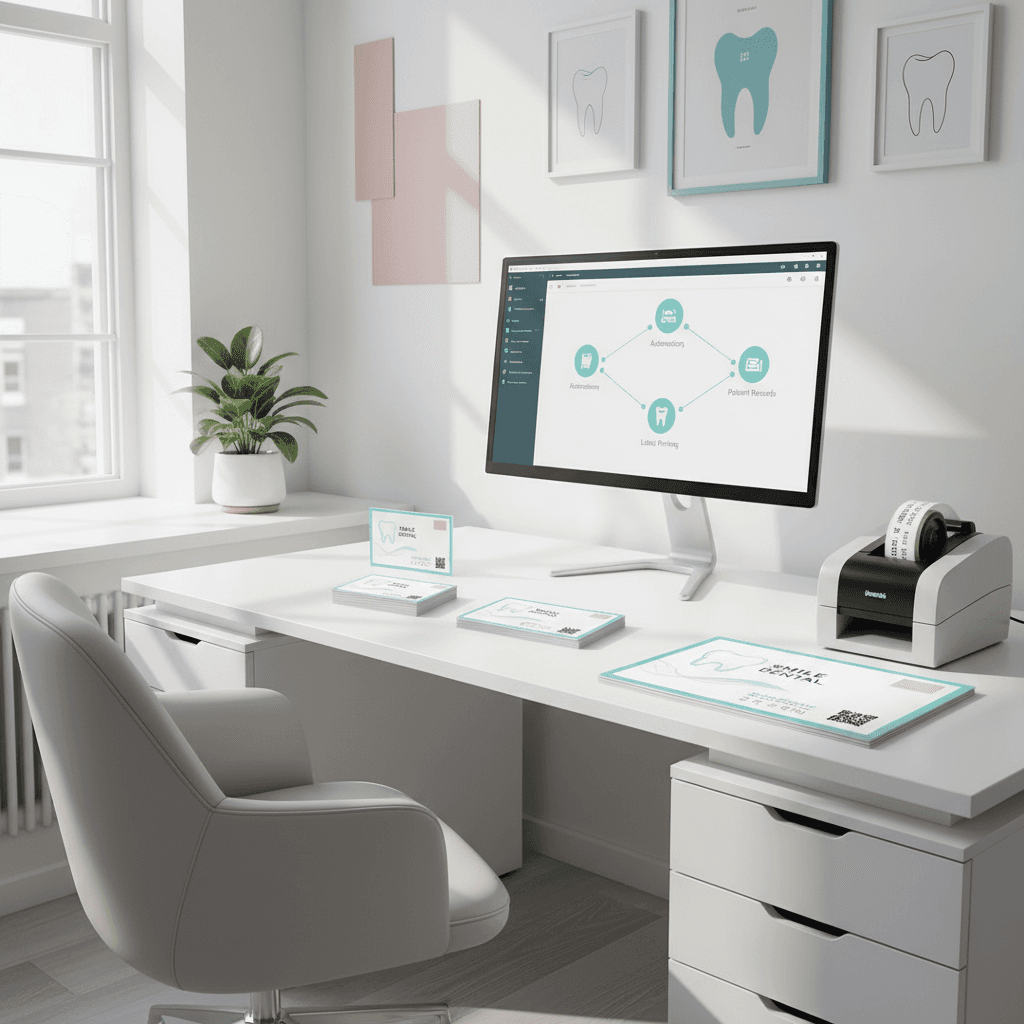
Dymo LabelWriter 450 and Zebra GX430t models accommodate standard 2" x 3.5" appointment card rolls, enabling on-demand printing directly from practice management systems. Brother QL-820NWB supports both standard and oversized formats, providing flexibility for detailed treatment notes or multi-appointment sequences. Roll quantities of 300-500 cards balance storage efficiency with reorder frequency, while maintaining consistent print quality throughout the roll.
Integration requires compatible roll specifications: adhesive-backed labels for temporary use, or cardstock rolls for traditional handout cards. Zebra models excel in high-volume environments, processing 50+ cards daily without quality degradation, while Dymo units suit smaller practices with occasional printing needs.
Integrating with Practice Management Software (PMS)
Software of Excellence, Dentally, and R4 systems export appointment data directly to compatible label printers, eliminating manual transcription errors. QR codes generated within PMS platforms link to patient portals, enabling instant calendar synchronisation and treatment plan access. GDPR compliance requires explicit consent for digital data transfer, easily obtained through checkbox integration during appointment booking.
Digital appointment cards distributed via email or SMS complement physical versions, creating redundant reminder systems that reduce no-shows by up to 35%. Patient profile analysis determines optimal distribution method, older demographics prefer physical cards, while younger patients engage more effectively with digital formats.
Future-Proofing, AI, Mobile, and SMS/Email Synergy
Dominate Dental’s AI-powered reminder system combines physical appointment cards with intelligent digital follow-up, achieving 15% higher conversion rates compared to single-channel approaches. WhatsApp integration enables personalised reminder messages 48 hours before appointments, with automated rescheduling links reducing administrative overhead by 60%.
Hybrid strategies maximise effectiveness: physical cards for immediate confirmation, SMS reminders 24 hours prior, and email follow-up for treatment plan continuity. This multi-touchpoint approach accommodates diverse patient communication preferences while maintaining consistent brand messaging across all channels.
To further enhance your online presence and attract more patients, explore SEO for dentists as part of your digital marketing mix.
Common Problems & Solutions, Reducing Lost Appointments and Streamlining Recalls
Comparison & Analysis, Physical Cards vs. Digital Reminders vs. Business Cards
Appointment Card vs. Business Card
Appointment cards serve transaction-specific purposes with date, time, and treatment details, while business cards facilitate initial contact and referral generation. Distribution frequency differs significantly, appointment cards issue per visit, business cards distribute broadly for marketing reach. Conversion tracking shows appointment cards achieve 85% retention through completion, while business cards generate 12-18% callback rates within three months.
| Feature | Appointment Card | Business Card |
|---|---|---|
| Primary Purpose | Appointment confirmation | Contact information |
| Information Scope | Specific date/time/treatment | General practice details |
| Patient Action | Attend scheduled appointment | Make initial contact |
| Success Metric | Show rate (85%+) | Callback rate (12-18%) |
Physical vs. Digital Appointment Card
Physical appointment cards excel with elderly patients (65+ demographics), achieving 78% preference rates due to tangible reliability and accessibility without technology dependence. Digital cards integrate seamlessly with smartphone calendars and practice management systems, reducing administrative overhead by 45% while enabling instant updates and automated reminders.
Environmental considerations favour digital distribution, eliminating paper waste and printing costs. However, physical cards provide superior brand reinforcement through tactile engagement and visual presence in patient environments, contributing to word-of-mouth referral generation.
For more on dental treatments and patient care, see the NHS guide to dental treatments.
Appointment Card vs. SMS/Email Reminder
Immediate digital reminders achieve 92% delivery rates but suffer from 34% ignore rates due to message fatigue and spam filtering. Physical appointment cards create lasting visual cues with 67% retention on display surfaces (refrigerators, desks, calendars), maintaining appointment awareness throughout the interim period.
Behavioural change statistics demonstrate physical reminders generate stronger commitment psychology, patients who receive tangible confirmation show 19% higher treatment completion rates compared to digital-only communication.
For further reading on how dental SEO can lead to more patients, check out how dental SEO can lead to more patients.
Best Practices & Inspiration, Templates, Wording, and Design Showcases
Best Appointment Card Designs for Dental Practices
Invisalign appointment cards benefit from clean, modern aesthetics featuring subtle aligner imagery and progress tracking elements. Implant consultation cards require premium materials (350gsm+ cardstock) with embossed logos, reflecting the significant treatment investment. Emergency appointment cards prioritise clarity and urgency, using bold typography and essential contact information without decorative elements.
Paediatric designs incorporate friendly colours and tooth mascot imagery while maintaining professional credibility for parent confidence. Treatment-specific customisation increases patient engagement by 28% compared to generic appointment card formats.
For authoritative research on appointment adherence and patient outcomes, see this study on missed appointments in healthcare.
Best Practices for Card Wording
Professional language combines clarity with warmth: “Your next Invisalign progress review is confirmed for [date] at [time] with Dr. [name].” GDC-compliant disclaimers include cancellation policies and contact procedures, positioned discreetly without overwhelming primary appointment information.
Frequently Asked Questions
How do appointment cards reduce missed dental appointments compared to digital reminders?
Appointment cards provide a tangible, physical reminder that patients are more likely to notice and retain than digital notifications, which are often overlooked or deleted. This physical presence increases patient commitment and accountability, reducing no-shows by up to 30% compared to relying solely on digital reminders.
What design and material considerations should be made when creating appointment cards for different types of dental treatments?
Appointment cards should reflect the treatment’s value and complexity through premium materials like thick cardstock or magnetic finishes for high-value treatments such as implants or Invisalign. Clear, concise information paired with professional branding ensures the card communicates trust and importance, tailored to the patient’s treatment journey.
In what ways can appointment cards reinforce a dental practice’s premium brand positioning?
Well-designed appointment cards act as micro-touchpoints that convey professionalism and care, reinforcing the practice’s commitment to quality. Using branded, high-quality materials and consistent messaging elevates patient perception, aligning with the premium nature of treatments and differentiating the practice from competitors.
How can integrating appointment cards with technology like label printers and automation improve patient recall and reduce no-shows?
Integrating appointment cards with label printers and automated systems streamlines the creation and distribution process, ensuring timely, personalized reminders that complement digital communications. This multi-channel approach enhances patient engagement, improves recall rates, and reduces no-shows by providing consistent, professional touchpoints throughout the patient journey.