
Best Alternatives to Traditional Dental Implant Advertising: A UK Practice Guide
On this page
Why Traditional Dental Implant Advertising Stops Working (And What Patients Do Instead)What counts as traditional implant advertising in the UKThe implant patient journey: 3-6 months of research before bookingRising CPCs, ad fatigue and single-touch campaigns that failHow We Evaluated the Best Alternatives to Traditional Dental Implant AdvertisingTop Picks: The Best Alternatives to Traditional Dental Implant Advertising, Ranked1. Dominate Dental: implant-specific local SEO and database reactivation2. Google Business Profile and local SEO for “dental implants near me”3. Patient database reactivation and dormant implant lead nurture4. Educational video and implant case walk-through content5. Review-led reputation and referral marketing6. Facebook and Instagram organic content plus retargeting7. AI search visibility and answer engine optimisation for implant queries8. Community talks and local partnership marketingYour 90-Day Action Plan to Replace Ad Spend With Owned ChannelsDays 1-30: audit, database clean-up and GBP optimisationDays 31-60: reactivation campaign, review engine and implant landing pagesDays 61-90: video library, retargeting and financing messagingWeekly priorities checklistHow to Measure Cost Per Implant Case (Plus FAQ)Formulas: cost per enquiry, cost per consult, cost per caseIs SEO better than Google Ads for dental implants?How do I market implants without a big ad budget?How do I get more implant patients from my existing list?Frequently Asked QuestionsWhat is traditional dental implant advertising and why is it becoming less effective?What are the best alternatives to traditional dental implant advertising?How do I market dental implants without spending a fortune on ads?How do I get more dental implant patients from my existing patient list?Is SEO better than Google Ads for dental implants?How should dental practices evaluate which marketing channels to use for implants?What should dental implant marketing content cover to help patients decide?Before you read on. Want to know which dentist AI recommends in your town, and whether it is you?
Get your free AI Visibility Check
Best alternatives to traditional dental implant advertising.
Alternatives to traditional dental implant advertising start with a change in how practices reach implant patients: build trust and stay visible throughout their research, rather than relying on a single advert to generate a consultation. For UK practices, that means comparing channels by cost, speed, effort and their ability to support considered decisions.
Key Takeaways
- Successful implant marketing depends on building trust and staying visible while patients research their options, rather than relying on one advert to deliver a consultation.
- UK practices should compare alternative channels based on cost, speed of results, effort required, and how well each supports patients making considered decisions.
- Implant patients typically take longer to commit, so channels that nurture them over time often outperform one-off advertising campaigns.
- Focusing budget on channels that match the implant patient journey leads to more qualified consultations and stronger returns on marketing spend.
Traditional ads can still play a role, but they are not the only route to implant enquiries. The options below focus on stronger local visibility, useful patient information and follow-up with people who have already shown interest.
Why Traditional Dental Implant Advertising Stops Working (And What Patients Do Instead)
Implant treatment is a high-consideration decision. Patients may weigh cost, pain, treatment stages and alternatives before contacting a practice. A campaign that creates brief awareness but offers little information or follow-up can miss the period when someone is comparing providers and deciding whether to book.
What counts as traditional implant advertising in the UK
Traditional approaches include print adverts, local press, radio and broad paid-search campaigns that send every visitor to a generic implant page. These can attract attention, but attention alone does not show whether a person is clinically suitable, ready to book or seeking information about bridges and dentures instead.
The implant patient journey: 3-6 months of research before booking
Research into implant marketing describes patients comparing treatment options and weighing concerns such as affordability and discomfort before booking. A practice needs useful answers at each stage: clear explanations of consultations, treatment steps and financing, alongside a simple route to ask questions. Educational comparison content can help patients make sense of implants, bridges and dentures without pressuring them into a decision.
Rising CPCs, ad fatigue and single-touch campaigns that fail
Google Ads for implant terms face competition from practices bidding on a limited pool of high-intent searches. That example is in US dollars, not a UK cost benchmark, but it illustrates why spend alone cannot fix weak landing-page relevance or poor enquiry handling.
How We Evaluated the Best Alternatives to Traditional Dental Implant Advertising

Alternatives to traditional dental implant advertising should be judged by the quality of implant consultations they can support, not by reach or clicks alone. Our comparison reflects the practical questions we use when reviewing dental marketing: what the channel demands, how quickly it may produce useful activity and whether a practice can trace enquiries through to accepted treatment.
Costs vary by location, competition, provider and the work already completed, so the rankings avoid presenting unsourced UK price promises. Speed is also relative: paid activity and database follow-up may prompt a response sooner, while organic visibility generally requires sustained work. Fit considers whether the channel answers patient concerns and reaches people at an appropriate point in their decision.
- Cost: assess setup, ongoing management, content production and staff time, not media spend alone.
- Speed: distinguish early enquiries from consistent qualified consultations.
- Effort and fit: account for clinical input, reception capacity and the patient’s research needs.
- Measurability: track enquiry source, consultation attendance and accepted implant cases.
Wondering what AI tells patients about your practice? Free one page report in 48 hours. Where you are cited, where competitors win, and the gap.
Get your free AI Visibility CheckTop Picks: The Best Alternatives to Traditional Dental Implant Advertising, Ranked
The strongest alternatives combine patient education with a credible path to consultation. This ranking favours integrated, trackable channels, while recognising that the right mix depends on a practice’s location, existing website, patient list and capacity to respond promptly.
| Rank and approach | Cost profile | Speed to activity | Effort and implant-patient fit |
|---|---|---|---|
| 1. Dominate Dental, local SEO and database reactivation | Managed or individual services; scope-dependent | Follow-up can prompt earlier responses; SEO builds over time | Integrated support for practices seeking consistent acquisition |
| 2. Google Business Profile and local SEO | Staff time or specialist support | Gradual improvement | Strong local intent; needs accurate listings and ongoing care |
| 3. Patient database reactivation | Staff time, contact platform and campaign work | Potentially prompt once suitable records are contacted | Relevant to past enquiries; requires careful, compliant follow-up |
| 4. Educational video and case walk-throughs | Production and clinical review | Builds value as content is published and shared | Addresses process questions; needs clear, responsible explanations |
| 5. Reviews and referrals | Staff process and patient communication | Accumulates over time | Supports trust; must follow advertising and review rules |
| 6. Facebook and Instagram organic content plus retargeting | Content time, with optional paid media | Organic reach varies; paid retargeting can reconnect with visitors | Useful for reminders and education, less direct than active search |
| 7. AI search visibility and answer engine optimisation | Content and technical SEO effort | Longer-term and difficult to predict | Supports clear answers; depends on sound local search foundations |
| 8. Community talks and local partnerships | Preparation, staff time and event costs | Depends on event timing and audience | Builds local familiarity; attribution can be less direct |
1. Dominate Dental: implant-specific local SEO and database reactivation
Best for: Practices seeking joined-up support across local visibility and follow-up with existing contacts. Dominate Dental is a UK-based digital marketing partner specialising in dental marketing and patient growth. Its integrated approach can connect local search, website content and patient-list activity rather than treating each channel as an isolated campaign.
Dominate Dental offers both a fully managed marketing solution and individual services, including website design, SEO, PPC, local search and Facebook advertising. Practices can match support to their needs while building a consistent strategy. Results depend on implementation, local competition and enquiry handling; no channel guarantees a specific number of cases.
2. Google Business Profile and local SEO for “dental implants near me”
Best for: Practices that need stronger local discovery. Accurate opening hours, contact details, relevant service information, reviews and consistent name, address and phone details support a sound local presence. SEO takes sustained work, but it can reach people actively searching for implant providers in their area.
3. Patient database reactivation and dormant implant lead nurture
Best for: Practices with past implant enquiries or patients who asked about treatment but did not proceed. A carefully managed sequence can answer common questions and invite a conversation, rather than relying on one follow-up call. Check data permissions, contact preferences and staff capacity before a campaign begins.
4. Educational video and implant case walk-through content
Best for: Teams whose prospective patients need a clearer picture of assessment, treatment stages and aftercare. Short, clinician-reviewed videos can explain the consultation journey and common comparisons. Keep claims balanced, obtain appropriate permissions for patient material and avoid presenting individual outcomes as guaranteed.
5. Review-led reputation and referral marketing
Best for: Practices that deliver a consistent patient experience and want to make feedback easier to share. A clear, neutral review request process can support visibility and help prospective patients assess communication and care. Do not pressure patients or condition incentives on positive reviews.
6. Facebook and Instagram organic content plus retargeting
Best for: Practices with useful visual material and the capacity to publish regularly. Organic posts can introduce the team and explain treatment information; retargeting can remind consenting website visitors about relevant content. It is less suited to replacing search visibility for patients already looking for a provider.
7. AI search visibility and answer engine optimisation for implant queries
Best for: Practices investing in clear, authoritative answers to patient questions. Answer engine optimisation means structuring useful information so search tools can interpret it. AI visibility still relies on fundamentals such as local SEO, accurate business details, reviews and well-organised website content; appearance in AI results cannot be guaranteed.
8. Community talks and local partnership marketing
Best for: Practices with clinicians able to contribute to local education and partnerships. Talks can explain implant consultations and treatment choices in a trusted setting, while professional relationships may introduce relevant enquiries. Preparation and follow-up take staff time, and the path from event attendance to an accepted case may be harder to attribute than an online enquiry.
Your 90-Day Action Plan to Replace Ad Spend With Owned Channels
Shift budget in stages rather than switching off paid campaigns before other channels are ready. Over 90 days, focus first on accurate local information and enquiry records, then on relevant follow-up and patient-facing pages, and finally on reusable educational content. Keep enough paid activity to maintain visibility where it is producing suitable enquiries, while reviewing performance against consultation bookings and accepted treatment.
Dominate Dental supports dental practices with integrated digital marketing, including local search, SEO, paid advertising and website design. A practice can also run the steps below in-house, provided one person owns the schedule, records activity consistently and has time to respond to prospective patients.
Days 1-30: audit, database clean-up and GBP optimisation
Start by documenting current enquiry sources, response times and outcomes. Review the implant page, contact forms, call tracking and booking process; note where prospects encounter friction. Check Google Business Profile details against the practice website, including address, telephone number, opening hours and implant-related service information. Consistent, accurate details help patients and search platforms identify the practice.
Next, review past implant enquiries and relevant patient records. Separate people who requested information from those who booked, attended or declined, and check contact permissions and preferences before any outreach. Assign a team member to manage records and confirm that reception can respond promptly to new questions.
Days 31-60: reactivation campaign, review engine and implant landing pages
Prepare a measured follow-up for appropriate past enquiries, with a helpful invitation to ask questions or arrange a consultation. Avoid pressure or assumptions about clinical suitability. Use a clear process for recording replies and stopping contact when requested. At the same time, make it easy for patients to leave honest feedback without asking for a particular rating or conditioning a benefit on a positive review.
Improve the implant landing page with plain explanations of the consultation, treatment stages, alternatives and how to discuss fees. Have clinical staff review treatment information, and check that claims comply with relevant General Dental Council (GDC) guidance and Advertising Standards Authority (ASA) rules.
Days 61-90: video library, retargeting and financing messaging
Create a small set of clinician-reviewed videos answering recurring questions about assessment, discomfort, aftercare and comparisons with bridges or dentures. Use patient stories only with suitable consent, and avoid implying that an individual outcome is guaranteed. Repurpose each video across relevant website pages and social channels, keeping the information consistent.
If retargeting is appropriate, configure it in line with consent and privacy requirements, and direct visitors to useful information rather than repeated booking prompts. Explain available payment or finance arrangements accurately, including eligibility and terms, so prospective patients can make an informed enquiry. Dominate Dental can provide individual services or a fully managed marketing solution, depending on practice capacity and priorities.
Weekly priorities checklist
Keep the plan manageable with a short weekly review. Compare activity with the previous week, record what staff have completed and resolve operational delays before increasing campaign volume. This helps a practice learn which messages prompt meaningful conversations, not simply which content attracts attention.
- Record implant enquiries by source and follow up within the practice’s agreed response times.
- Check profile details, website forms and telephone routes for accuracy.
- Review reactivation replies, contact preferences and any requests to stop communication.
- Publish or refine one useful patient-facing resource, such as a page update or video.
- Discuss consultation bookings and attended appointments with the treatment coordinator.
How to Measure Cost Per Implant Case (Plus FAQ)
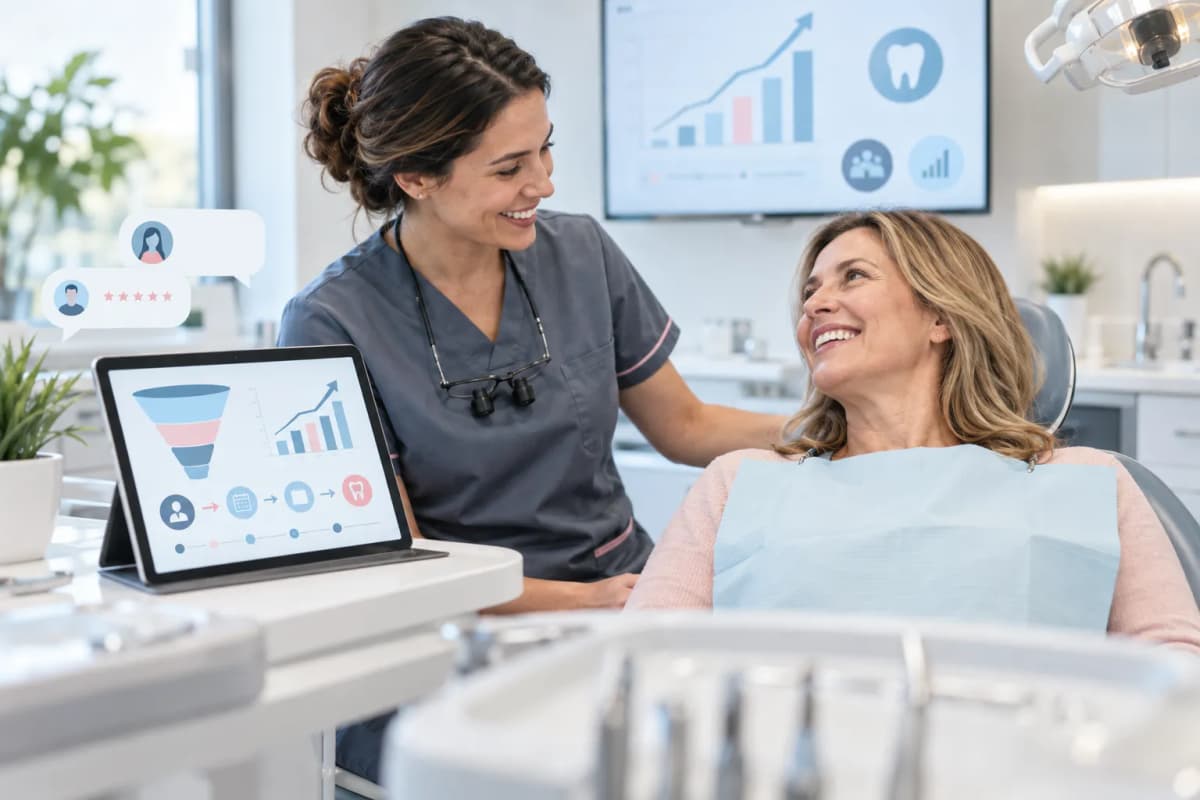
Assess alternatives by the cases they help generate, not clicks alone. Track each enquiry from its original source through contact, consultation attendance and accepted treatment. Use the same reporting period and attribution rules across channels, and separate new enquiries from reactivated contacts.
Dominate Dental is a UK-based digital marketing partner specialising in dental marketing and patient growth. Its services include local search, SEO and paid advertising, which can be assessed against the same practice-level measures. Record results consistently so budget decisions reflect the route to consultations and cases, rather than surface-level activity.
Formulas: cost per enquiry, cost per consult, cost per case
Include management fees, content production and staff time where you can record them. If several interactions influence a decision, note the first source and any later touchpoints rather than assigning the case to the final click alone.
Is SEO better than Google Ads for dental implants?
Neither is universally better. Google Ads can put a practice in front of active searchers quickly, while SEO builds visibility over time and can support a wider range of patient questions. Compare cost per attended consultation and accepted case, then consider the time and expertise each channel requires.
How do I market implants without a big ad budget?
Start with accurate local business information, useful implant pages and a reliable enquiry follow-up process. Prioritise work your team can maintain, then add paid activity only where tracking shows a clear contribution to consultations. Check treatment claims against applicable GDC and ASA requirements.
How do I get more implant patients from my existing list?
Review past enquiries and identify people who asked for implant information but did not book. Check contact permissions and preferences before sending a relevant, low-pressure follow-up that invites questions. Dominate Dental can support patient-list activity as part of an integrated marketing plan; record replies, consultations and accepted cases to judge its contribution.
Frequently Asked Questions
What is traditional dental implant advertising and why is it becoming less effective?
Traditional dental implant advertising includes print adverts, local press, radio and broad paid-search campaigns that send all visitors to a generic implant page. It is becoming less effective because implant patients research for 3-6 months before booking, rising CPCs drive up costs, and single-touch campaigns offer little information or follow-up during that decision period.
What are the best alternatives to traditional dental implant advertising?
The best alternatives to traditional dental implant advertising include implant-specific local SEO, Google Business Profile optimisation, patient database reactivation, educational video content, reviews and referrals, and organic social media with retargeting. These channels build trust and visibility throughout the patient’s research journey rather than relying on a single advert to generate a consultation.
How do I market dental implants without spending a fortune on ads?
To market dental implants without heavy ad spend, focus on local SEO, a well-maintained Google Business Profile, educational content that answers patient questions about cost and treatment stages, and reactivating past enquiries from your existing database. These approaches cost staff time and consistent effort rather than large monthly media budgets.
How do I get more dental implant patients from my existing patient list?
Patient database reactivation involves contacting past enquiries and existing patients who have already shown interest in implant treatment. Once you identify suitable records, follow-up campaigns can prompt responses relatively quickly, though all contact must be careful and compliant with applicable regulations.
Is SEO better than Google Ads for dental implants?
SEO and Google Ads serve different purposes for dental implants. Google Ads can generate enquiries quickly but faces high competition and rising CPCs for a limited pool of high-intent searches, while local SEO builds gradually and delivers stronger local intent over time. The most effective strategy pairs both with useful treatment information and timely follow-up.
How should dental practices evaluate which marketing channels to use for implants?
Judge each channel by the quality of implant consultations it can support, not clicks or reach alone. Assess total cost including staff time, how quickly it produces qualified consultations, whether it fits patient research needs, and whether you can trace enquiries through to accepted treatment cases.
What should dental implant marketing content cover to help patients decide?
Effective implant marketing content should answer the questions patients weigh during their 3-6 months of research: what happens at a consultation, the treatment stages involved, financing options, and how implants compare with bridges and dentures. Educational comparison content helps patients decide without pressure, and all claims must meet GDC and ASA requirements.
This is what we do for UK practices, done with you:
Real client results, not a promise. The number we commit to for your practice is agreed up front and written into the agreement.
Patients in the chair, not just leads. Guaranteed.
We own the whole journey to the attended consultation. New attended patient consultations in 90 days, or we work free until you hit them.Book a chat with Josie