
Best Free Social Media Report for UK Dental Freelancers
On this page
What Makes a Social Media Report Essential for UK Dental Freelancers?Why solo practitioners need structured reportingKey metrics that actually drive patient bookingsHow often you should review your performance dataThe Top Free Social Media Reporting Tools for Solo Dental PractitionersMeta Business Suite for Instagram and Facebook trackingGoogle Analytics and UTM tracking for consultation linksThird-party schedulers with built-in free reportsHow to Build Your First Dental Social Media Report Using Free PlatformsStep-by-step guide to exporting your dataCustomising your report template for Invisalign and implant leadsTracking engagement, clicks, and consultation requestsNavigating GDC and ASA Compliance When Reporting Patient DataRecording patient consent for before-and-after visualsKeeping testimonials and reviews within regulatory boundsAnonymising data for monthly performance reviewsTurning Monthly Report Insights into Higher-Value Treatment BookingsSpotting underperforming content before it costs you timePivoting your strategy towards composite bonding and emergency dental leadsWhen free tools stop working and what to do nextBefore you read on. Want to know which dentist AI recommends in your town, and whether it is you?
Get your free AI Visibility Check
For UK dental freelancers navigating the competitive private practice sector, understanding social media performance isn’t just beneficial; it’s fundamental to securing high-value treatments like Invisalign and dental implants. Without a clear view of what’s working and what isn’t, valuable marketing budgets can be squandered on ineffective campaigns, leaving you with fewer enquiries and missed opportunities. This is where a structured social media report becomes your indispensable guide, transforming raw data into actionable insights that drive patient bookings.
The question isn’t whether you should track your social media, but how to do it effectively, especially when budget constraints are a reality for solo practitioners. Fortunately, a wealth of free tools exists to provide the data you need. This guide explores how to harness these resources to create insightful reports, helping you understand your audience better and optimise your online presence to attract more of your ideal patients. Let’s uncover the best free social media report for UK dental freelancers.
What Makes a Social Media Report Essential for UK Dental Freelancers?
Why solo practitioners need structured reporting
As a solo dental practitioner, your time and resources are precious. Unlike larger practices, you often wear multiple hats, from clinician to practice manager and marketing lead. A structured social media report provides a vital overview of your online efforts without demanding excessive manual input. It consolidates performance data, allowing you to quickly assess what content captures attention, which platforms yield the most promising leads, and where your marketing investment is yielding the best returns. This systematic approach helps you avoid guesswork, ensuring your marketing spend is directed towards strategies proven to attract patients seeking advanced treatments.
The UK dental market sees private patient acquisition costs rise, with the British Dental Association noting a 24% increase between 2022 and 2025. For freelancers, this means every pound spent on marketing must work harder. A well-compiled report acts as a compass, guiding your strategy and helping you make informed decisions to maximise enquiry rates and patient bookings, thereby safeguarding your practice’s profitability and growth trajectory.
Key metrics that actually drive patient bookings
When evaluating social media performance, it’s easy to get lost in vanity metrics such as likes or follower counts. For UK dental freelancers focused on high-value treatments, the metrics that truly matter are those directly linked to patient acquisition. These include click-through rates (CTR) on your posts and ads, which indicate how many people are interested enough to learn more. Equally important are website traffic originating from social channels and, most critically, the number of direct enquiries or consultation requests generated through these platforms. Tracking these conversion-focused metrics allows you to understand which content effectively persuades potential patients to take the next step.
For practices specialising in treatments like Invisalign or dental implants, monitoring lead quality is paramount. Tools that track form submissions or direct messages mentioning specific procedures are invaluable. According to Whitehat SEO’s 2025 dental marketing benchmark, UK dental practices with a structured social plan report 18-32% higher new-patient enquiry rates. This suggests that focusing on metrics that reflect genuine patient interest and lead generation is key to achieving such growth, rather than simply audience size.
How often you should review your performance data
Consistency is paramount in social media marketing, and this applies equally to performance analysis. For UK dental freelancers, a monthly review of your social media performance data is typically the sweet spot. This frequency allows enough time for campaigns to gather data and show trends, without letting underperforming content run too long and waste resources. A monthly report enables you to identify patterns, understand seasonal influences, and make timely adjustments to your content calendar and advertising spend.
Dental practices that track social media metrics at least monthly see 40% higher engagement rates over six months, as reported by Hootsuite in 2024. This demonstrates the tangible benefits of regular analysis. For solo practitioners, incorporating this review into your monthly business administration tasks ensures you remain agile. Reviewing data weekly can be excessive for a freelancer, while quarterly reviews are too infrequent to allow for effective course correction. Therefore, a committed monthly deep-dive is essential for sustained growth and identifying the best free social media report for UK dental freelancers.
Key Insight: Monthly Reporting Cadence
A monthly review cycle for social media performance is optimal for UK dental freelancers. It balances sufficient data accumulation with the agility needed to adapt strategies promptly, ensuring marketing efforts remain efficient and effective in attracting high-value patient enquiries.
The Top Free Social Media Reporting Tools for Solo Dental Practitioners
Meta Business Suite for Instagram and Facebook tracking
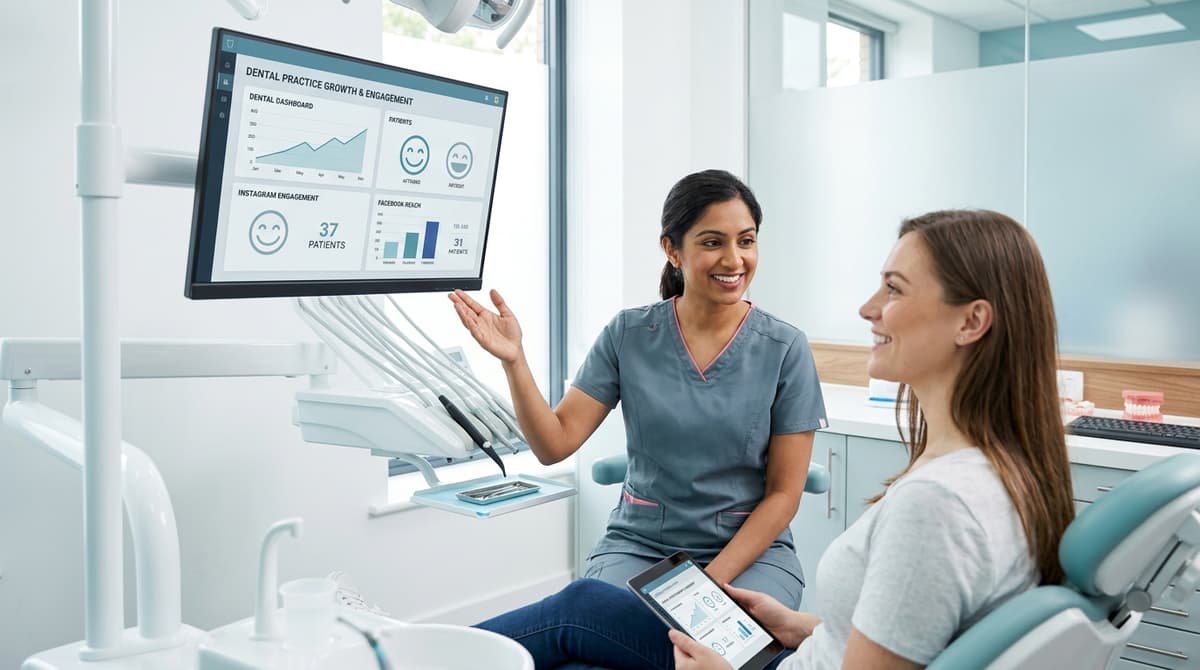
For dental freelancers primarily active on Instagram and Facebook, Meta Business Suite is an indispensable, free resource. This integrated platform consolidates analytics from both channels, offering a comprehensive overview of your audience demographics, post reach, engagement rates, and follower growth. You can delve into the performance of individual posts, Reels, and Stories, understanding what content types and topics generate the most interaction and interest from potential patients. Its intuitive dashboard makes it accessible even for those new to analytics.
Meta Business Suite allows you to track key metrics such as impressions, reach, profile visits, and clicks to your website or booking links. For practices offering cosmetic treatments, analysing which visual content (e.g., before-and-after images, patient testimonials) performs best is particularly insightful. While it doesn’t offer the depth of paid analytics tools, for a UK dental freelancer, it provides a solid foundation for understanding audience behaviour and content effectiveness on the dominant social platforms. It’s a prime example of how to get started with reporting without immediate financial outlay.
Google Analytics and UTM tracking for consultation links
While Meta Business Suite covers your social media profiles, Google Analytics is essential for understanding what happens *after* a user clicks through to your website. This free tool provides in-depth insights into website traffic sources, user behaviour, and conversion tracking. For dental freelancers, setting up Google Analytics is a non-negotiable step towards understanding your marketing ROI. By implementing UTM (Urchin Tracking Module) parameters on your social media links, you can precisely attribute website visits and subsequent actions, like contact form submissions or appointment bookings, directly back to specific social media posts or campaigns.
Combining social media platform data with Google Analytics allows you to create a more complete picture of your patient acquisition funnel. You can see which social posts drive traffic, how long visitors stay on your site, which pages they view (e.g., your cosmetic dentistry services page), and whether they complete a desired action. This granular data is invaluable for optimising your social media strategy and ensuring your efforts are focused on attracting qualified leads for treatments like implants or orthodontics. It’s a powerful combination for any UK dental freelancer wanting to measure success accurately.
Pros
- Free and widely accessible.
- Provides detailed website traffic and user behaviour data.
- Enables precise tracking of traffic sources via UTM parameters.
- Complements social media platform analytics for a full funnel view.
- Essential for understanding website conversion rates from social media.
Cons
- Requires initial setup and understanding of UTM tagging.
- Can be complex for beginners without guidance.
- Focuses on website behaviour, not direct social media engagement metrics.
Third-party schedulers with built-in free reports
Many popular social media management tools, often used for scheduling posts, also offer basic reporting features within their free tiers. Platforms like Buffer, Hootsuite (with limitations on free plans), or Later provide dashboards that summarise key performance indicators for the social media accounts they manage. These tools can aggregate data across multiple platforms, offering a consolidated view that saves time compared to checking each platform individually. For a UK dental freelancer, the convenience of scheduling and basic reporting in one place can be a significant advantage.
While the free versions typically have limitations on the depth of analysis and the number of accounts or historical data accessible, they often provide essential metrics like engagement rate, reach, and follower growth. Some may even offer basic insights into audience demographics. These tools can be a good starting point for solo practitioners who want a unified overview without the complexity of integrating multiple data sources. For those prioritising ease of use and consolidated views, exploring the free tiers of these schedulers can be an effective way to begin generating basic performance reports, helping you understand your social media’s impact on practice growth.
Wondering what AI tells patients about your practice? Free one page report in 48 hours. Where you are cited, where competitors win, and the gap.
Get your free AI Visibility CheckHow to Build Your First Dental Social Media Report Using Free Platforms
For UK dental freelancers intent on demonstrating tangible marketing ROI, constructing a social media report from free tools is an achievable, essential task. It transforms scattered data into a narrative of your online performance, highlighting what attracts new patients and what needs refinement. This section provides a practical, step-by-step approach to compiling your initial report, focusing on actionable insights rather than overwhelming complexity. By systematically gathering and analysing information, you can gain a clear understanding of your social media’s contribution to practice growth, particularly for high-value treatments.
The journey begins with identifying the core data points that matter most. While numerous metrics exist, a focused approach ensures you don’t get lost in the noise. For dental practices, especially those targeting sophisticated treatments like Invisalign or dental implants, the most valuable data relates directly to lead generation and patient engagement. Think about the journey from seeing a post to booking a consultation. What steps indicate genuine interest? By concentrating on these critical touchpoints, you can build a report that is not only informative but also directly applicable to increasing your patient bookings. This methodical process is key to finding the Free Social Media Report that best serves your freelance practice.
Step-by-step guide to exporting your data
The first practical step in creating your dental social media report involves systematically exporting data from the platforms you use. For Meta platforms (Facebook and Instagram), navigate to Meta Business Suite. Within the ‘Insights’ section, you can often export data for specific date ranges, covering metrics like reach, engagement, and audience demographics. Look for export options, typically available as CSV files, which can then be opened in spreadsheet software like Microsoft Excel or Google Sheets. This raw data forms the foundation of your report.
For website traffic originating from social media, Google Analytics is your primary source. Ensure you have it correctly installed on your practice website. Access the ‘Acquisition’ reports, specifically ‘All Traffic’ > ‘Channels’ or ‘Source/Medium’. Here, you can view traffic driven by social networks. To track specific campaigns or posts, implement UTM parameters on your links shared on social media. Google’s Campaign URL Builder is a free tool to help you create these. By exporting data from Google Analytics (again, often as CSVs), you can see exactly which social efforts are driving users to your site and what actions they take once there.
Customising your report template for Invisalign and implant leads
To make your social media report truly impactful for a UK dental freelancer, it must be tailored to the specific high-value treatments you offer. Begin by customising your spreadsheet or document template. Create distinct sections for key performance indicators relevant to treatments like Invisalign and dental implants. This might include tracking enquiries specifically mentioning “clear aligners,” “orthodontics,” “dental implants,” or “smile makeovers.” If your website has dedicated landing pages for these treatments, monitor traffic and conversion rates to these pages specifically within Google Analytics.
When analysing content performance, identify posts that have historically performed well for these specific treatments. Did a video explaining the implant process generate significant engagement? Did a before-and-after carousel for Invisalign receive many saves or shares? Document these findings. For lead tracking, if you use specific forms or call tracking numbers for these services, ensure your export and analysis processes can isolate these leads. This tailored approach ensures your report doesn’t just show general social media activity but highlights social media’s direct contribution to attracting patients for your most profitable services. This focus is what truly elevates a basic report into a strategic tool for growth.
Key Insight: Treatment-Specific Tracking
Customising your social media report to track leads and engagement for high-value treatments like Invisalign and dental implants is paramount for UK dental freelancers. This targeted analysis ensures your marketing efforts are directly aligned with your practice’s revenue goals, moving beyond general metrics to pinpoint success in attracting your ideal patients.
Tracking engagement, clicks, and consultation requests
The core of any effective social media report lies in tracking metrics that indicate genuine interest and lead generation. Engagement metrics, such as likes, comments, shares, and saves, show how your content is resonating with your audience. However, for solo practitioners, the real value comes from metrics that signal intent. Click-through rates (CTR) on links to your website or booking pages are a strong indicator of interest. Higher CTRs suggest your call to action and content are compelling enough to encourage further exploration.
Ultimately, the most critical metrics are direct consultation requests or enquiries. This can be tracked through form submissions on your website, direct messages via social platforms, or phone calls attributed to social media campaigns (if you use call tracking). For instance, if your Meta Business Suite shows a spike in profile visits and website clicks following a post about dental implants, and Google Analytics confirms these visitors navigated to your implant service page and filled out an enquiry form, that’s a clear win. Documenting these conversions, and ideally the source of the enquiry (e.g., “Instagram DM”), provides direct evidence of social media’s effectiveness in generating qualified leads for your practice, directly answering the question of the Free Social Media Report‘s value.
Your First Social Media Report Checklist
- Platform Data Export: Meta Business Suite (Facebook/Instagram) insights exported (reach, engagement, demographics).
- Website Traffic Analysis: Google Analytics data exported (social traffic sources, landing page performance).
- UTM Tracking: Links shared on social media have UTM parameters for precise source tracking.
- Treatment-Specific Metrics: Dedicated tracking for enquiries/traffic related to Invisalign, implants, etc.
- Engagement Metrics: Likes, comments, shares, saves for key posts.
- Click-Through Rates: Percentage of users clicking links from social posts.
- Lead Generation: Number of form submissions, direct messages, or calls originating from social media.
- Content Performance: Identification of top-performing posts for specific treatments.
- Data Consolidation: All exported data compiled into a single spreadsheet or document.
Navigating GDC and ASA Compliance When Reporting Patient Data
For UK dental freelancers, generating social media reports involves more than just data analysis; it necessitates strict adherence to regulatory guidelines set by the General Dental Council (GDC) and the Advertising Standards Authority (ASA). These bodies govern how dental professionals promote their services and present patient-related information. Ensuring compliance builds trust with both patients and regulatory bodies, preventing potential penalties and safeguarding your professional reputation. This section outlines key compliance considerations when compiling and using your social media performance data.
When you’re reviewing performance, especially content featuring patient outcomes, it’s essential to remember that all marketing materials must be truthful, clear, and not misleading. This applies to the data you analyse as well as the content you create. Understanding these regulations proactively will help you avoid common pitfalls and ensure your reporting practices are ethical and legal. It’s about using data responsibly to drive practice growth while upholding the highest professional standards demanded of UK dental practitioners.
Recording patient consent for before-and-after visuals
Before-and-after photographs are incredibly persuasive marketing tools for treatments like orthodontics and cosmetic dentistry. However, their use is strictly regulated. The GDC Standards for the Dental Team mandates that all marketing materials must be accurate and not misleading. For before-and-after images, this means obtaining explicit, informed consent from the patient *before* taking or using the photographs for marketing purposes. This consent should cover the specific use of the images, including where they might appear (e.g., social media, website, brochures).
Your consent form should clearly detail that the images will be used for advertising and specify the platforms. For social media reporting, ensure that any before-and-after content you analyse or plan to create has documented consent. If a particular campaign featuring patient transformations performed well, you must be able to verify that consent was obtained for those images. This prevents issues if the ASA or GDC investigates your marketing practices, ensuring your reporting reflects compliant patient data usage. Without this, even successful content can lead to serious regulatory problems.
GDC & ASA Compliance Checklist for Reporting
- Patient Consent: Verifiable, written consent obtained for all patient images/testimonials used in marketing.
- Accuracy: All claims made in marketing materials (and implied by data) are truthful and evidence-based.
- Clarity: Marketing messages are easy to understand and avoid jargon or misleading statements.
- Regulation Check: Ensure any claims about treatment success rates or outcomes align with GDC and ASA guidelines.
- Testimonial Verification: Ensure any patient testimonials used are genuine and comply with rules on endorsements.
- Anonymisation: Patient data used for internal reporting is anonymised where appropriate.
Keeping testimonials and reviews within regulatory bounds
Patient testimonials and online reviews are powerful social proof, but they too must comply with GDC and ASA regulations. The core principle is that any testimonial used must be genuine, verifiable, and not misleading. This means avoiding the fabrication of reviews or the selective editing of genuine feedback to present an overly positive, unrealistic picture. If you are reporting on the success of campaigns that encouraged reviews, ensure you are only showcasing authentic feedback.
The ASA’s CAP Code (UK Code of Non-broadcast Advertising and Direct & Promotional Marketing) requires that testimonials must reflect the honest opinions of the provider of the goods or services. For dental freelancers, this means if you’re analysing engagement on posts featuring patient quotes, ensure those quotes are verbatim or only slightly edited for brevity, with the patient’s permission if significant changes are made. Furthermore, claims made within testimonials must also be compliant. For example, a testimonial claiming guaranteed results for a specific treatment would likely fall foul of regulations. Always ensure that the aggregated data reflects ethical marketing practices.
Anonymising data for monthly performance reviews
While your social media reports aim to identify successful patient acquisition strategies, it’s crucial to handle any patient-identifiable information responsibly. For internal performance reviews, especially when analysing broader trends or sharing insights within a team (even if that team is just you and your assistant), anonymising data is a best practice. This means removing any personal details that could directly or indirectly identify a patient.
When compiling your monthly performance review, focus on aggregated metrics rather than individual patient journeys unless explicit consent for such detailed case studies has been obtained for marketing. For example, instead of reporting “Patient X enquired after seeing Post Y,” report “5 enquiries were received for dental implants this month, with 3 originating from social media.” This approach protects patient privacy while still allowing you to track the effectiveness of your social media efforts. It also helps ensure that your reporting process itself is compliant with data protection principles, even when dealing with non-sensitive marketing performance data. This diligent approach is fundamental to responsible marketing for any UK dental freelancer.
Part 3 Content
Turning Monthly Report Insights into Higher-Value Treatment Bookings

A social media report is only as valuable as the actions it inspires. For UK dental freelancers, the ultimate objective is translating online engagement into a fully booked diary of high-value treatments. Moving beyond vanity metrics requires a deliberate shift in how you interpret data. You must treat your monthly report as a strategic blueprint rather than a simple performance summary. By identifying precise patterns in patient behaviour, you can reallocate your marketing energy towards activities that directly generate consultation requests. This proactive approach ensures that every hour spent on content creation contributes to sustainable practice growth. Accessing a tailored Free Social Media Report provides the foundational insights needed to execute these revenue-driving pivots effectively. This initial assessment helps you identify the Best free social media report for UK dental freelancers?
Spotting underperforming content before it costs you time
Solo practitioners often pour significant effort into content formats that fail to attract paying patients. A structured monthly review allows you to identify these resource drains immediately. Look closely at the engagement rate and click-through rate for each post type. If video reels or static carousels consistently generate likes but zero website visits or form submissions, that format is consuming your time without delivering a return on investment. The British Dental Association highlights a 24% rise in private patient acquisition costs between 2022 and 2025, making inefficient marketing even more expensive. By cutting underperforming content early, you free up hours for high-impact activities. This data-driven pruning ensures your content calendar remains focused on formats that genuinely persuade potential patients to pick up the phone or book online.
Pivoting your strategy towards composite bonding and emergency dental leads
Data often reveals untapped opportunities for treatment expansion. When your report shows consistent profile visits or high engagement on specific topics, use those signals to pivot your strategy. For example, if posts highlighting quick aesthetic improvements generate significant direct messages, you have identified a strong demand for composite bonding. Similarly, tracking search terms or keywords within your social media analytics can uncover interest in urgent care services. A surge in enquiries for emergency dental treatments during specific months suggests a seasonal trend worth capitalising on. By realigning your content calendar to match these data-backed interests, you attract patients with clear intent. This strategic adjustment transforms passive scrolling into active consultation bookings, directly boosting your private revenue.
When free tools stop working and what to do next
Free reporting platforms provide an excellent starting point, but they inevitably hit a ceiling as your practice scales. Basic dashboards lack the advanced segmentation and automated lead routing required for a multi-dentist practice or a high-volume solo clinic. When you notice that your free tools cannot track the full patient journey from initial social media impression to final treatment acceptance, it is time to upgrade your technology stack. Professional dental marketing agencies utilise sophisticated analytics and AI-driven patient routing to connect every social media interaction with a booked appointment. This level of precision becomes essential when managing larger marketing budgets. Transitioning to advanced reporting ensures you maintain a clear view of your return on investment while focusing on clinical excellence rather than manual data compilation. Determining the Best free social media report for UK dental freelancers becomes less about finding a template and more about building a scalable growth engine.
Case Study Snapshot: Scaling Beyond Free Tools
A London-based dental freelancer utilised basic social media analytics to identify a spike in interest for clear aligners. By shifting 60% of their content focus towards this treatment, they saw a 28% increase in consultation bookings within three months. However, as their lead volume grew, manual tracking proved insufficient. Partnering with a specialist agency allowed them to implement automated lead scoring and detailed campaign attribution, resulting in a 15% higher conversion rate from enquiry to accepted treatment. This transition highlights the importance of matching your reporting tools to your current growth stage.
Ready to transform your data into a predictable patient acquisition system? Discover how our expert team can elevate your practice marketing today.
This is what we do for UK practices, done with you:
Real client results, not a promise. The number we commit to for your practice is agreed up front and written into the agreement.
Patients in the chair, not just leads. Guaranteed.
We own the whole journey to the attended consultation. New attended patient consultations in 90 days, or we work free until you hit them.Book a chat with Josie