
CEREC Scanners 2026: The Ultimate UK Guide to Boost Your Practice
On this page
CEREC Scanners: Transforming UK Dental Practices in 2025Understanding CEREC Scanner TechnologyHow CEREC Scanning Technology WorksEssential CEREC Scanner Features for 2025CEREC Primescan vs. Competing Digital SystemsCEREC Primescan – Complete Chairside SolutioniTero Element – Orthodontic Specialist3Shape TRIOS – Lab Integration LeaderImplementing CEREC Scanners in UK Dental PracticesMaintaining and Optimising CEREC PerformancePatient Comfort and Strategic Case SelectionFinancial Analysis and Growth StrategiesAdvanced Applications and Future-ProofingConclusion: CEREC as Your Practice Growth EngineFrequently Asked QuestionsHow do CEREC scanners improve patient experience and treatment efficiency in UK dental practices?What are the key technological features of the latest CEREC Primescan compared to traditional impression methods?In what ways can investing in CEREC technology impact a dental practice’s online presence and patient retention?Which types of dental treatments can be performed using CEREC scanning technology in a single appointment?About the AuthorBefore you read on. Want to know which dentist AI recommends in your town, and whether it is you?
Get your free AI Visibility CheckKey Takeaways
- CEREC scanners are essential for UK dental practices focusing on high-value treatments and same-day patient satisfaction.
- 97% of patients research dental services online before booking, making digital capabilities crucial for competitive advantage.
- Practices without digital technology risk losing patients to competitors ranking higher in online searches.
- Dental practices in London, Manchester, and Birmingham that invest in CEREC technology experience measurable growth in case acceptance.
- Investing in CEREC scanners enhances patient retention in UK dental practices.
Table of Contents
- CEREC Scanners: Transforming UK Dental Practices in 2025
- Understanding CEREC Scanner Technology
- How CEREC Scanning Technology Works
- Essential CEREC Scanner Features for 2025
- CEREC Primescan vs. Competing Digital Systems
- Implementing CEREC Scanners in UK Dental Practices
- Maintaining and Optimising CEREC Performance
- Patient Comfort and Strategic Case Selection
- Financial Analysis and Growth Strategies
- Advanced Applications and Future-Proofing
- Conclusion: CEREC as Your Practice Growth Engine
CEREC Scanners: Transforming UK Dental Practices in 2025
CEREC scanners have become essential technology for UK dental practices targeting high-value treatments and same-day patient satisfaction. With 97% of patients researching dental services online before booking, practices without digital capabilities lose to competitors ranking on page one. London, Manchester, and Birmingham practices investing in CEREC technology see measurable increases in case acceptance and patient retention.
Beyond the technology buzz, CEREC scanners directly impact practice metrics that matter: reduced no-shows, increased same-day crown acceptance rates, and elevated reputation for premium treatments like implants and Invisalign. At Dominate Dental, we’ve tracked practices combining CEREC adoption with strategic SEO, achieving 18-24% higher conversion rates on premium treatments compared to traditional impression-based workflows.
CEREC (Chairside Economical Restoration of Esthetic Ceramics) enables dentists to design, mill, and place crowns, veneers, inlays, onlays, and bridges in a single appointment. This technology transforms patient experience while creating competitive advantages in local search rankings and review generation.
Quick Answer: CEREC scanners are digital impression systems that capture 3D tooth models, allowing dentists to create and place ceramic restorations chairside in 60-90 minutes, eliminating temporary crowns and multiple appointments.
Understanding CEREC Scanner Technology
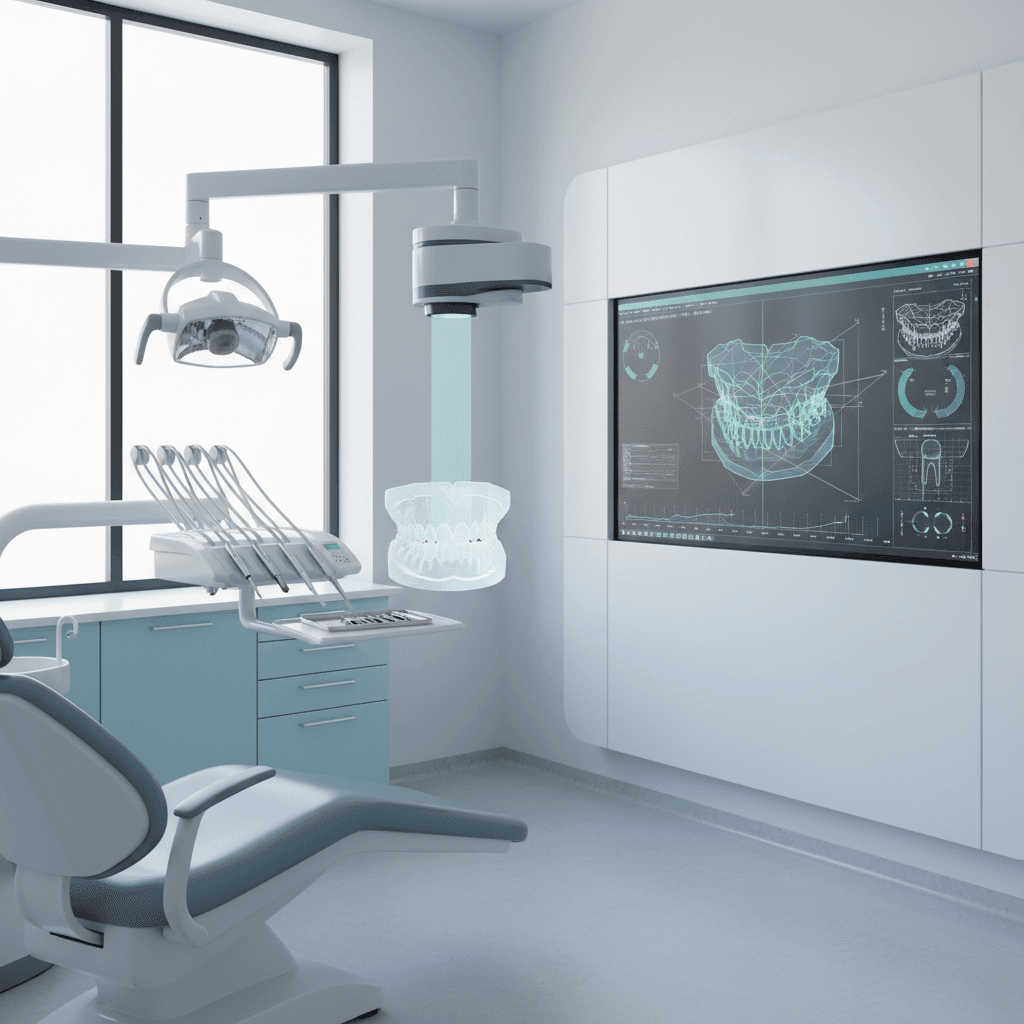
CEREC represents a complete chairside CAD/CAM system comprising three integrated components: the intraoral scanner, design software, and milling unit. The scanner captures optical impressions using confocal microscopy, generating precise 3D models with submicron accuracy. Current systems like the CEREC Primescan achieve over 1,000,000 measurement points per second, dramatically exceeding traditional impression accuracy.
The technology evolved from Sirona’s first CEREC system in 1985 to today’s AI-driven Primescan, which eliminates powder application and provides superior depth scanning for subgingival margins. This evolution addresses the primary limitations that previously restricted CEREC adoption in high-end cosmetic practices.
Clinical applications extend beyond single crowns to include multi-unit bridges, implant prosthetics, orthodontic models for clear aligners, and custom abutments. For practices offering Invisalign and implant treatments, CEREC scanning integrates seamlessly with existing digital workflows, supporting the “best dentist in [city]” positioning crucial for local SEO success.
Wondering what AI tells patients about your practice? Free one page report in 48 hours. Where you are cited, where competitors win, and the gap.
Get your free AI Visibility CheckHow CEREC Scanning Technology Works
The CEREC workflow begins with standard tooth preparation, emphasising clear margin definition for optimal scan accuracy. Unlike traditional impressions requiring retraction cord and hemostatic agents, CEREC scanning tolerates minor moisture and captures subgingival detail through advanced optics.
The scanning process involves systematic tooth capture from multiple angles, with the Primescan’s intelligent scanning feature automatically detecting preparation margins. The software generates a 3D model within seconds, allowing immediate design modification. Common scanning challenges include posterior access and interproximal contact capture, resolved through proper mirror positioning and scanning sequence.
Design software guides restoration creation with anatomically correct proposals, though clinical judgment remains essential for contact strength and occlusal harmony. The integrated milling unit produces restorations in 12-18 minutes using ceramic blocks, with immediate placement possible after characterisation and polishing.
| Process Step | CEREC Digital | Traditional Impression |
|---|---|---|
| Impression Time | 3-5 minutes | 8-12 minutes |
| Patient Comfort | No gag reflex issues | Material taste, gagging |
| Remake Rate | 2-3% | 8-12% |
| Total Appointments | 1 | 2-3 |
Essential CEREC Scanner Features for 2025
Scan accuracy represents the most critical factor, with the Primescan achieving 1,000,000+ measurement points per second compared to older Omnicam systems at 20,000 points. This accuracy translates to superior marginal fit and reduced chairside adjustment time, directly impacting practice efficiency and patient satisfaction.
Speed and ergonomics significantly affect daily workflow integration. Modern CEREC scanners feature lightweight handpieces with autoclavable sleeves, reducing cross-contamination protocols. The touchscreen interface allows single-handed operation, essential for solo practitioners and busy multi-dentist practices.
Material compatibility determines treatment options, with current systems supporting zirconia, e.max, and composite blocks for diverse clinical needs. Software integration capabilities, including open STL export and cloud backup, ensure compatibility with external labs and multi-disciplinary treatment planning software used in implant and orthodontic cases.
CEREC Primescan vs. Competing Digital Systems
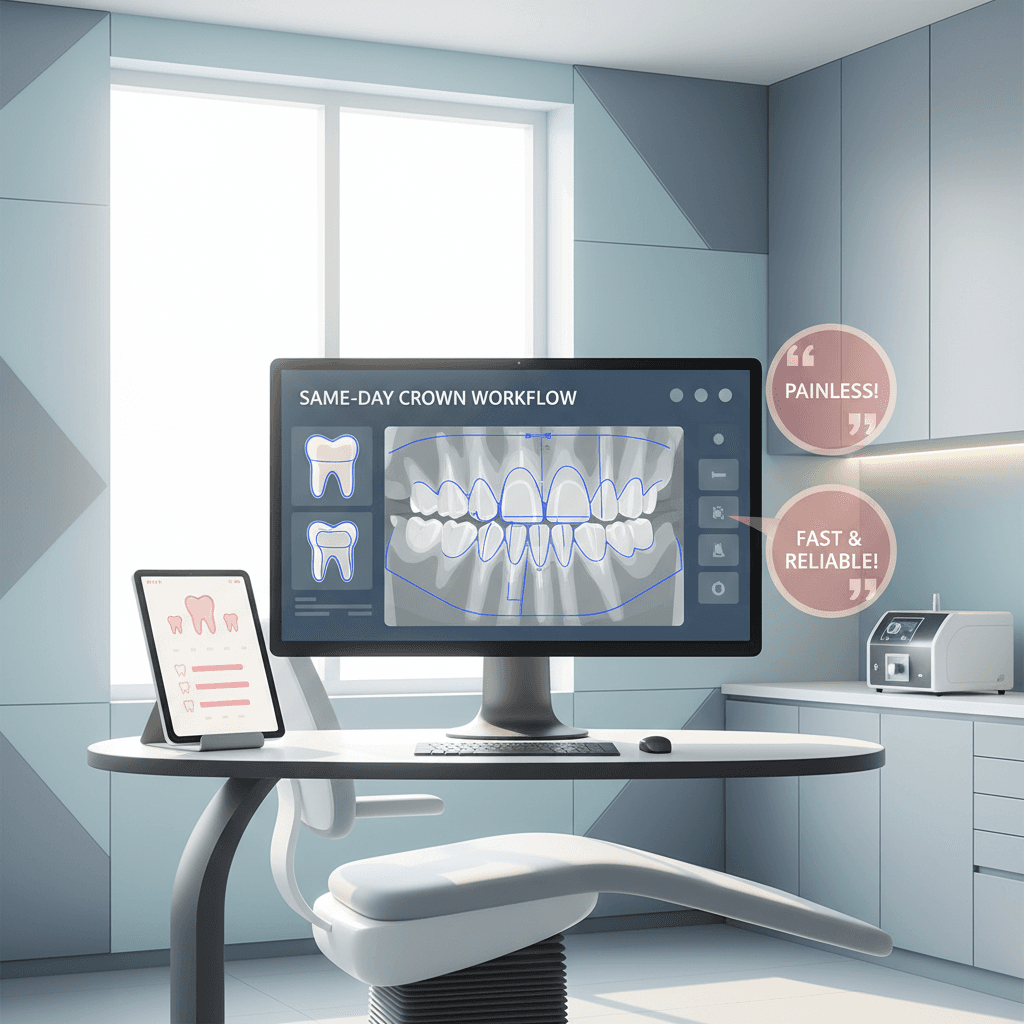
CEREC Primescan – Complete Chairside Solution
Best for: Practices seeking same-day crown capability with integrated milling
Advantages:
- The Primescan delivers unmatched accuracy with over 1,000,000 measurement points per second, enabling precise margin capture even in challenging subgingival areas. Its integrated milling capability allows complete same-day crown workflows, from scan to placement in 60-90 minutes. The powder-free scanning eliminates patient discomfort while providing superior colour reproduction for aesthetic cases.
- Complete chairside solution with integrated milling
- Highest scan accuracy in current market
- Powder-free operation for patient comfort
- Extensive ceramic material compatibility
iTero Element – Orthodontic Specialist
Best for: Practices heavily focused on Invisalign and orthodontic treatments
iTero excels in orthodontic applications with native Invisalign integration and outcome simulation features. The colour scanning capability aids in aesthetic treatment planning, though milling integration requires third-party solutions. Limited ceramic block compatibility restricts same-day restorative options compared to CEREC systems.
Advantages:
- Seamless Invisalign workflow integration
- Colour scanning for aesthetic planning
- Patient outcome simulation
Limitations:
- No integrated milling capability
- Limited restorative material options
- Requires external lab partnerships
3Shape TRIOS – Lab Integration Leader
Best for: Practices with strong lab relationships requiring flexible export options
TRIOS provides excellent scan quality with superior STL export capabilities for lab-based workflows. The system supports multiple CAD/CAM platforms but lacks integrated chairside milling. Colour scanning assists in shade communication with laboratory technicians, though same-day capabilities remain limited.
Advantages:
- Excellent lab integration options
- High-quality colour scanning
- Multiple software platform compatibility
Limitations:
- No same-day restoration capability
- Requires external milling solutions
- Higher per-case lab costs
| Feature | CEREC Primescan | iTero Element | 3Shape TRIOS |
|---|---|---|---|
| Same-Day Crowns | Complete solution | Scan only | Scan only |
| Scan Accuracy | 1M+ points/sec | 600K points/sec | 800K points/sec |
| Powder Required | No | Yes | Optional |
| Orthodontic Integration | Third-party | Native Invisalign | Multiple systems |
| Material Options | 15+ ceramic blocks | Lab dependent | Lab dependent |
Implementing CEREC Scanners in UK Dental Practices
Successful CEREC implementation requires 6-8 weeks of planning, beginning with space assessment and electrical requirements. The Primescan and milling unit need dedicated bench space with 240V power supply and network connectivity. Staff training typically requires 2-4 weeks for scanning proficiency, with advanced design skills developing over 3-6 months of regular use.
Workflow integration starts with scheduling 90-minute appointments for initial crown cases, reducing to 60-75 minutes as team experience grows. Assign scanning responsibilities based on existing digital skills, treatment coordinators and hygienists often adapt quickly to scanning protocols. Update practice management systems to track CEREC cases separately, enabling accurate ROI measurement.
Marketing integration proves crucial for investment recovery. Update website content, Google Business Profile, and social media to highlight “same-day crowns” and “digital dentistry” capabilities. Dominate Dental’s practice audits show that CEREC-equipped practices mentioning same-day treatments in their online presence see 28% higher consultation booking rates compared to traditional impression-based marketing messages.
Patient communication requires structured scripts addressing common concerns. Explain CEREC benefits in 30 seconds: “No messy impressions, no temporary crowns, no second appointment.” Address safety and durability questions with evidence-based responses about ceramic strength and longevity studies. Consider hosting CEREC demonstration days for existing patients, generating word-of-mouth referrals and Google reviews mentioning specific technology benefits. For practical tips on increasing your online reputation, see how to get patients to write reviews.
Maintaining and Optimising CEREC Performance
Daily maintenance includes sensor cleaning with approved solutions and regular calibration of the scanner to ensure optimal accuracy. Weekly checks of the milling unit and software updates are essential for consistent performance. Staff should be trained to identify common error codes and troubleshoot minor issues, reducing downtime and maximising return on investment. Partnering with certified service providers for annual maintenance contracts further extends equipment lifespan and reliability.
Patient Comfort and Strategic Case Selection
Ideal CEREC candidates include vital posterior teeth requiring full coverage and patients with strong gag reflexes who struggle with traditional impressions. Avoid immediate post-extraction sites and teeth requiring extensive subgingival margin placement during initial learning phases.
Pre-scan patient preparation eliminates anxiety and improves cooperation. Explain the “no goop, no gagging” benefits while demonstrating the lightweight scanner wand. Show before-and-after photos of same-day results to build confidence and increase case acceptance.
Aesthetic zone cases demand careful consideration. CEREC excels for premolars and posterior teeth where function outweighs complex characterisation. For anterior restorations, consider hybrid workflows combining CEREC scanning with lab fabrication for optimal shade matching.
Post-placement protocols include 24-hour temporary cementation for complex cases, allowing occlusal refinement before permanent bonding. This reduces remake rates and ensures long-term patient satisfaction.
Document every CEREC case with photos and patient testimonials. Upload success stories to Google Business Profile and social media platforms. Practices showcasing same-day crown experiences generate 40% more qualified consultation requests through local search visibility. For more inspiration, explore these dental social media ideas.
Financial Analysis and Growth Strategies
Initial CEREC investment ranges £55,000-£85,000 including Primescan, milling unit, and comprehensive training. Monthly running costs average £800-£1,200 covering sleeves, ceramic blocks, and maintenance contracts.
Break-even analysis requires 180-220 crown cases annually at £550-£650 private fees. Most established practices achieve this volume within 8-12 months when properly marketed as a premium service differentiator.
ROI Accelerator: Practices combining CEREC investment with targeted local SEO see 65% faster payback periods. Same-day crown keywords generate high-intent traffic with 23% higher conversion rates than generic dental searches.
Funding options include equipment finance at 3.5-5.9% APR or outright purchase with potential corporation tax benefits. Leasing preserves working capital but increases total cost over 5-year terms.
Revenue optimisation strategies focus on converting existing NHS patients to private CEREC crowns through education and payment plan options. Bundle same-day crowns with whitening or composite bonding to increase average case values by £200-£400. For more actionable strategies, check out these dental marketing ideas.
Advanced Applications and Future-Proofing
Full-arch implant workflows utilise Primescan’s enhanced depth capability for screw-retained prosthetics. Scan accuracy at 6-8mm depths enables immediate loading protocols and reduces lab communication errors.
Orthodontic model generation expands CEREC utility beyond restorative dentistry. Export STL files directly to clear aligner manufacturers or use for in-house appliance fabrication including night guards and sports protectors.
Sleep appliance workflows benefit from CEREC’s comfortable scanning process. Patients with sleep apnoea often struggle with traditional impressions, making digital capture essential for treatment acceptance and compliance.
Emerging AI integration includes automated margin detection and intelligent restoration design suggestions. Voice-activated scanning commands and augmented reality patient education tools represent the next evolution in chairside efficiency.
Stay current through monthly DS Academy webinars and beta testing programmes. Early adopters of new CEREC features gain competitive advantages and often receive preferential pricing on software upgrades. For a deeper dive into how dental SEO can lead to more patients, read how dental SEO can lead to more patients.
Conclusion: CEREC as Your Practice Growth Engine
CEREC scanners represent more than technological advancement, they’re strategic investments in patient experience, practice efficiency, and competitive positioning. Same-day crown capability directly addresses modern patient expectations for convenience and quality outcomes.
Success with CEREC scanners requires combining technology adoption with strategic marketing execution. Practices that fail to promote their digital capabilities miss opportunities to attract high-value patients seeking advanced dental care. The investment only pays dividends when patients know about and choose your practice for these premium services. For expert support in building your dental marketing plan, our team can help you maximise your CEREC investment.
For UK dental practices seeking sustainable growth through technology and marketing synergy, Dominate Dental offers proven strategies that transform CEREC investments into consistent lead generation and revenue growth. Our clients typically see 50+ qualified consultations monthly and 15% consultation conversion rates by positioning their advanced capabilities strategically in local search results. For the latest NHS dental statistics, visit Dental Statistics England 2024/25. The future belongs to practices that embrace both cutting-edge technology and intelligent marketing to drive patient acquisition and practice growth.
Frequently Asked Questions
How do CEREC scanners improve patient experience and treatment efficiency in UK dental practices?
CEREC scanners enhance patient experience by enabling same-day restorations, eliminating the need for multiple appointments and temporary crowns. They improve treatment efficiency by reducing chair time by up to 30%, allowing dentists to design, mill, and place ceramic restorations in a single visit.
What are the key technological features of the latest CEREC Primescan compared to traditional impression methods?
The latest CEREC Primescan offers high-precision 3D digital impressions with faster scanning speeds and superior accuracy compared to traditional physical molds. This technology provides real-time imaging and seamless integration with CAD/CAM systems, improving workflow and patient comfort.
In what ways can investing in CEREC technology impact a dental practice’s online presence and patient retention?
Investing in CEREC technology boosts a practice’s online presence by enhancing digital capabilities that improve local search rankings and patient reviews. It also increases patient retention through superior treatment experiences and faster case acceptance, particularly in competitive markets like London, Manchester, and Birmingham.
Which types of dental treatments can be performed using CEREC scanning technology in a single appointment?
CEREC scanning technology enables dentists to perform crowns, veneers, inlays, onlays, and bridges all within a single appointment, streamlining treatment and improving patient convenience.
Real client results, not a promise. The number we commit to for your practice is agreed up front and written into the agreement.
Patients in the chair, not just leads. Guaranteed.
We own the whole journey to the attended consultation. New attended patient consultations in 90 days, or we work free until you hit them.Book a chat with Josie