
Cheapest Google Ads Management for Invisalign Leads: A UK Dentist’s Guide to Not Wasting Money
On this page
What Does ‘Cheapest’ Actually Mean for Invisalign Google Ads?Why price per click isn’t the real measure of cheapThe true cost per lead: how to calculate your break-evenFixed fee vs percentage of spend. Which model saves you more?When the cheapest option costs you more in missed revenuePricing Model Comparison for Invisalign Google Ads ManagementYour Minimum Viable Budget for Invisalign Google Ads in the UKLondon vs Manchester vs smaller cities: how location changes your budgetThe £500-£1,500 per month sweet spot for independent practicesHow to compete with big players (SmileDirectClub, Invisalign direct) on a shoestringNHS vs private: why your patient mix affects your ad spendDIY, Freelancer, or Agency: Which Is the Cheapest Route to Invisalign Leads?The hidden costs of DIY: time, mistakes, and missed opportunitiesFreelancer management: lower fees but higher risk of inconsistencyAgency management: what you get for the premiumPerformance-based pricing: the ultimate ‘cheap’ option that pays for resultsComparing Invisalign Google Ads Management RoutesHow to Reduce Your Cost-Per-Click and Maximise Every PennyKeyword research and negative keywords: stop burning cash on irrelevant clicksQuality Score hacks for Invisalign campaignsLanding page alignment: why your ad copy must match the page exactlyConversion tracking and attribution: the only way to know what’s workingRed Flags in Cheap Management Services (and How to Avoid Them)Agencies that hide change logs or make excessive tweaksThe ‘set and forget’ trap: why cheap management rarely optimisesLanding page mismatches that kill your conversion rateHow to vet a provider: a 5-point checklist for UK dentistsReferencesFrequently Asked QuestionsHow to reduce cost per lead on Google Ads?Is $10 a day enough for Google Ads?What is the average cost per lead on Google Ads?How much do Google Ads charge per lead?Fixed fee vs percentage of ad spend?Why is cheap management risky?Before you read on. Want to know which dentist AI recommends in your town, and whether it is you?
Get your free AI Visibility Check
Cheapest Google Ads management for Invisalign leads.
As a UK dental practice owner, you know the allure of Invisalign. It’s a high-value treatment that can significantly boost your practice’s revenue. But attracting the right patients through Google Ads often feels like navigating a minefield of rising costs and questionable results. You’re searching for the Cheapest Google Ads management for Invisalign leads, but what if the ‘cheapest’ option is actually the most expensive in disguise? It’s a common frustration: pouring money into ads only to see a trickle of unqualified enquiries or, worse, no-shows. This guide cuts through the confusion, helping you understand what true value means when it comes to managing your Google Ads campaigns, ensuring you invest wisely and attract the high-quality Invisalign consultations your practice deserves.
Key Takeaways
- The lowest cost Google Ads option often results in unqualified leads and missed consultations, making it the most expensive choice for your practice.
- True value in Invisalign campaigns comes from attracting high-intent patients who book and show up, not just low cost per click.
- Investing in targeted, well-managed ads reduces wasted spend and increases the number of paid consultations for your Invisalign offering.
- UK dental owners should evaluate agencies on their ability to deliver measurable ROI, not on the cheapest upfront fee.
We’ll unpack the real costs, explore realistic budgets tailored for the UK market, and reveal how to avoid the pitfalls of bargain-basement services that promise the moon but deliver dust. Our aim is to equip you with the knowledge to make informed decisions, ensuring your marketing spend translates directly into new Invisalign patients and demonstrable growth.
What Does ‘Cheapest’ Actually Mean for Invisalign Google Ads?
When seeking the Cheapest Google Ads management for Invisalign leads, it’s easy to focus solely on the agency’s monthly fee. However, this perspective is fundamentally flawed. The true measure of ‘cheap’ isn’t the management cost per se, but the cost per qualified lead and, ultimately, the return on investment (ROI) generated for your practice. A low management fee might seem attractive, but if it results in wasted ad spend, poor targeting, or a low conversion rate, it’s costing you far more in missed opportunities and lost revenue. To illustrate, a campaign that spends £1,000 a month with a 10% management fee (£100) but only generates two unqualified leads is far more expensive than a campaign spending £2,000 a month with a 20% fee (£400) that delivers ten high-quality consultations, leading to multiple Invisalign cases.
Why price per click isn’t the real measure of cheap
The price per click (PPC) is a vanity metric if not viewed in context. While a lower PPC might seem like a win, it often indicates either weak targeting or low competition, neither of which is ideal for high-value treatments like Invisalign. In competitive markets like London, premium keywords for Invisalign can exceed £10 per click, according to data from Dental-Media.co.uk. A low PPC might mean you’re attracting clicks from people who aren’t actively seeking treatment, leading to a high bounce rate and wasted budget. The real goal is to attract clicks from genuinely interested potential patients who are ready to convert. Focusing on click cost alone ignores the essential factors of keyword relevance, ad quality, and landing page effectiveness, all of which contribute to whether a click leads to a valuable consultation.
The true cost per lead: how to calculate your break-even
To understand the real cost, you must calculate your cost per lead (CPL) and compare it against the value of a new Invisalign patient. A common CPL for Invisalign marketing campaigns can range from £30 to £100, as noted in various industry insights. This figure is only meaningful when you know your break-even point. For example, if your practice generates approximately £17,000 per month in revenue from new Invisalign cases, and you aim for a 548.85% ROI, as seen with the Invisalign Lead Generation System, you can work backwards. If a typical Invisalign patient treatment plan brings in £3,000, and your conversion rate from lead to patient is, say, 10%, then a lead is worth £300 to your practice. This means a CPL of £75 is highly profitable. Knowing this helps you evaluate whether a seemingly ‘cheap’ management fee is actually delivering leads at a cost that makes financial sense for your practice’s specific revenue goals.
Fixed fee vs percentage of spend. Which model saves you more?
Management fees for Google Ads services typically fall into one of two categories: a fixed monthly fee or a percentage of your total ad spend. Fixed fees, often ranging from £300 to £800 per month, offer budget predictability, which can be appealing for practices wary of escalating costs. However, they might not scale with your growth or adapt to fluctuating campaign needs. Percentage-based fees, commonly 15-20% of ad spend, align the agency’s earnings with your investment. This model can be cost-effective when ad spend is lower but can become expensive as you increase your budget. The ‘cheapest’ option here depends on your ad spend volume and the agency’s structure. A practice spending £1,000 might find a £500 fixed fee cheaper than 20% (£200), but a practice spending £5,000 might find 15% (£750) more economical than a £1,000 fixed fee. It is important to analyse which model offers better value for the level of service and results delivered.
When the cheapest option costs you more in missed revenue
The most insidious form of ‘cheap’ management is one that underperforms. Agencies with the lowest fees may lack the expertise, time, or dedication to properly optimise your campaigns. This ‘set and forget’ approach, often found with budget providers, fails to adapt to market changes, keyword performance shifts, or evolving patient behaviour. For Invisalign campaigns, this can be particularly damaging. Without ongoing optimisation of keywords, ad copy, bidding strategies, and audience targeting, your cost per click can creep up, and the quality of leads will inevitably decline. A truly effective campaign requires constant refinement to maintain relevance and efficiency, ensuring you are attracting the most qualified patients at the lowest possible cost per lead.
Pricing Model Comparison for Invisalign Google Ads Management
| Feature | Fixed Fee Model | Percentage of Ad Spend Model |
|---|---|---|
| Typical Range | £300 – £800/month | 15% – 20% of monthly ad spend |
| Budget Predictability | High | Variable (fluctuates with ad spend) |
| Scalability | Can be limited; may require renegotiation for increased spend | Scales directly with ad spend |
| Potential Cost-Effectiveness | Favourable for lower ad spends (£500-£1,500/month) | Favourable for higher ad spends (e.g., £3,000+/month) if ROI is strong |
| Agency Incentive Alignment | Can be misaligned if agency doesn’t prioritise performance over minimal effort | Aligned with increasing ad spend, but can incentivise higher spend over efficiency |
| Best For | Practices with strict, fixed marketing budgets; smaller ad spends | Practices aiming for aggressive growth; larger ad spends where efficiency is managed |
Your Minimum Viable Budget for Invisalign Google Ads in the UK
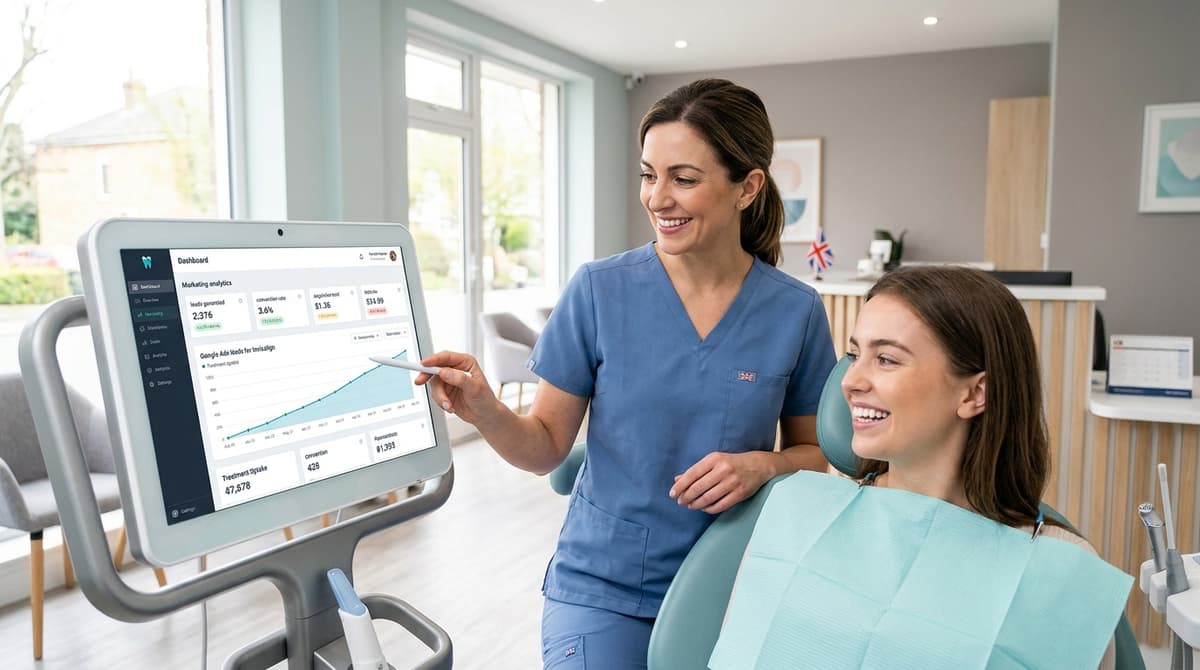
Determining the right budget for Invisalign Google Ads in the UK is less about finding the absolute cheapest management and more about establishing a minimum viable spend that yields tangible results. For independent practices looking to generate qualified consultations, a recommended minimum ad spend often falls between £500 and £1,500 per month, as suggested by industry insights from sources like Remedo and DentalScapes. This budget is not for management fees but for the actual ad spend that Google charges for clicks. Below this threshold, it becomes exceptionally difficult to generate sufficient data, achieve competitive keyword visibility, and test different ad creatives or audience segments effectively. Investing a realistic amount ensures your campaigns have the fuel they need to perform and provide the data necessary for optimisation, which is key to finding the Cheapest Google Ads management for Invisalign leads by maximising ROI.
London vs Manchester vs smaller cities: how location changes your budget
Geographic location significantly impacts your required budget for Invisalign Google Ads in the UK. Major metropolitan areas like London and Manchester boast higher patient demand and treatment volumes, but they also feature intense competition. This competition drives up the cost per click for desirable keywords. To illustrate, a keyword like “Invisalign London dentist” will invariably cost more per click than “Invisalign Northampton.” Consequently, a practice in Greater London might need an ad spend closer to the £1,500+ mark monthly to achieve comparable visibility and lead volume to a practice in a smaller city that can operate effectively within the £500-£800 range. Understanding these regional cost differences is essential for setting a realistic budget that accounts for local market dynamics and competition levels.
The £500-£1,500 per month sweet spot for independent practices
For many independent UK dental practices focusing on private, high-value treatments like Invisalign, a monthly ad spend between £500 and £1,500 represents a ‘sweet spot’. This budget range is substantial enough to compete effectively in most local markets without being prohibitively expensive. It allows for targeted keyword bidding, the creation of compelling ad copy and extensions, and the development of optimised landing pages. Importantly, it generates enough click volume for Google’s algorithms to learn and for your marketing team to gather meaningful performance data. With this level of investment, practices can start seeing consistent lead generation, often achieving conversion rates around 9%, according to Remedo. This level of spend is often what allows for the most cost-effective management, as it provides a solid foundation for performance-based strategies rather than just chasing the lowest management fee.
How to compete with big players (SmileDirectClub, Invisalign direct) on a shoestring
Competing with large corporate entities like SmileDirectClub or direct Invisalign marketing efforts on a smaller budget requires strategic precision rather than sheer volume. While they may outspend you significantly, they often lack the personal touch and local authority that independent practices can champion. Your strategy should focus on highly targeted long-tail keywords (e.g., “Invisalign cost [your town] dentist,” “best orthodontist for clear aligners near me”). Furthermore, use your local presence and patient testimonials. These are powerful differentiators that big players struggle to replicate. Ensure your landing pages are exceptionally relevant and user-friendly, and use Google’s targeting options to reach specific demographics and locations within your service area. While a £500-£1,500 ad spend is a starting point, smart management and a focus on quality over quantity are your best tools for competing effectively on a tighter budget.
NHS vs private: why your patient mix affects your ad spend
Your practice’s patient mix. The balance between NHS and private patients. Profoundly influences your Google Ads budget strategy for Invisalign. Practices heavily reliant on NHS work may have a smaller pool of patients willing or able to invest in private, elective treatments like Invisalign. In such cases, a larger portion of your marketing budget may need to be allocated to precisely target individuals who demonstrably seek private cosmetic or orthodontic solutions. Conversely, a practice that is already predominantly private might find it easier to justify a higher ad spend, knowing that the potential ROI from each new Invisalign patient is substantial. The data from your existing patient base regarding treatment uptake and spend habits is invaluable in setting an appropriate and effective Google Ads budget, ensuring your investment aligns with your practice’s revenue streams and patient demographics.
Key Insight: Budgeting for Results
Don’t view your Google Ads budget as a cost, but as an investment. The Invisalign Lead Generation System has demonstrated potential ROI of 548.85%, turning ad spend into significant profit. A minimum viable ad spend of £500-£1,500 per month allows for competitive visibility and data generation, making it possible to achieve such returns, especially when managed by experts focused on lead quality and conversion.
Wondering what AI tells patients about your practice? Free one page report in 48 hours. Where you are cited, where competitors win, and the gap.
Get your free AI Visibility CheckDIY, Freelancer, or Agency: Which Is the Cheapest Route to Invisalign Leads?
When seeking the Cheapest Google Ads management for Invisalign leads, the decision of who manages your campaigns is paramount. Many practice owners initially consider tackling Google Ads themselves or hiring a freelancer to cut costs. However, the perceived savings often evaporate when hidden expenses are factored in. The goal is not merely to spend less on management fees, but to invest wisely for the highest return on investment, generating qualified consultations that convert into profitable Invisalign treatments. Understanding the true cost of each management path. From your own time to the specialised expertise of an agency. Is key to making an informed decision that drives genuine practice growth.
The hidden costs of DIY: time, mistakes, and missed opportunities
While managing your own Google Ads might seem like the ultimate money-saver, the reality for most busy dental practice owners is starkly different. Your valuable time, estimated at several hours per week, is better spent on patient care, team management, or strategic practice development. Each hour you dedicate to learning Google Ads, setting up campaigns, monitoring performance, and troubleshooting issues is an hour not spent generating revenue elsewhere. Furthermore, a lack of specialised knowledge can lead to costly mistakes. Misconfigured conversion tracking, poor keyword selection, or ineffective ad copy can result in significant wasted ad spend. For example, a practice owner might spend £1,000 on ads and £500 on management, only to achieve a low ROI. However, if they manage it themselves, they might spend £1,000 on ads and hundreds of hours of their own time, with far worse results, failing to capture leads effectively. This is why many UK dental practices find that the ‘cheapest’ DIY route ultimately costs them more in lost revenue and missed opportunities.
Freelancer management: lower fees but higher risk of inconsistency
Hiring a freelance Google Ads specialist can offer a middle ground, often with lower fees than a full-service agency. Freelancers can provide focused expertise for specific tasks. However, this route carries its own set of risks. The quality and reliability of freelancers can vary dramatically, and their availability might be inconsistent, especially if they juggle multiple clients. You may find yourself without dedicated support during critical campaign periods or facing delays in implementation. Moreover, a freelancer might lack the breadth of experience that comes from working across numerous dental practices and diverse campaigns, which is essential for understanding nuanced strategies. For example, a freelancer might be adept at setting up basic campaigns but lack the strategic insight to optimise for high-value treatments like Invisalign, or they may not have the tools and processes to ensure comprehensive reporting and transparent tracking, making it harder to ascertain true cost-effectiveness.
Agency management: what you get for the premium
A reputable dental marketing agency, like Dominate Dental, offers a comprehensive package that often justifies a higher fee. You gain access to a team of specialists with deep expertise in dental PPC, including specific knowledge of treatments like Invisalign. This includes dedicated account managers, copywriters, SEO specialists, and data analysts who work collaboratively. Agencies typically employ sophisticated systems for campaign management, optimisation, and reporting, providing transparency and detailed insights into performance. They also possess advanced tools and technologies that individual freelancers or practice owners rarely have access to. This integrated approach ensures that your campaigns are not only set up correctly but are continuously refined based on data and market trends. For example, agencies can often identify and capitalise on niche keyword opportunities or implement complex audience segmentation strategies that a freelancer might overlook, directly contributing to better lead quality and a lower cost per qualified lead.
Performance-based pricing: the ultimate ‘cheap’ option that pays for results
The most cost-effective and lowest-risk approach to Google Ads management is often performance-based pricing. Instead of paying a flat fee or a percentage of ad spend regardless of outcomes, you pay primarily for results. Such as qualified leads or booked consultations. This model directly aligns the agency’s success with yours. At Dominate Dental, we offer solutions like the Invisalign Lead Generation System, which is built around delivering tangible outcomes. This system has been instrumental in helping practices increase Invisalign cases significantly, generating over £17,000 per month in revenue for one client and achieving a 548.85% ROI. With performance-based models, your investment is directly tied to the generation of new patients, making it the truest definition of ‘cheap’ because it ensures your marketing spend is working hard to bring in profitable business, reducing the risk of wasted expenditure and guaranteeing a focus on conversion.
Comparing Invisalign Google Ads Management Routes
| Management Route | Typical Cost Structure | Pros | Cons | Best For |
|---|---|---|---|---|
| DIY | Your time investment (significant) | Zero direct management fee | High time commitment, steep learning curve, risk of costly mistakes, missed opportunities, no specialised expertise | Practices with ample time and a very low budget, willing to accept lower performance |
| Freelancer | Hourly rate or fixed project fee (£200-£600/month) | Potentially lower fees than agencies, focused expertise | Inconsistent availability, variable quality, limited scope of services, higher risk of inconsistency, may lack strategic depth | Practices with specific, limited needs and moderate budgets, comfortable managing the freelancer directly |
| Agency | Fixed fee (£300-£1,000+/month) or % of ad spend (15-20%) | Expert team, comprehensive services, strategic planning, advanced tools, proven processes, transparency | Higher upfront cost, requires careful vetting to ensure expertise matches needs | Practices seeking growth, wanting expert management, and valuing ROI and patient acquisition |
| Performance-Based (e.g., Invisalign Lead Generation System) | Primarily based on lead/consultation volume; often a component of overall management | Directly tied to results, lowest risk, highest ROI potential, focuses on qualified leads | May require a partnership commitment, success dependent on the provider’s capabilities | Practices prioritizing tangible results and minimal risk, focused on high-value treatments like Invisalign |
How to Reduce Your Cost-Per-Click and Maximise Every Penny
Achieving the Cheapest Google Ads management for Invisalign leads isn’t just about finding a low management fee; it’s about optimising your campaigns to reduce the cost of acquiring each click and, more importantly, each lead. Even with a modest budget, strategic implementation can significantly improve your return on investment. This involves meticulous keyword research, ensuring your ads are highly relevant to user searches, and building landing pages that convert visitors into enquiries. By focusing on these core optimisation tactics, you ensure that every pound spent on advertising contributes directly to generating qualified consultations for your Invisalign treatments, rather than being frittered away on irrelevant traffic or poor user experiences.
Keyword research and negative keywords: stop burning cash on irrelevant clicks
The foundation of an efficient Google Ads campaign lies in precise keyword selection. For Invisalign, this means identifying terms that indicate high intent, such as “Invisalign treatment cost [your town]” or “orthodontist for clear aligners.” Avoid broad, generic terms that attract unqualified clicks. Equally important is the strategic use of negative keywords. These are terms you tell Google *not* to show your ads for. For example, if you only offer private Invisalign, you’d add negative keywords like “NHS Invisalign,” “free Invisalign consultation,” or “dental assistant Invisalign jobs.” This prevents your ads from appearing for searches that will never convert, thereby saving your ad budget and improving your click-through rate (CTR). Proper keyword research and negative keyword implementation are essential steps to ensure you’re not wasting money on clicks from people who are not potential Invisalign patients.
Quality Score hacks for Invisalign campaigns
Google’s Quality Score is a metric that assesses the quality and relevance of your ads, keywords, and landing pages. A higher Quality Score can lead to lower costs per click and better ad positions. For Invisalign campaigns, focus on three key components: Expected CTR, Ad Relevance, and Landing Page Experience. Ensure your ad copy directly addresses the user’s search query and highlights the benefits of Invisalign. Your landing page should be highly relevant to the ad clicked, providing clear information about Invisalign, your practice, and a straightforward call to action. For instance, an ad for “affordable Invisalign options” should lead to a landing page detailing payment plans and the benefits of choosing your practice for clear aligners. Regularly reviewing and improving these elements boosts your Quality Score, directly reducing the cost of each click and enhancing the overall efficiency of your ad spend.
Landing page alignment: why your ad copy must match the page exactly
A significant factor in both Quality Score and conversion rates is the alignment between your ad copy and your landing pages. When a user clicks an ad, they expect the page they land on to directly relate to the promise made in the advertisement. For Invisalign, if your ad mentions “free consultation for clear braces,” the landing page must prominently feature that offer. Mismatched messaging leads to user confusion, high bounce rates, and wasted ad spend. A well-aligned landing page reinforces trust and guides the user seamlessly towards conversion. This means using consistent messaging, keywords, and offers across your ads and landing pages. Investing in dedicated landing pages for specific treatments like Invisalign, rather than sending traffic to your homepage, can dramatically improve conversion rates and lower your cost per lead, making your budget work harder.
Conversion tracking and attribution: the only way to know what’s working
You cannot effectively optimise or determine the true cost of your Invisalign leads without accurate conversion tracking. This involves setting up Google Ads to register specific actions on your website as conversions, such as form submissions for consultation bookings, phone calls from your ads, or even form fills for a downloadable Invisalign guide. Attribution models help you understand which ads, keywords, and campaigns are contributing most to these conversions. Without this data, you’re essentially flying blind, unable to discern which parts of your campaign are profitable and which are draining your budget. For example, if your ad spend is £1,000 and you think you’re getting leads, but without tracking, you don’t know if those leads are converting into patients, or if a different keyword is actually driving the most valuable enquiries. Implementing robust conversion tracking is fundamental to identifying what’s truly working, optimising for the Cheapest Google Ads management for Invisalign leads by focusing on performance, and ensuring a strong ROI.
Actionable Tip: Focus on Lead Quality
Don’t just aim for clicks; aim for consultations. High-quality leads are the cornerstone of profitable Invisalign marketing. By meticulously refining keywords, utilising negative keywords, ensuring ad-to-landing page relevance, and tracking conversions accurately, you transform your ad spend from a cost into a predictable revenue generator. This strategic approach, exemplified by systems like the Invisalign Lead Generation System, ensures you attract patients ready for treatment, maximising your ROI and solidifying your practice’s growth.
Red Flags in Cheap Management Services (and How to Avoid Them)

When searching for the Cheapest Google Ads management for Invisalign leads, it’s tempting to opt for the lowest bidder. However, budget-friendly services can often mask significant inefficiencies and hidden costs that ultimately harm your practice’s growth. As a dental marketing expert focused on delivering tangible results for UK practices, I’ve seen firsthand how seemingly attractive low fees can lead to wasted ad spend, poor quality leads, and a frustrating lack of return. It’s imperative to look beyond the price tag and identify the warning signs that indicate a service might be too cheap to be effective. Understanding these red flags empowers you to make an informed decision, ensuring your marketing investment translates into genuine patient acquisition and revenue growth, rather than just a depleted budget.
Agencies that hide change logs or make excessive tweaks
Transparency is paramount in any marketing partnership. If an agency is reluctant to provide detailed change logs or makes numerous, unexplained modifications to your campaigns, it’s a significant red flag. To illustrate, a provider making 219+ changes in 12 months without clear strategic justification, as noted from client feedback, suggests a lack of focused strategy or a reactive, rather than proactive, approach. This can lead to campaign instability and make it difficult to track what’s actually driving performance. Instead, you should expect clear documentation of all significant changes, along with explanations of the rationale behind them and their expected impact. This allows you to understand how your budget is being utilised and how optimisations are being made to improve lead generation for treatments like Invisalign.
The ‘set and forget’ trap: why cheap management rarely optimises
The most common pitfall with budget-friendly Google Ads management is the ‘set and forget’ mentality. Agencies that charge minimal fees often lack the resources, expertise, or incentive to continuously monitor and optimise campaigns. This means your ads might be running on autopilot, failing to adapt to market shifts, competitor actions, or evolving patient search behaviour. For Invisalign campaigns, this can be particularly damaging. Without ongoing optimisation of keywords, ad copy, bidding strategies, and audience targeting, your cost per click can creep up, and the quality of leads will inevitably decline. A truly effective campaign requires constant refinement to maintain relevance and efficiency, ensuring you are attracting the most qualified patients at the lowest possible cost per lead.
Landing page mismatches that kill your conversion rate
A disconnect between your Google Ads and the landing pages they direct traffic to is a surefire way to waste money and kill conversion rates. If your ads promise specific Invisalign benefits, offers, or information, the landing page must deliver precisely that. Cheap management services may overlook this essential element, failing to create dedicated, high-converting landing pages or ensuring existing pages accurately reflect ad content. This mismatch erodes user trust, increases bounce rates, and leads to a poor Quality Score, driving up your advertising costs. For example, an ad promoting “affordable Invisalign finance options” must land on a page detailing payment plans, not a general contact form. Ensuring perfect alignment between ad promise and landing page reality is fundamental to turning clicks into consultations.
How to vet a provider: a 5-point checklist for UK dentists
Selecting the right Google Ads management partner is critical for generating qualified Invisalign leads efficiently. Before committing, use this checklist to thoroughly vet potential providers:
Vetting Your Google Ads Management Provider
- Specialisation in Dentistry: Do they understand the nuances of dental marketing, specifically high-value treatments like Invisalign?
- Transparent Reporting: Can they provide clear, detailed reports on ad spend, clicks, leads, CPL, and ROI? Are change logs readily available?
- Performance-Based Focus: Do they emphasise results and offer models that align their fees with your success (e.g., lead volume, consultation bookings)?
- Case Studies & Metrics: Can they show demonstrable results from similar dental practices, backed by real data and ROI figures?
- Communication & Strategy: Do they have a clear communication strategy and a proactive approach to campaign optimisation, rather than a ‘set and forget’ model?
By rigorously applying these criteria, you can filter out less effective or transparent services and identify a partner committed to delivering the Cheapest Google Ads management for Invisalign leads through genuine performance and value, not just low fees.
Pros and Cons of Budget Google Ads Management
Pros
- Potentially lower upfront management fees, making initial marketing spend seem more accessible.
- May appeal to practices with extremely limited budgets or those testing PPC for the first time.
- Could offer basic campaign setup and monitoring for simple, low-competition markets.
Cons
- High risk of wasted ad spend due to poor optimisation and targeting.
- Leads generated are often of low quality, resulting in low conversion rates to consultations and treatments.
- Lack of transparency in reporting and campaign changes.
- ‘Set and forget’ approach leads to stagnation and missed opportunities for growth.
- Inability to compete effectively against better-managed campaigns for high-value keywords.
- Ultimately costs more in lost revenue and missed patient opportunities than it saves in fees.
References
Frequently Asked Questions
How to reduce cost per lead on Google Ads?
Cheapest Google Ads management for Invisalign leads reduces cost per lead by optimising targeting, ad quality, and landing page conversion rates rather than simply cutting fees. You must refine keyword relevance and continuously adjust bidding strategies based on performance data to attract qualified patients efficiently. A data-driven approach ensures your budget generates high-value consultations while keeping acquisition costs under control.
Is $10 a day enough for Google Ads?
Cheapest Google Ads management for Invisalign leads does not support a daily budget of $10, as this amount is insufficient for competitive UK markets. Premium keywords for Invisalign often exceed £10 per click, meaning a small budget will exhaust quickly without generating qualified impressions. Effective campaigns require a higher monthly investment to gather enough data for optimisation and attract genuine patient enquiries.
What is the average cost per lead on Google Ads?
Cheapest Google Ads management for Invisalign leads targets a cost per lead that aligns with your practice’s revenue goals, typically ranging from £30 to £100 for Invisalign campaigns. This average varies based on location and competition, but the real value comes from calculating your break-even point against the lifetime value of a new patient. Managing costs effectively means ensuring each lead has a high probability of converting into a consultation rather than just minimising the initial spend.
How much do Google Ads charge per lead?
Cheapest Google Ads management for Invisalign leads does not involve a direct charge per lead from Google, as costs are driven by auction dynamics and keyword bidding. The actual cost per lead depends on your campaign performance, targeting precision, and the quality of your landing page, often falling between £30 and £100 for Invisalign-related searches. Focusing on the management fee alone ignores these variables, so practices should evaluate total ad spend against the number of qualified consultations received.
Fixed fee vs percentage of ad spend?
Cheapest Google Ads management for Invisalign leads often involves choosing between a fixed monthly fee or a percentage of ad spend, depending on your budget scale. Fixed fees typically range from £300 to £800 per month, offering predictability, while percentage models charge 15% to 20% of your monthly ad budget. The most cost-effective option depends on your total spend volume, as a percentage fee may become cheaper than a high fixed rate once your campaign scales significantly.
Why is cheap management risky?
Cheapest Google Ads management for Invisalign leads can result in higher overall costs if the agency lacks the expertise to optimise campaigns and attract qualified patients. Low-fee providers often use a set-and-forget approach that leads to wasted ad spend, poor targeting, and a decline in lead quality over time. True value comes from continuous refinement of keywords, ad copy, and bidding strategies to ensure your budget generates high-quality consultations rather than just clicks.
This is what we do for UK practices, done with you:
Real client results, not a promise. The number we commit to for your practice is agreed up front and written into the agreement.
Patients in the chair, not just leads. Guaranteed.
We own the whole journey to the attended consultation. New attended patient consultations in 90 days, or we work free until you hit them.Book a chat with Josie