
The Complete Guide to Compare dental sales training feedback tools?
On this page
What is Compare dental sales training feedback tools??Benefits of Compare dental sales training feedback tools?How to Choose Compare dental sales training feedback tools?Essential features for a dental practiceFrequently Asked QuestionsWhat are the best dental sales training feedback tools available?How do call reviews, surveys and online forms support dental sales coaching?What features should I look for in a feedback tool?How much do these tools cost?Can feedback tools integrate with existing dental software?Before you read on. Want to know which dentist AI recommends in your town, and whether it is you?
Get your free AI Visibility Check
Compare dental sales training feedback tools?
For a dental practice, Compare dental sales training feedback tools? is not simply a software question. It is a patient acquisition decision that may affect case acceptance, consultation bookings, treatment value and team confidence. The right system can turn conversations into coaching data, helping principals review why suitable patients do not proceed with Invisalign, implants or private treatment.
Key Takeaways
- For a dental practice, Compare dental sales training feedback tools?
- It is a patient acquisition decision that may affect case acceptance, consultation bookings, treatment value and team confidence.
- The right system can turn conversations into coaching data, helping principals review why suitable patients do not proceed with Invisalign , implants or private treatment.
At Dominate Dental, we look beyond feature lists. We assess whether feedback is specific enough to support behaviour change, quick enough for busy teams to use and connected to the wider patient journey. That means reviewing call quality, enquiry handling, follow-up discipline, appointment outcomes and conversion reporting together.
What is Compare dental sales training feedback tools??
Compare dental sales training feedback tools? by examining how each system captures patient interactions, identifies coaching opportunities and measures progress over time. A useful platform may collect feedback from telephone calls, web enquiries, treatment consultations and follow-up messages. It should then present practical information that a practice manager or treatment coordinator can act upon, rather than producing vague scores without context.
These tools support sales coaching without replacing clinical judgement. They can highlight whether a team member explained finance clearly, checked the patient’s priorities, responded to hesitation, arranged a suitable next step or recorded the enquiry correctly. This distinction matters because low case acceptance does not always indicate weak clinical expertise. Patients may leave without booking because the conversation lacked structure, the follow-up was late or the value of treatment was not explained in terms that felt relevant to them.
A sound feedback process combines conversation review, team self-assessment, manager observations and performance indicators such as consultation attendance, treatment plans accepted and enquiries converted. The software is only one part of that process. Clear coaching standards, regular review meetings and consistent ownership determine whether the information changes daily behaviour.
Benefits of Compare dental sales training feedback tools?
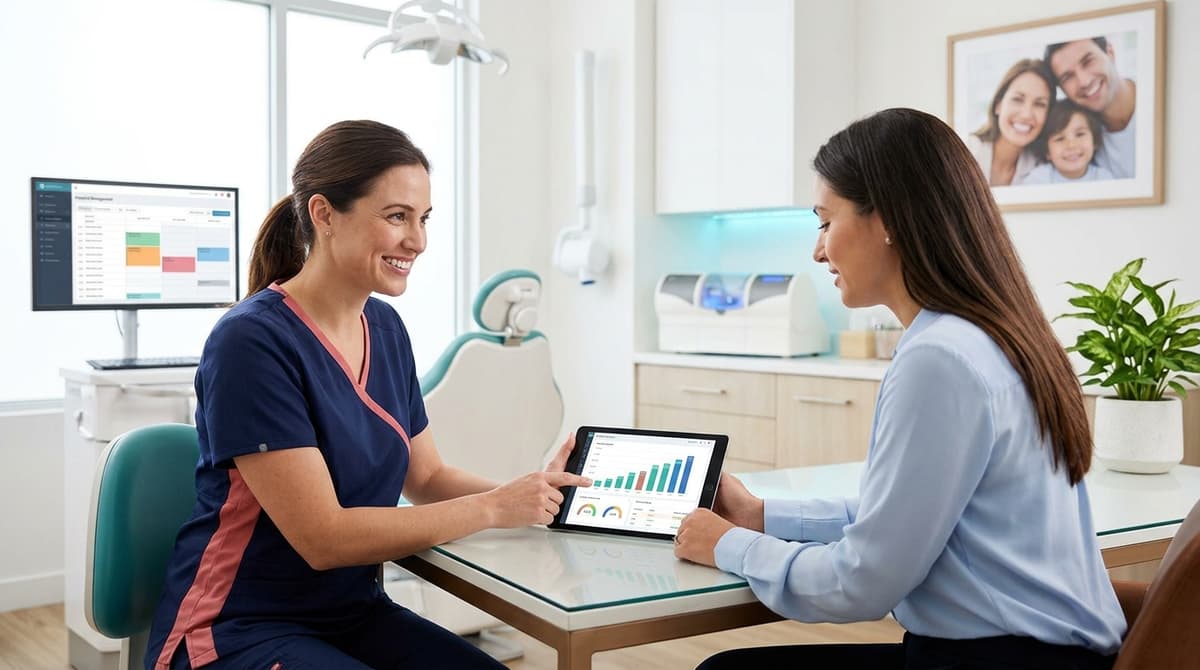
Compare dental sales training feedback tools? with the operational problems they are expected to solve. A system should help a practice understand performance between training sessions, not only provide a report after a workshop. This can create a clearer view of enquiry handling, consultation quality, response times and patient follow-up across the whole team.
One benefit is more objective coaching. Manual feedback can depend on memory or personal preference, while recorded interactions and structured forms give managers evidence to discuss. Team members can see which behaviours support patient trust and which points cause conversations to stall. A Zigpoll dental survey reports that 70% of dental teams say sales training feedback improves confidence. Read the survey findings.
Feedback can support case-acceptance coaching. The supporting dental sales training resource explains why call analysis should sit alongside coaching, rather than operate as a separate reporting exercise. The practical lesson is to examine the point at which a patient disengages, then coach the communication skill linked to that moment.
Structured review can support retention as well as first-appointment conversion. That supports a broader view of performance: the objective is not to pressure a patient into treatment, but to provide clear information, set expectations accurately and create a reliable follow-up experience. For practices investing in Invisalign acquisition, the Dominate Dental digital marketing service provides a relevant example of a patient-generation process built around consultation demand and measurable actions.
Cost should be assessed against usage and commercial impact. The right budget depends on the number of users, call volume, recording requirements, reporting depth, integration needs and coaching time. Dominate Dental’s digital marketing services may suit practices that want feedback and patient acquisition activity connected to an Invisalign growth objective, rather than treating training data as an isolated exercise.
Wondering what AI tells patients about your practice? Free one page report in 48 hours. Where you are cited, where competitors win, and the gap.
Get your free AI Visibility CheckHow to Choose Compare dental sales training feedback tools?
Begin with the commercial problem you need to solve. A practice with low case acceptance may need conversation analysis, while a multi-site group may prioritise consistent scoring and manager reporting. Define the patient journey under review: telephone enquiry, website form, consultation, finance discussion, treatment-plan follow-up or reactivation. This prevents a feature-led purchase and gives your team a clear standard against which each interaction can be assessed.
Review how feedback is collected. Useful systems should support call recordings, written interaction notes, team self-assessments and manager evaluations, with a consistent scoring framework across the practice. Look for criteria linked to observable behaviours, such as asking open questions, identifying treatment motivations, explaining next steps, checking understanding and booking a consultation. A score without supporting evidence rarely changes performance. Audio clips, written comments and time-stamped observations give treatment coordinators specific coaching actions.
Essential features for a dental practice
Prioritise accessibility for the people who will use the system each week. A clear dashboard should show enquiry volume, contact rate, consultation bookings, attendance, treatment-plan acceptance and follow-up activity. Filters by team member, treatment type, location and date range make patterns easier to identify. Automated prompts can reduce missed coaching sessions, while role-based permissions help protect patient information.
- Dental workflow compatibility: Check whether the tool can connect with your practice management system, telephone platform, CRM, web enquiry forms and appointment calendar. Confirm which integrations are native and which require a separate connector.
- Practical reporting: Select reports that distinguish activity from outcomes. A high number of calls does not necessarily indicate effective communication if consultation attendance remains weak.
- Feedback speed: Near-real-time notifications can help managers address missed opportunities while the conversation remains fresh. Scheduled reviews may suit smaller practices with lower enquiry volume.
- Patient privacy: Ask how recordings are stored, who can access them, how long they are retained and how consent is managed. Your data protection responsibilities remain with the practice.
- Coaching workflow: Team members should be able to acknowledge feedback, record an action plan and revisit the interaction later. This creates accountability without turning review into criticism.
Assess the tool against your current workload. Manual review of every interaction can consume valuable manager time, so ask whether conversations can be prioritised by treatment value, missed appointment, patient sentiment or incomplete follow-up. Artificial intelligence may help identify themes, but human review remains necessary for context, clinical sensitivity and fair coaching. The strongest process combines automated detection with a manager’s judgement.
Calculate the full monthly cost before committing. Include user licences, call recording, transcription, integration fees, onboarding, training and support. Compare the likely cost with your consultation volume and private treatment opportunity. Set a baseline before implementation, then review progress after an agreed period using measures such as response time, booking rate, attendance, case acceptance and revenue by treatment category.
Frequently Asked Questions
What are the best dental sales training feedback tools available?
The best option is the one that matches your practice workflow, treatment mix and coaching capacity. Prioritise call recording, structured scorecards, written feedback, role-based access, performance reporting and integration with your telephone, CRM and practice management systems. The platform should connect conversation quality with outcomes such as consultation bookings, attendance, follow-up completion and treatment acceptance. A feature-rich system will not improve performance unless your team uses it consistently and managers turn findings into practical coaching.
How do call reviews, surveys and online forms support dental sales coaching?
Each method captures a different type of evidence. Call reviews show how receptionists and treatment coordinators handle questions, hesitation and finance discussions. Patient surveys reveal how the experience felt from the patient’s perspective. Online forms can support self-assessment after training or record a manager’s review of a consultation. Combining these sources gives a more balanced view than relying on a single score. Keep the assessment criteria consistent, including rapport, discovery questions, treatment explanation, expectation setting and next-step booking.
What features should I look for in a feedback tool?
Look for searchable recordings, transcription, custom scorecards, comments linked to specific moments, coaching assignments and progress reporting. Data protection controls also matter. Confirm how patient information is stored, who can access recordings, how consent is recorded and how long data remains available. Ask for a demonstration using a realistic Invisalign or implant enquiry. You should be able to see how the interaction is reviewed, how feedback reaches the team member and how improvement is measured later.
How much do these tools cost?
The final price depends on user numbers, recording and transcription capacity, integrations, onboarding and support. Calculate the full subscription cost alongside the time required for coaching. A lower-priced system may offer limited reporting, while a larger package may be unnecessary for a small team. Set baseline figures for response time, consultation bookings and case acceptance before purchase, then assess commercial progress at regular intervals.
Can feedback tools integrate with existing dental software?
Many systems can connect with practice management software, telephony, calendars, websites and customer relationship management platforms, although integration depth varies. Ask whether the connection is native, whether an additional connector is required and which data fields transfer. Confirm that duplicate patient records, missed enquiries and appointment outcomes can be identified accurately. Dominate Dental’s digital marketing services can support practices seeking a more connected patient acquisition process, while feedback software supplies the coaching evidence needed to improve enquiry handling.
For practices planning sustained Invisalign growth, Dominate Dental’s digital marketing services offer a focused framework for generating consultation demand and reviewing the actions that influence conversion.
Real client results, not a promise. The number we commit to for your practice is agreed up front and written into the agreement.
Patients in the chair, not just leads. Guaranteed.
We own the whole journey to the attended consultation. New attended patient consultations in 90 days, or we work free until you hit them.Book a chat with Josie