
Dental Implant Marketing in the UK | Boost Same-Day Implant Leads
On this page
Who Qualifies for Same-Day Dental Implants?Essential Candidacy CriteriaDiagnostic Assessment ProcessThe Complete Same-Day Implant ProcessPre-Surgical PreparationSurgical Procedure StepsComprehensive Benefits and Risks AssessmentLong-Term Success FactorsChoosing the Right Provider and TechnologyEssential Technology RequirementsRed Flags to AvoidEmerging Technologies and Future TrendsPatient Selection RefinementsMaking the Right DecisionFrequently Asked QuestionsCan you have dental implants in one day?Can you get implants put in the same day?Can you get the implant on the same day?What are the disadvantages of immediate loading implants?How quickly can dental implants be done?Can I go to work the next day after a dental implant?About the AuthorBefore you read on. Want to know which dentist AI recommends in your town, and whether it is you?
Get your free AI Visibility CheckThe landscape of dental implant treatment has transformed dramatically over the past decade. What once required months of waiting between procedures can now be accomplished in a single day, thanks to revolutionary advances in digital dental implant technology and surgical techniques.
Key Takeaways
- Dental implant in one day involves placing the implant and attaching a temporary crown or bridge in a single appointment.
- This technique allows patients to leave with functional teeth immediately, while the permanent restoration is fitted after 3-6 months of healing.
- Successful outcomes depend on adequate bone density, good oral health, and strict adherence to aftercare protocols.
- Advances in digital dental implant technology have significantly reduced treatment time from months to a single day.
Table of Contents
Traditional dental implant procedures typically involve multiple appointments spread across 6–12 months: initial consultation, implant placement, healing period, and finally crown attachment. For many patients, this extended timeline means months of living with gaps in their smile or uncomfortable temporary dentures, prompting some to explore sharpened teeth solutions.
Same-day dental implants, also known as immediate load implants, have emerged as a game-changing solution for suitable candidates. This innovative approach combines implant placement with immediate provisional restoration, allowing patients to walk out of the surgery with a complete, functional smile in just one appointment. Utilizing dental implants healing abutments further enhances stability during the critical early healing phase.
According to recent clinical studies, immediate load dental implants demonstrate success rates of 95-98% when performed on properly selected candidates with adequate bone density and optimal oral health conditions.
The growing popularity of dental implant in one day procedures reflects both technological advancement and changing patient expectations. Modern patients increasingly seek fee for service dental solutions that minimise disruption to their daily lives whilst delivering immediate aesthetic and functional benefits.
However, understanding the pros and cons of dental implants in immediate load scenarios is crucial for making an informed decision. Not every patient qualifies for same-day treatment, and the success of these procedures depends heavily on careful case selection, precise surgical technique, and meticulous post-operative care.
The integration of digital dental implants planning has been instrumental in making same-day procedures more predictable and successful. Advanced imaging technologies, including CBCT scans and computer-guided surgery, enable precise implant placement and immediate loading protocols that were previously impossible.
For dental practices offering high-value treatments like immediate load implants, patient education becomes paramount. Understanding the complete process, from initial assessment through long-term maintenance, helps set realistic expectations and ensures optimal outcomes.
This comprehensive guide examines the critical steps involved in same-day dental implant procedures, explores candidacy requirements, and provides an honest assessment of both benefits and potential risks. We’ll also address the dangers of one day dental implants that patients should be aware of before proceeding with treatment.
Whether you’re considering same-day implants for yourself or seeking to understand this advanced treatment option, this analysis will provide the evidence-based insights needed to make an informed decision about your dental health investment.
Who Qualifies for Same-Day Dental Implants?
The success of dental implant in one day procedures depends critically on proper patient selection. Unlike traditional implants that allow extended healing time to compensate for suboptimal conditions, immediate load implants require specific clinical criteria to achieve predictable outcomes.
Comprehensive patient evaluation involves multiple factors that determine candidacy for same-day treatment. These assessments help identify patients who can safely receive immediate functional restoration whilst minimising the dangers of one day dental implants associated with premature loading.
Essential Candidacy Criteria
Successful same-day implant candidates must meet several key requirements. Adequate bone density stands as the primary consideration, as immediate loading places greater stress on the implant-bone interface during the critical healing period.
Bone quality assessment typically involves CBCT imaging to evaluate both quantity and density. Patients with Type I or Type II bone quality (dense cortical bone) generally achieve better primary stability necessary for immediate loading protocols.
Good general health proves equally important, as systemic conditions can significantly impact healing and implant integration. Well-controlled diabetes, absence of active periodontal disease, and non-smoking status create optimal conditions for successful outcomes.
Smoking represents one of the most significant risk factors for immediate load implant failure. Nicotine restricts blood flow to healing tissues, compromising osseointegration and increasing infection risk. Patients must commit to smoking cessation before and after treatment.
Diagnostic Assessment Process
The evaluation process for same-day implants extends beyond standard implant assessment. Digital dental implant planning utilises advanced imaging technologies to create precise treatment protocols and identify potential complications before surgery.
Three-dimensional imaging through CBCT scans provides detailed anatomical information essential for immediate loading success. This technology enables accurate measurement of available bone, identification of critical structures, and virtual implant placement planning using dental scans.
Clinical examination focuses on soft tissue health, occlusal relationships, and aesthetic requirements. Patients with active infection, severe bone loss, or unrealistic expectations may require alternative treatment approaches or extended healing protocols.
The Complete Same-Day Implant Process
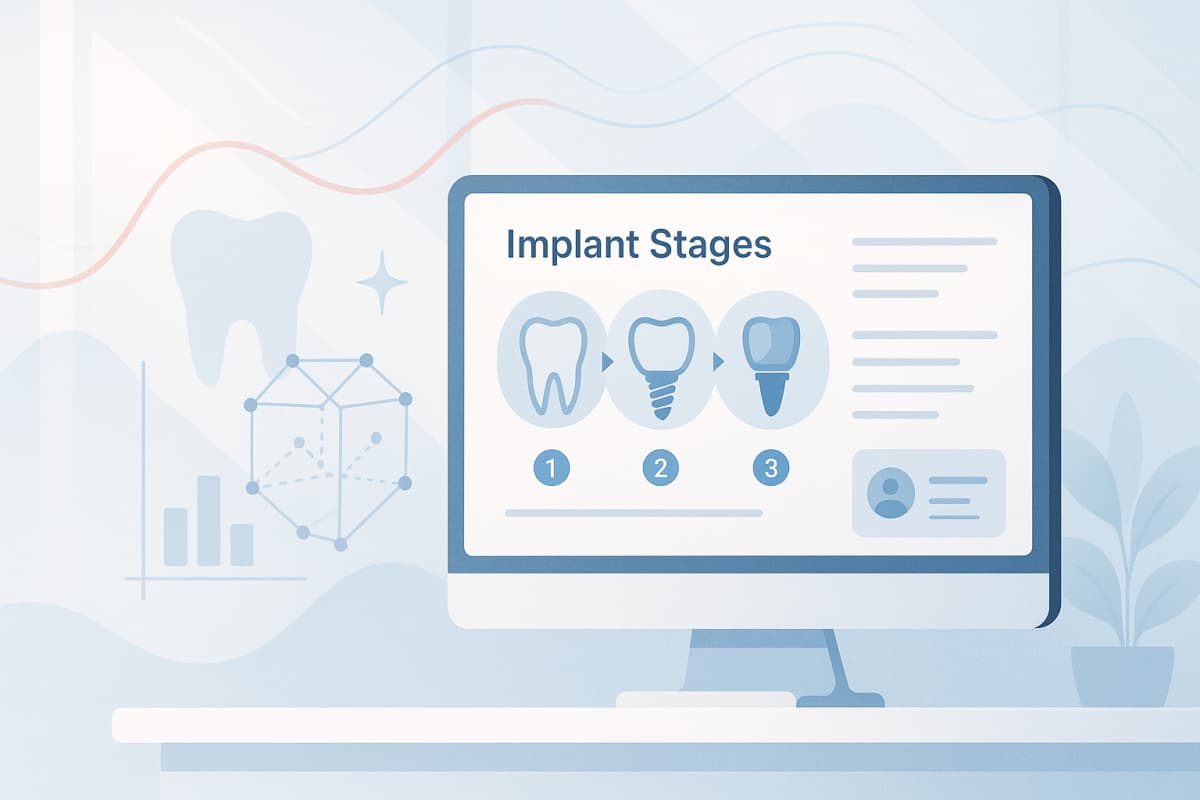
Understanding the step-by-step procedure helps patients prepare for treatment and set realistic expectations. The same-day implant process typically requires 2-4 hours depending on complexity and number of implants being placed.
Modern digital dental implants protocols integrate computer-guided surgery with immediate loading techniques to achieve predictable results. This systematic approach minimises surgical time whilst maximising precision and patient comfort.
Pre-Surgical Preparation
Treatment begins with comprehensive treatment planning based on diagnostic imaging and clinical assessment. Digital impressions or traditional moulds may be taken to fabricate temporary restorations in advance of surgery.
Surgical guides created from CBCT data enable precise implant placement according to the predetermined treatment plan. These guides ensure optimal positioning for both functional and aesthetic outcomes whilst avoiding anatomical structures.
Patients receive detailed pre-operative instructions including dietary restrictions, medication protocols, and post-operative care guidelines. Arranging transportation and time off work ensures a smooth treatment experience.
Surgical Procedure Steps
- Anaesthesia and preparation: Local anaesthetic ensures patient comfort throughout the procedure. Sedation options may be available for anxious patients.
- Site preparation: If tooth extraction is required, this is performed first with careful attention to preserving surrounding bone and soft tissue.
- Implant placement: The titanium implant is precisely positioned using surgical guides, achieving primary stability of 35-45 Ncm torque for immediate loading.
- Abutment connection: The healing abutment or final abutment is attached to the implant, depending on the restoration type.
- Temporary restoration: The pre-fabricated temporary crown or bridge is adjusted and cemented, providing immediate function and aesthetics.
- Occlusal adjustment: Bite relationships are carefully adjusted to prevent excessive forces on the healing implant.
- Post-operative instructions: Detailed care instructions and follow-up appointments are scheduled to monitor healing progress.
The immediate restoration serves multiple purposes beyond aesthetics. It maintains soft tissue contours, prevents adjacent tooth movement, and provides psychological benefits by eliminating the edentulous period.
Wondering what AI tells patients about your practice? Free one page report in 48 hours. Where you are cited, where competitors win, and the gap.
Get your free AI Visibility CheckComprehensive Benefits and Risks Assessment
Evaluating the pros and cons of teeth implants in immediate loading scenarios requires careful consideration of both short-term and long-term outcomes. While same-day procedures offer compelling advantages, they also present unique challenges that must be understood.
Clinical studies demonstrate that immediate load implants achieve success rates comparable to traditional protocols when performed on properly selected patients. However, the margin for error is smaller, making precise technique and patient compliance crucial.
Pros
- Immediate aesthetic improvement and restored confidence
- Reduced treatment time from months to hours
- Fewer surgical appointments and reduced overall discomfort
- Maintained facial support and soft tissue contours
- Immediate function for eating and speaking
- Preservation of interdental papilla and gingival architecture
- Higher patient satisfaction and treatment acceptance
Cons
- Stricter candidacy requirements limit patient eligibility
- Higher risk of implant failure if protocols aren’t followed
- Temporary restoration limitations requiring dietary modifications
- More complex surgical procedure requiring specialist expertise
- Potential for increased post-operative complications
- Higher initial treatment costs compared to traditional approaches
- Limited ability to modify treatment plan during healing
Long-Term Success Factors
The long-term success of same-day implants depends on several critical factors that extend beyond the initial surgical procedure. Osseointegration quality, soft tissue health, and mechanical stability all contribute to lasting treatment outcomes.
Patient compliance with post-operative instructions significantly influences success rates. This includes adherence to dietary restrictions, oral hygiene protocols, and regular follow-up appointments during the critical healing period.
The transition from temporary to permanent restoration typically occurs 3-6 months after implant placement, once osseointegration is confirmed through clinical and radiographic assessment. This permanent restoration provides optimal strength and aesthetics for long-term function.
Choosing the Right Provider and Technology
The success of dental implant in one day procedures depends heavily on provider expertise and technological capabilities. Not all dental practices offer the same level of experience or equipment necessary for predictable immediate loading outcomes.
When evaluating providers, prioritise those with specific training in immediate load protocols and extensive experience with same-day procedures. Board-certified oral surgeons or periodontists with implant fellowships typically demonstrate the advanced surgical skills required for complex cases.
Essential Technology Requirements
Modern digital dental implants require sophisticated diagnostic and surgical equipment to achieve optimal results. CBCT imaging, computer-guided surgery systems, and in-house laboratory capabilities represent the technological foundation for successful same-day treatment.
Practices offering same-day implants should utilise surgical guides created from digital planning software. This technology enables precise implant placement according to predetermined specifications, reducing surgical time and improving accuracy.
In-house CAD/CAM capabilities allow for same-day fabrication of temporary restorations, eliminating the need for external laboratory services and reducing treatment time. This integration ensures better quality control and immediate adjustments if required.
Ask potential providers about their success rates with immediate load implants specifically. Practices should be able to provide data on their outcomes, including survival rates at 1, 3, and 5 years post-treatment. Transparency about complications and how they’re managed indicates professional integrity.
Red Flags to Avoid
Certain warning signs indicate practices that may not provide optimal same-day implant care. Avoid providers who guarantee universal candidacy for immediate loading, as this contradicts established clinical protocols requiring careful patient selection.
Practices offering significantly below-market pricing may compromise on materials, technique, or follow-up care. Quality implant treatment requires substantial investment in training, technology, and materials that cannot be maintained with unrealistic pricing. Learn more from best dental implant marketing in uk.
Be wary of providers who cannot clearly explain the dangers of one day dental implants or who minimise the importance of post-operative care. Professional practitioners should thoroughly discuss both benefits and risks whilst providing detailed aftercare instructions.
Emerging Technologies and Future Trends
The field of immediate load implants continues evolving with advancing technologies and refined protocols. Artificial intelligence integration in treatment planning and robotic-assisted surgery represent the next frontier in precision implant dentistry.
Surface modifications to implant designs show promise for enhanced osseointegration rates, potentially expanding candidacy criteria for same-day procedures. These developments may reduce healing times and improve success rates across broader patient populations.
Regenerative medicine approaches, including growth factors and stem cell therapy, are being investigated to accelerate healing and improve outcomes in challenging cases. These adjunctive treatments may eventually allow immediate loading in patients currently considered unsuitable candidates.
Patient Selection Refinements
Ongoing research continues refining the criteria for immediate load candidacy. Advanced imaging techniques and biomarker analysis may soon provide more precise prediction of healing outcomes, allowing for better patient selection and treatment planning.
Machine learning algorithms trained on large datasets of implant outcomes could eventually predict success rates for individual patients based on their specific anatomical and medical characteristics. This personalised approach would optimise treatment decisions and improve overall outcomes.
The integration of patient-reported outcome measures with clinical data provides a more comprehensive understanding of treatment success beyond simple survival rates. This holistic approach considers quality of life improvements and patient satisfaction alongside clinical parameters.
Making the Right Decision

Same-day dental implants represent a significant advancement in implant dentistry, offering immediate aesthetic and functional benefits for appropriately selected patients. However, success depends on careful evaluation of candidacy, selection of experienced providers, and commitment to post-operative care protocols.
The pros and cons of dental implants in immediate loading scenarios must be weighed against individual circumstances, expectations, and risk tolerance. While the appeal of leaving the dental office with a complete smile is understandable, the decision should be based on clinical suitability rather than convenience alone.
For practices considering offering same-day implant services, investment in proper training, technology, and protocols is essential. The complexity of immediate loading requires a higher level of expertise and equipment than traditional implant procedures, making comprehensive preparation crucial for success.
Patients who meet the strict candidacy criteria and commit to following post-operative instructions can expect excellent outcomes with same-day implants. The key lies in thorough evaluation, realistic expectations, and choosing providers with demonstrated expertise in immediate loading protocols.
As technology continues advancing and protocols become more refined, same-day dental implants will likely become accessible to broader patient populations. For now, careful case selection and meticulous technique remain the foundations of successful immediate load implant treatment.
Frequently Asked Questions
Can you have dental implants in one day?
Yes, it is possible to receive dental implants in one day through a procedure known as immediate loading or same-day implants. This approach involves placing the implant and a temporary crown in a single visit, allowing patients to leave with functional teeth. However, suitability depends on factors such as bone quality, overall health, and precise treatment planning to ensure long-term success.
Can you get implants put in the same day?
Implants can be placed on the same day as tooth extraction or as a standalone procedure, provided the patient’s oral condition supports immediate implant placement. This method reduces treatment time and can enhance patient convenience, but requires careful assessment by the dental team to minimize risks and ensure optimal osseointegration.
Can you get the implant on the same day?
Yes, getting the implant placed on the same day is feasible with modern dental technology and precise surgical techniques. This immediate implant placement can be combined with a temporary restoration, allowing patients to maintain aesthetics and function while the implant integrates with the bone.
What are the disadvantages of immediate loading implants?
Immediate loading implants carry risks such as higher chances of implant failure if the implant does not achieve sufficient primary stability. There is also an increased potential for complications like micromovement, which can compromise osseointegration. Additionally, not all patients are candidates, and improper case selection can lead to poor outcomes compared to traditional delayed loading protocols.
How quickly can dental implants be done?
The dental implant process timeline varies but can range from a single day for immediate placement and temporary restoration to several months for traditional staged protocols. Typically, full integration and final crown placement take three to six months, though advances in technology and treatment planning have accelerated timelines for suitable cases.
Can I go to work the next day after a dental implant?
Most patients can return to work the day after receiving a dental implant, especially if the procedure was minimally invasive and involved immediate loading. However, some discomfort, swelling, or mild bleeding may occur, so it’s advisable to plan for light duties and avoid strenuous activities to promote healing and reduce complications.
This is what we do for UK practices, done with you:
Real client results, not a promise. The number we commit to for your practice is agreed up front and written into the agreement.
Patients in the chair, not just leads. Guaranteed.
We own the whole journey to the attended consultation. New attended patient consultations in 90 days, or we work free until you hit them.Book a chat with Josie