
Dental Website Optimization 2026: Proven Tips to Get 300% More Enquiries
On this page
Dental Website Optimization: The 2025 UK Guide to Dominating Local Patient AcquisitionWhat Is Dental Website Optimization and Why UK Practices Can’t Ignore It in 2025Core Components of High-Converting Dental WebsitesMastering On-Page SEO for Dental Websites – Target High-Intent Keywords Like “Invisalign [City]”How to Structure Dental Service Pages for Invisalign Marketing and ImplantsTechnical SEO Essentials – Achieve 90+ PageSpeed Scores for Mobile-First RankingImplementing Schema Markup and Structured Data for Rich SnippetsLocal SEO Integration – Make Your Site the #1 “Dentist Near Me” Result in London, Manchester, BirminghamBuilding Location-Specific Landing Pages Without CannibalizationUX and Mobile Optimization – Reduce Bounce Rates by 40% with Patient Journey DesignBest CTAs for Dental Sites – Drive 15% Conversion from VisitorsOff-Page SEO and Link Building – Secure Authority Backlinks for Competitive EdgeDIY vs Dominate Dental: When to Hire the UK’s #1 Dental SEO AgencySEO Audit Checklist – Run This in 30 MinutesMeasuring ROI and Tracking Success – Prove £32 Cost-Per-Lead Like Our ClientsFrequently Asked QuestionsWhat are the key elements of dental website optimization that can increase patient enquiries by 300%?How does targeting high-intent local keywords like “Invisalign [City]” improve a dental practice’s online visibility?Why is mobile-first design and achieving a 90+ PageSpeed score crucial for dental websites in 2025?When should a dental practice consider hiring a professional SEO agency like Dominate Dental instead of attempting DIY optimization?About the AuthorBefore you read on. Want to know which dentist AI recommends in your town, and whether it is you?
Get your free AI Visibility CheckKey Takeaways
- Optimising dental websites for search engines can increase patient enquiries by 300%.
- Most patients, 72%, research dental treatments online before making a booking.
- A well-performing website directly boosts revenue from high-value treatments like Invisalign and dental implants.
- Relying on outdated marketing methods results in fewer patient enquiries.
Table of Contents
- Dental Website Optimization: The 2025 UK Guide to Dominating Local Patient Acquisition
- What Is Dental Website Optimization and Why UK Practices Can’t Ignore It in 2025
- Mastering On-Page SEO for Dental Websites – Target High-Intent Keywords Like “Invisalign [City]”
- Technical SEO Essentials – Achieve 90+ PageSpeed Scores for Mobile-First Ranking
- Implementing Schema Markup and Structured Data for Rich Snippets
- Local SEO Integration – Make Your Site the #1 “Dentist Near Me” Result in London, Manchester, Birmingham
- UX and Mobile Optimization – Reduce Bounce Rates by 40% with Patient Journey Design
- Off-Page SEO and Link Building – Secure Authority Backlinks for Competitive Edge
- DIY vs Dominate Dental: When to Hire the UK’s #1 Dental SEO Agency
- Measuring ROI and Tracking Success – Prove £32 Cost-Per-Lead Like Our Clients
Dental Website Optimization: The 2025 UK Guide to Dominating Local Patient Acquisition
UK dental practices optimising their websites for search engines generate 300% more patient enquiries than those relying on outdated marketing methods. With 72% of patients researching dental treatments online before booking, your website performance directly impacts revenue from high-value treatments like Invisalign and dental implants. SEO for dentists is essential for practices aiming to maximise their online visibility and attract more patients.
Dominate Dental stands as the UK’s leading dental marketing agency, delivering measurable results for practices across London, Manchester, and Birmingham. Our Manchester implant client achieved 52% organic traffic growth within six months through strategic dental website optimization, transforming their online presence into a patient acquisition powerhouse.
Quick Answer: Expect 15% visitor-to-consultation conversion rates and 50+ monthly leads when implementing comprehensive dental website optimization. Book your free SEO audit to discover your practice’s untapped potential.
What Is Dental Website Optimization and Why UK Practices Can’t Ignore It in 2025
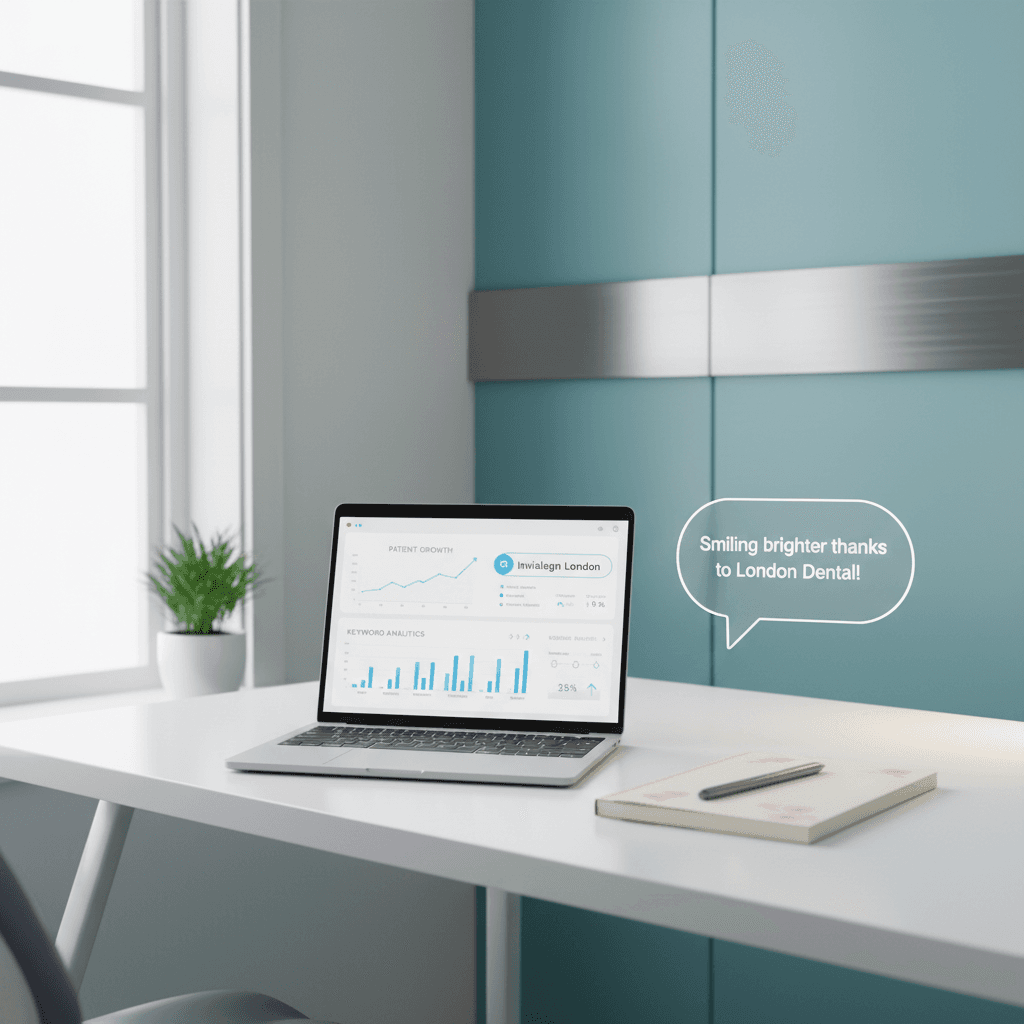
Dental website optimization combines technical SEO, user experience design, and treatment-specific content strategy to position your practice above competitors in search results. Unlike generic SEO, this approach focuses on high-intent keywords like “Invisalign provider London” and “dental implants Manchester” that drive private treatment bookings worth thousands per patient.
The stakes are higher than ever: 93% of patients never scroll past Google’s first page, while AI-powered search engines increasingly favour websites with structured, comprehensive treatment information. Practices ignoring this shift lose qualified leads to competitors who invest in professional optimization.
Start with a 5-step audit: check page loading speed (under 2.5 seconds), mobile responsiveness, NAP consistency across directories, target keyword integration, and conversion-focused call-to-action placement. A London practice ignoring these fundamentals recently lost 40% of their Invisalign enquiries to an optimized rival ranking three positions higher.
Core Components of High-Converting Dental Websites
- Schema markup for dental practice information
- Mobile-first responsive design
- Treatment-specific service pages
- Local SEO integration
- Fast loading speeds (sub-3 seconds)
- HTTPS security certification
- Online booking integration
- Patient testimonial sections
Wondering what AI tells patients about your practice? Free one page report in 48 hours. Where you are cited, where competitors win, and the gap.
Get your free AI Visibility CheckMastering On-Page SEO for Dental Websites – Target High-Intent Keywords Like “Invisalign [City]”
Treatment-specific optimization captures patients actively seeking procedures like Invisalign or dental implants. Target long-tail keywords such as “how much do dental implants cost in Birmingham” and “best Invisalign provider near me” within your page titles, H1 tags, and meta descriptions. Keep meta descriptions under 60 characters for optimal mobile display.
Keyword research reveals patient search patterns: general terms like “dentist near me” generate high volume but lower conversion rates, while specific phrases like “emergency dental implant repair London” indicate immediate treatment intent. Build content clusters around primary treatments, linking related pages to establish topical authority. For more insights on effective strategies, read SEO tips for dentists.
Structure service pages with H2 subheadings addressing common patient questions: treatment duration, costs, aftercare, and financing options. Optimize images with descriptive alt text (“Invisalign before and after results Birmingham practice”) while compressing files to maintain fast loading speeds.
A Birmingham implant practice rewrote their main service page targeting “dental implants Birmingham cost” and achieved first-page ranking within eight weeks, generating 35 additional consultation requests monthly. The key was addressing specific patient concerns rather than generic treatment descriptions.
How to Structure Dental Service Pages for Invisalign Marketing and Implants
Begin with a compelling hero section featuring your primary treatment keyword and clear call-to-action button (“Book Free Invisalign Consultation”). Follow with a benefits-focused section explaining treatment advantages over alternatives, supported by patient testimonials and before/after imagery.
Include a detailed process timeline (Invisalign: 6-18 months average, dental implants: 3-6 months healing period) and comprehensive FAQ section addressing cost concerns, payment plans, and insurance coverage. This structure satisfies both search engines and patient information needs while guiding visitors toward booking consultations.
Technical SEO Essentials – Achieve 90+ PageSpeed Scores for Mobile-First Ranking
Google’s mobile-first indexing prioritises fast-loading, technically sound websites. Dental practices with slow sites lose 50% of visitors before pages fully load, directly impacting consultation bookings and treatment enquiries. Core Web Vitals—Largest Contentful Paint (LCP), Cumulative Layout Shift (CLS), and First Input Delay (FID)—determine ranking positions.
Compress images to under 100KB using tools like TinyPNG while maintaining visual quality for treatment photos. Implement caching plugins to reduce server response times and test loading speeds across multiple devices. Target LCP under 2.5 seconds, CLS below 0.1, and FID under 100 milliseconds for optimal performance.
HTTPS certification is mandatory for patient trust and Google ranking factors. Install SSL certificates and redirect all HTTP pages to secure versions. Configure schema markup for dental practices, including business hours, location data, and service offerings to enhance search result visibility. For a comprehensive approach, consider a dental marketing plan that integrates technical SEO with content and conversion strategies.
Our Manchester client reduced loading time from 5.2 seconds to 1.8 seconds through image optimization and caching implementation, resulting in 52% increased organic traffic and 28% higher consultation booking rates. Technical improvements compound over time, creating sustainable competitive advantages.
Implementing Schema Markup and Structured Data for Rich Snippets
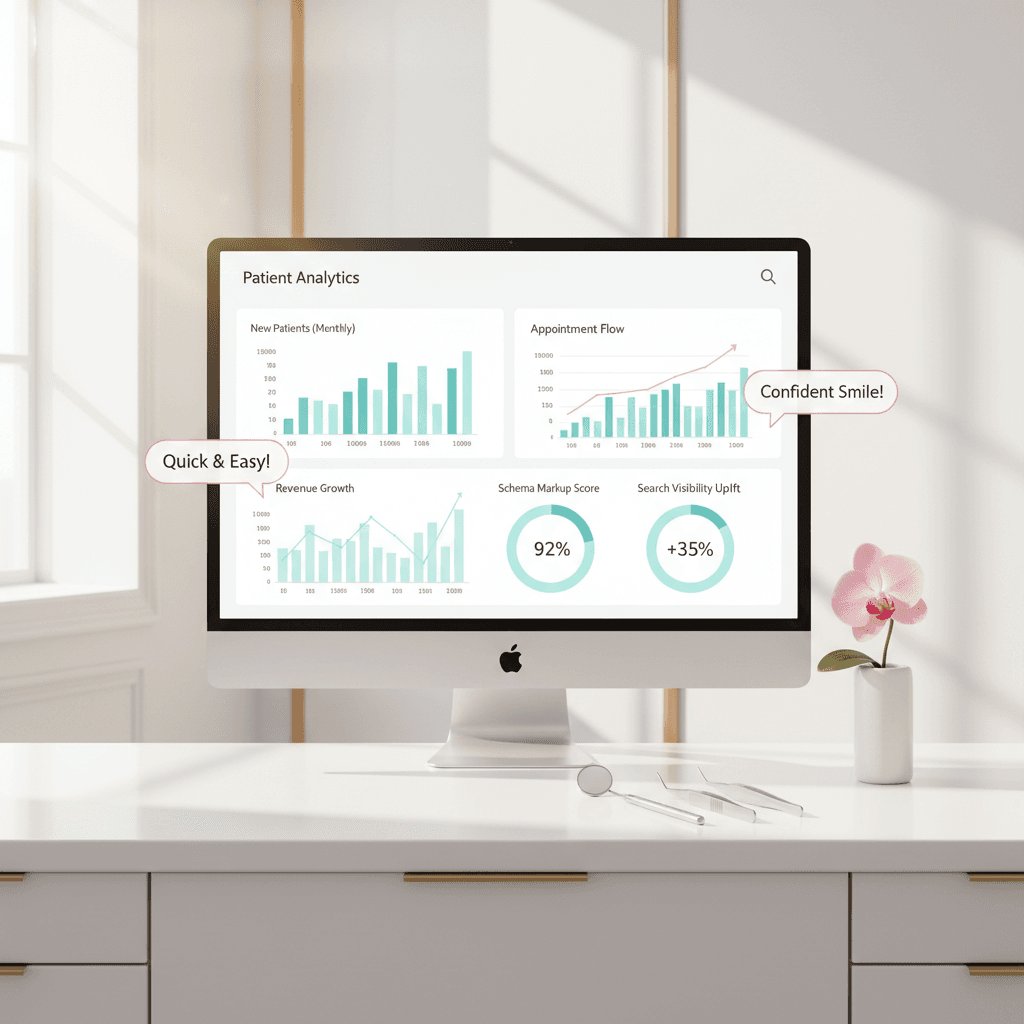
Schema markup transforms how search engines understand your dental practice, enabling rich snippets that dramatically increase click-through rates. Google’s algorithm prioritises structured data when generating featured snippets, particularly for medical queries where accuracy is paramount.
Implement JSON-LD structured data for three critical schema types: LocalBusiness for practice information, MedicalBusiness for treatment specialties, and FAQPage for common patient questions. Add this code to your website’s header section, ensuring all NAP details match exactly across your Google Business Profile and citations.
Quick Implementation: Use Google’s Structured Data Testing Tool to validate your schema markup. A properly configured dental practice schema includes opening hours, accepted insurance, emergency contact numbers, and specific services like “dental implants” or “Invisalign treatment”.
Focus on FAQ schema for high-value treatments, structuring questions like “How much do dental implants cost in Manchester?” with comprehensive answers. This approach captures voice search queries and positions your practice as the authoritative source for treatment information.
Local SEO Integration – Make Your Site the #1 “Dentist Near Me” Result in London, Manchester, Birmingham
Local search dominance requires systematic NAP (Name, Address, Phone) consistency across 30+ directories, combined with strategic location-based content optimization. Research shows 78% of mobile “dentist near me” searches result in practice visits within 24 hours, making local visibility directly correlated to patient acquisition. Local SEO for dentists is crucial for practices aiming to capture these high-intent local searches.
Optimize your Google Business Profile with weekly posts, high-quality interior photos, and rapid review responses under 24 hours. Embed interactive Google Maps on contact pages and create location-specific service pages for each area you serve. Manchester practices should target “dental implants Manchester” while Birmingham locations focus on “Invisalign Birmingham” to capture geo-specific search intent.
Build citations systematically across NHS directories, Yell, Yelp, and healthcare-specific platforms like WhatClinic. Inconsistent NAP information confuses Google’s local algorithm, diluting your ranking potential. Multi-location practices require individual Google Business Profiles for each site, with unique phone numbers and distinct content to avoid duplicate listing penalties.
| Local SEO Element | Impact on Rankings | Implementation Time | Cost |
|---|---|---|---|
| Google Business Profile Optimization | High – Direct ranking factor | 2-3 hours | Free |
| NAP Citation Building | High – Trust signals | 8-10 hours | £200-500 |
| Location-Specific Landing Pages | Medium – Content relevance | 4-6 hours per page | £300-800 |
| Review Management System | Medium – Social proof | 1-2 hours setup | £50-150/month |
Building Location-Specific Landing Pages Without Cannibalization
Create unique location pages for each service area with distinct content, avoiding duplicate NAP information that triggers Google penalties. Structure each page with local landmarks, area-specific testimonials, and treatment pricing relevant to that demographic. Include embedded Google Maps, local parking information, and public transport directions to enhance user experience and local relevance signals.
Implement strategic internal linking between location pages and main service pages, using anchor text like “dental implants in Harley Street” or “Invisalign treatment Central London”. This approach distributes link equity while maintaining clear geographic targeting for each location’s search visibility. For more inspiration, explore these dental marketing ideas to boost your local presence.
UX and Mobile Optimization – Reduce Bounce Rates by 40% with Patient Journey Design
Mobile-first design is non-negotiable for dental websites, with 68% of dental searches occurring on mobile devices. Optimize for thumb navigation with large, accessible buttons positioned within easy reach zones. Implement progressive disclosure to present complex treatment information in digestible sections, reducing cognitive load for patients researching procedures like dental implants or orthodontic treatment.
Design patient journey flows that mirror real-world decision-making patterns. Place prominent “Book Consultation” CTAs above the fold, followed by treatment benefits, process explanations, and social proof elements. Use white space strategically to reduce visual clutter, particularly important for older demographics who represent high-value private treatment patients.
Test website performance across multiple devices and connection speeds, ensuring sub-3-second load times on 3G networks. Implement click-to-call functionality for emergency dental situations and integrate online booking systems that require minimal form fields. A streamlined mobile experience directly correlates with consultation booking rates, particularly for urgent dental needs.
Accessibility compliance enhances both user experience and search rankings. Include alt text for treatment images, maintain sufficient color contrast ratios, and ensure keyboard navigation functionality. These improvements benefit patients with disabilities while signaling quality to search engines, contributing to overall dental website optimization effectiveness.
Best CTAs for Dental Sites – Drive 15% Conversion from Visitors
Craft urgency-driven CTAs that address specific patient pain points: “Stop Tooth Pain Today – Emergency Appointment”, “Free Invisalign Consultation – See Your New Smile”, and “Dental Implant Assessment – Restore Your Confidence”. Test button colors, with orange and green typically outperforming blue for conversion rates. Use A/B testing to determine which CTA phrasing and placement yield the highest consultation bookings. Ensure all CTAs are accessible and visible on both desktop and mobile devices for maximum impact.
Off-Page SEO and Link Building – Secure Authority Backlinks for Competitive Edge

Authority backlinks signal Google that your practice is trustworthy and relevant, directly impacting your ability to rank for high-value keywords like “dental implants London” or “Invisalign Manchester”. Unlike general businesses, dental practices have unique opportunities to build local authority through healthcare partnerships and professional networks.
Target local partnerships with GPs, pharmacies, and medical centres who regularly refer patients. Create shareable resources like “Post-Implant Care Guidelines” or “Orthodontic Timeline Infographics” that healthcare professionals want to link to. Guest posting on NHS directories and local health websites builds both authority and local relevance. For authoritative information on dental treatments, visit NHS dentistry.
A Leeds practice we worked with gained 20 quality backlinks through strategic partnerships with three local GP surgeries and two pharmacies, resulting in first-page rankings for “dental implants Leeds” within four months. Focus on earning links from dental schools, professional associations, and local business directories rather than buying low-quality links that can harm your rankings.
Quick Win: Contact five local healthcare providers this week offering to create a patient referral guide they can link to from their websites.
DIY vs Dominate Dental: When to Hire the UK’s #1 Dental SEO Agency
Most practice owners underestimate the complexity of dental website optimization, leading to months of wasted effort and missed opportunities. While basic improvements like faster loading times can be DIY projects, achieving consistent 50+ monthly enquiries requires treatment-specific expertise and dedicated resources. To understand how dental SEO can lead to more patients, read this in-depth guide.
| Factor | DIY Approach | Dominate Dental | Winner |
|---|---|---|---|
| Time to Results | 12-18 months | 3-6 months | Agency |
| Monthly Cost | £500-1000 (tools + time) | £2000+ (full service) | Depends on scale |
| Treatment Expertise | General SEO knowledge | Dental-specific strategies | Agency |
| Scalability | Limited to owner’s time | Multi-location capability | Agency |
Dominate Dental’s Manchester implant client achieved 52% organic traffic growth in six months, with a cost-per-lead of £32 compared to the industry average of £85. Our treatment-specific approach means Invisalign pages rank for “clear aligners [city]” while implant pages capture “tooth replacement” searches – something general SEO agencies miss.
Choose DIY for basic technical fixes and content creation if you have under three dentists. Partner with Dominate Dental when you’re ready to scale beyond 50 monthly enquiries and need expertise in high-value treatment marketing.
SEO Audit Checklist – Run This in 30 Minutes
Complete this audit monthly to catch issues before they impact rankings:
- Check Google PageSpeed Insights for mobile and desktop scores above 90
- Verify NAP consistency across Google Business Profile, website footer, and contact page
- Test all contact forms and booking systems on mobile devices
- Review Google Analytics 4 for pages with bounce rates above 70%
- Confirm SSL certificate is active (look for padlock in browser)
- Search “[practice name] + reviews” to monitor online reputation
- Test voice search by asking “dentist near me” on mobile
- Check if service pages load in under 2.5 seconds
- Verify schema markup using Google’s Rich Results Test
- Review Google Search Console for crawl errors or security issues
- Test booking CTAs are visible above the fold on all devices
- Confirm treatment pages target specific keywords (not just “dental services”)
- Check competitor rankings for your target keywords
- Verify Google Business Profile posts are updated weekly
- Test internal links between service pages work correctly
Measuring ROI and Tracking Success – Prove £32 Cost-Per-Lead Like Our Clients
Dental website optimization success isn’t measured by vanity metrics like total visitors, but by qualified enquiries that convert to high-value treatments. Track patient lifetime value (typically £3,000-5,000 for private treatments) against acquisition costs to prove ROI to your practice stakeholders. For a broader understanding of search engine optimization, you can also refer to this Wikipedia article on SEO.
Set up Google Analytics 4 conversion tracking for form submissions, phone calls, and booking confirmations. Monitor monthly organic traffic growth (target 15-25%), bounce rate reduction (aim for under 60%), and most importantly, conversion rate from visitor to consultation (benchmark 15% for optimized sites).
| KPI | Target | Measurement Tool | Frequency |
|---|---|---|---|
| Organic Traffic Growth | 20% monthly | Google Analytics 4 | Monthly |
| Consultation Conversion Rate | 15%+ | Google Analytics 4 | Monthly |
| Cost Per Lead | £32 | CRM/Analytics | Monthly |
| Patient Lifetime Value | £3,000-£5,000 | Practice Management Software | Quarterly |
Frequently Asked Questions
What are the key elements of dental website optimization that can increase patient enquiries by 300%?
Key elements include mastering on-page SEO with high-intent keywords, implementing technical SEO to ensure fast load times and mobile responsiveness, using schema markup for rich snippets, and integrating local SEO strategies. Together, these components enhance search visibility and user experience, driving significantly more patient enquiries.
How does targeting high-intent local keywords like “Invisalign [City]” improve a dental practice’s online visibility?
Targeting high-intent local keywords aligns your website with the specific search queries potential patients use when ready to book treatments. This precision increases your ranking in local search results, attracts more qualified traffic, and ultimately boosts consultation bookings from patients actively seeking services in your area.
Why is mobile-first design and achieving a 90+ PageSpeed score crucial for dental websites in 2025?
With the majority of patients researching treatments on mobile devices, a mobile-first design ensures seamless navigation and faster load times, reducing bounce rates. Achieving a 90+ PageSpeed score is essential for ranking well on search engines and providing a smooth user experience that encourages visitors to convert into consultations.
When should a dental practice consider hiring a professional SEO agency like Dominate Dental instead of attempting DIY optimization?
Practices should hire a professional agency when they seek measurable growth, such as 50+ qualified leads monthly and a 15% conversion rate, but lack the time, expertise, or resources to implement advanced SEO strategies. Partnering with Dominate Dental ensures access to proven, data-driven methods and ongoing optimisation tailored to high-value dental treatments.
Real client results, not a promise. The number we commit to for your practice is agreed up front and written into the agreement.
Patients in the chair, not just leads. Guaranteed.
We own the whole journey to the attended consultation. New attended patient consultations in 90 days, or we work free until you hit them.Book a chat with Josie