
How Get Free Dental Implants on NHS: Ultimate 2026 Guide
On this page
NHS Dental Implants: The Reality Behind Free TreatmentWho Actually Qualifies for NHS Dental ImplantsMedical Conditions That QualifyWhy Most Applications Are RejectedWho Gets Free NHS Dental Treatment AutomaticallyComplete Fee Exemption CategoriesRequired DocumentationStep-by-Step Application Process for NHS Dental ImplantsStep 1: Register with NHS Dentist (Weeks 1-4)Step 2: Address All Existing Dental Problems (Months 1-6)Step 3: Request Specialist Referral (Month 7)Step 4: Specialist Assessment (Months 8-12)NHS vs Private Dental Implant CostsAlternatives When You Don’t Qualify for NHS ImplantsNHS-Available Tooth Replacement SolutionsImproving Your NHS Application ProspectsRegional NHS Dental System DifferencesEngland NHS Dental TreatmentScotland, Wales, and Northern Ireland VariationsWhy NHS Implant Applications Get RejectedInsufficient Medical Necessity EvidenceAlternative Treatments Not Properly AttemptedPoor Oral Health and Treatment ComplianceCharitable and Alternative Funding SourcesEstablished Dental Charity ProgramsDental School Treatment OptionsRegional NHS Variations Across the UKScotland’s Distinct ApproachWales’ Enhanced AccessibilityMaking Informed Treatment DecisionsWhen to Pursue the NHS RoutePrivate Treatment Timing ConsiderationsFrequently Asked QuestionsWhat are the strict medical criteria required to qualify for free dental implants on the NHS?Why do approximately 95% of NHS dental implant applications get rejected?Who is automatically eligible for free NHS dental treatment and does this include dental implants?What alternatives are available for patients who do not qualify for NHS-funded dental implants?About the AuthorBefore you read on. Want to know which dentist AI recommends in your town, and whether it is you?
Get your free AI Visibility CheckKey Takeaways
- Dental implants typically cost between £2,000 and £3,500 per tooth when obtained privately.
- NHS funding for dental implants is highly sought after due to the high private costs.
- Qualifying for free dental implants on the NHS requires meeting very strict medical criteria.
- Approximately 95% of applicants do not meet the eligibility requirements for NHS dental implants.
Table of Contents
- NHS Dental Implants: The Reality Behind Free Treatment
- Who Actually Qualifies for NHS Dental Implants
- Who Gets Free NHS Dental Treatment Automatically
- Step-by-Step Application Process for NHS Dental Implants
- NHS vs Private Dental Implant Costs
- Alternatives When You Don’t Qualify for NHS Implants
- Regional NHS Dental System Differences
- Why NHS Implant Applications Get Rejected
- Why Most NHS Implant Applications Get Rejected
- Charitable and Alternative Funding Sources
- Regional NHS Variations Across the UK
- Making Informed Treatment Decisions
NHS Dental Implants: The Reality Behind Free Treatment
You can only get dental implants free on the NHS in rare clinical cases, where implants are medically necessary (for example after mouth cancer, serious facial trauma, or congenital conditions like hypodontia), never for routine tooth loss. The criteria are strict enough that around 95% of applicants do not qualify and pay privately, typically £2,000 to £3,500 per tooth.
NHS dental implants are reserved exclusively for patients with severe trauma, cancer treatment complications, or congenital conditions causing significant functional impairment. General tooth loss from decay, gum disease, or age-related factors doesn’t qualify, regardless of financial circumstances.
For those considering private options due to the rarity of NHS approval, understanding the importance of a comprehensive dental marketing plan can help practices reach more patients seeking implant solutions. Additionally, clinics looking to attract more implant candidates may benefit from SEO for dentists to improve their online visibility and patient acquisition.
Quick Answer: Can I Get Free Dental Implants on NHS?
Most patients cannot access dental implants through NHS due to strict medical necessity criteria. Available only for severe trauma, cancer treatment, or congenital conditions affecting quality of life. Cost: £306.80 (Band 3) if approved, with 12-24 month assessment timeline.
Who Actually Qualifies for NHS Dental Implants

NHS England commissioning policies define “exceptional clinical need” as situations where conventional treatments cannot restore basic oral function. This threshold eliminates routine tooth replacement scenarios.
Medical Conditions That Qualify
- Head and neck cancer treatment requiring jaw reconstruction or significant bone loss
- Severe facial trauma from accidents necessitating maxillofacial surgery
- Congenital conditions like ectodermal dysplasia causing multiple missing teeth from birth
- Failed conventional treatments with documented evidence of denture/bridge inability to function
Assessment requires multidisciplinary team evaluation including oral surgeons, prosthodontists, and restorative specialists. Clinical documentation must prove quality of life impact and previous treatment failures over 6+ months.
Why Most Applications Are Rejected
Single tooth loss, multiple extractions from decay, age-related tooth loss, and cosmetic concerns don’t meet medical necessity thresholds. NHS prioritizes pain relief and basic function over optimal tooth replacement.
Wondering what AI tells patients about your practice? Free one page report in 48 hours. Where you are cited, where competitors win, and the gap.
Get your free AI Visibility CheckWho Gets Free NHS Dental Treatment Automatically
Certain groups receive free NHS dental care, though this doesn’t guarantee implant access. Medical necessity criteria still apply regardless of cost exemptions.
Complete Fee Exemption Categories
- Under 18 years old, or under 19 in full-time education
- Pregnant women or within 12 months of giving birth (including stillbirth)
- Income Support, Income-based Jobseeker’s Allowance, or Pension Credit recipients
- Universal Credit recipients earning under £435 monthly (individual) or £935 (couple)
- NHS hospital inpatients receiving treatment from hospital dentists
Required Documentation
HC2 certificates for low-income patients take 4-6 weeks to process. Maternity exemption certificates (MatEx) provide temporary coverage. Benefit award notices must be current and accepted by NHS dentists.
The NHS Low Income Scheme offers partial cost help through HC3 certificates for those with savings under £16,000 and income slightly above benefit thresholds.
Step-by-Step Application Process for NHS Dental Implants
Step 1: Register with NHS Dentist (Weeks 1-4)
Use NHS.uk Find a Dentist tool, though availability is limited, London and South East have 23% fewer NHS dental practices than 2019. Establish 12+ month treatment history demonstrating oral health compliance.
Step 2: Address All Existing Dental Problems (Months 1-6)
NHS requires treatment of cavities, gum disease, and root canal needs before considering implants. Clinical photography and radiographic documentation of tooth loss must accompany demonstrated failure of properly fitted dentures worn for minimum 6 months.
Step 3: Request Specialist Referral (Month 7)
Prepare written explanation of functional impairment affecting eating, speaking, and psychological wellbeing. Your dentist must justify why conventional prosthetics are inadequate for hospital dental departments or specialist NHS clinics.
Step 4: Specialist Assessment (Months 8-12)
Comprehensive examination includes CBCT scans and prosthodontic assessment. Panel review evaluates medical necessity against NHS commissioning criteria. Outcomes include rare approval, alternative treatment recommendation, or denial.
If approved, treatment spans months 13-24 with surgical implant placement, 3-6 month osseointegration, and prosthetic crown/bridge fabrication. NHS Band 3 charge of £306.80 applies unless exempt.
NHS vs Private Dental Implant Costs

| Treatment Type | NHS Cost (If Eligible) | UK Private Average | London Private |
|---|---|---|---|
| Single Tooth Implant | £306.80 (Band 3) | £2,000–£3,500 | £2,500–£4,000 |
| Implant-Supported Bridge | £306.80 (Band 3) | £4,000–£8,000 | £5,000–£10,000 |
| Full Arch (All-on-4/6) | Rarely available | £12,000–£18,000 | £15,000–£25,000 |
Alternatives When You Don’t Qualify for NHS Implants
When patients don’t meet the strict medical necessity criteria for how to get free dental implants on nhs, several NHS-funded and private alternatives restore function and appearance effectively.
For dental practices aiming to reach more patients interested in these alternatives, leveraging dental practice SEO can significantly improve online visibility and attract those searching for tooth replacement solutions.
NHS-Available Tooth Replacement Solutions
Dentures (Band 3 – £306.80) offer immediate, non-surgical tooth replacement for single or multiple missing teeth. Full or partial acrylic dentures provide affordable restoration, though they require adhesive for stability and need replacement every 5-7 years. Best suited for patients with multiple missing teeth or those unsuitable for surgical procedures.
Dental Bridges (Band 3 – £306.80) create fixed prosthetics anchored to adjacent healthy teeth. These permanent solutions restore natural appearance and chewing function without removable components, though they require alteration of neighboring teeth and aren’t suitable for multiple missing teeth scenarios.
Improving Your NHS Application Prospects
Patients can strengthen future NHS implant applications by demonstrating 18+ months of excellent oral hygiene with documented check-ups, addressing smoking cessation (NHS won’t approve implants for active smokers), and managing chronic conditions like diabetes or osteoporosis.
Documenting quality-of-life impact through detailed diaries of functional limitations provides crucial evidence for medical necessity assessments. However, realistic assessment shows that patients without trauma, cancer, or congenital criteria face unlikely approval prospects.
Regional NHS Dental System Differences
UK countries operate distinct NHS dental policies affecting costs, referral pathways, and implant accessibility, though all maintain similarly strict medical necessity criteria for implant funding.
England NHS Dental Treatment
England applies the strictest criteria with lowest approval rates for dental implants. The three-tier charging system includes Band 1 (£26.80), Band 2 (£73.50), and Band 3 (£306.80), with specialist services concentrated in teaching hospitals and limited NHS practices accepting new patients.
Scotland, Wales, and Northern Ireland Variations
Scotland eliminates patient charges for under-18s and eligible adults, requiring only a £17.10 registration fee followed by 80% treatment subsidies. Wales operates reduced Band charges with Band 3 at £233, offering slightly more accessible specialist referrals through health boards.
Northern Ireland uses a simplified two-band system with hospital dental services handling complex cases. All regions maintain similar strict eligibility thresholds for implant funding, making medical necessity the primary barrier rather than regional policy differences.
Why NHS Implant Applications Get Rejected
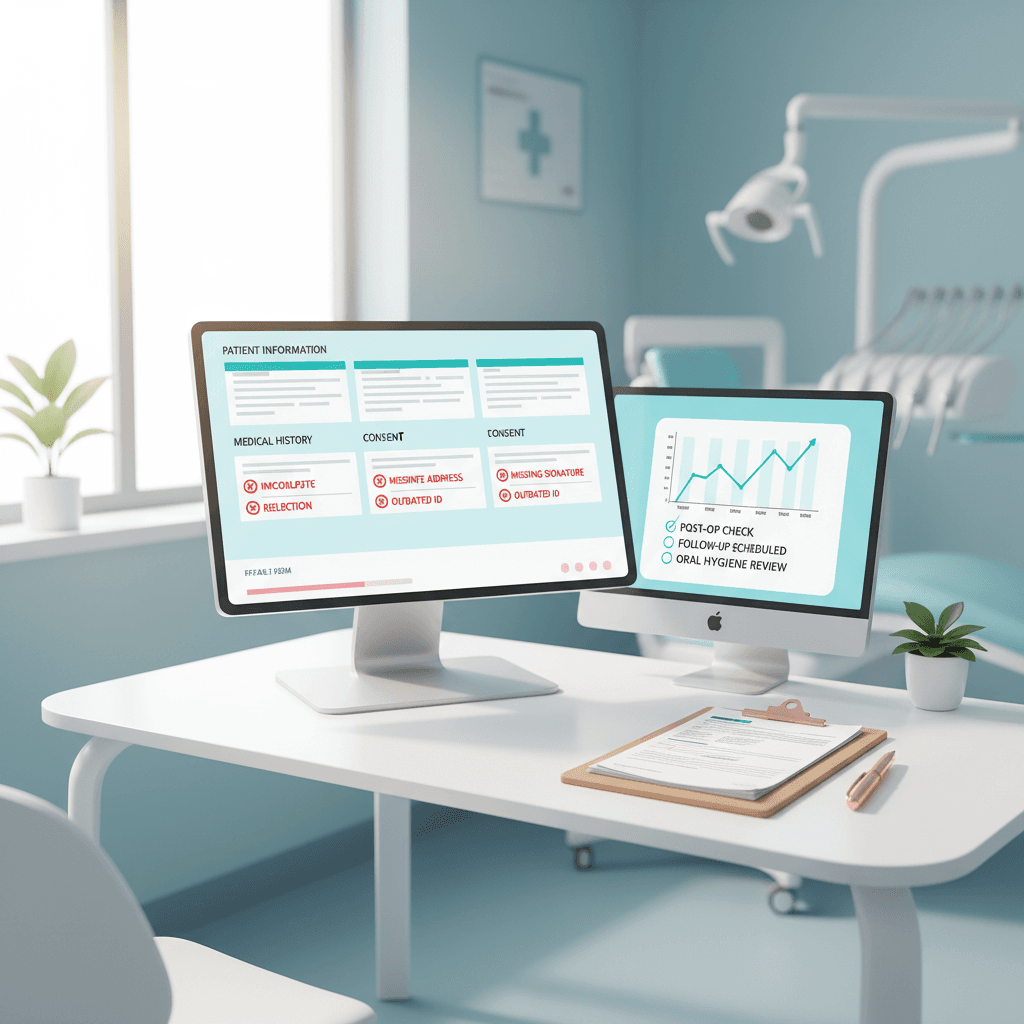
Understanding common denial reasons helps patients assess their realistic chances and improve documentation quality for how to get free dental implants on NHS. Over 95% of applications fail to meet the strict medical necessity threshold.
Insufficient Medical Necessity Evidence
General tooth loss from decay, gum disease, or aging doesn’t constitute exceptional clinical need. NHS panels require documented evidence of severe functional impairment affecting nutrition, speech, or psychological wellbeing. Patients must demonstrate that conventional prosthetics cannot adequately restore function.
Alternative Treatments Not Properly Attempted
Applications fail when patients haven’t trialled well-fitted dentures for minimum six months or documented bridge failures. NHS requires proof that conventional treatments are inadequate before considering implants. Simply stating discomfort with dentures isn’t sufficient, clinical evidence of inability to function is essential.
Poor Oral Health and Treatment Compliance
Active gum disease, untreated decay, or inconsistent dental attendance results in automatic rejection. NHS won’t invest in implants for patients who haven’t demonstrated long-term oral health maintenance. Smoking status also disqualifies applicants immediately.
Critical Success Factor: Maintain 18+ months of documented excellent oral hygiene with regular NHS dental check-ups before requesting specialist referral.
Charitable and Alternative Funding Sources
When NHS approval isn’t achievable, several charitable organizations provide dental treatment assistance, though implant funding remains extremely limited.
For more ideas on how dental practices can reach patients in need of alternative funding, explore these dental marketing ideas that can help connect with underserved communities.
Established Dental Charity Programs
Dentaid UK focuses on emergency dental care for homeless and vulnerable populations but rarely funds elective implants. The Oral Health Foundation offers occasional hardship grants prioritizing pain relief and infection treatment over reconstructive procedures.
Veterans UK covers service-related dental injuries, potentially including implants for combat-related facial trauma. Local authority hardship funds occasionally provide emergency dental vouchers, though these typically exclude complex treatments.
Dental School Treatment Options
University dental schools offer reduced-cost treatment by supervised students. However, implant procedures are rarely available through these programs due to complexity and training requirements. Simple extractions and fillings represent the majority of student clinic services.
Most charitable funding pools exhaust by October each year. Applications submitted early in the financial year have higher success rates for basic dental care needs.
Regional NHS Variations Across the UK
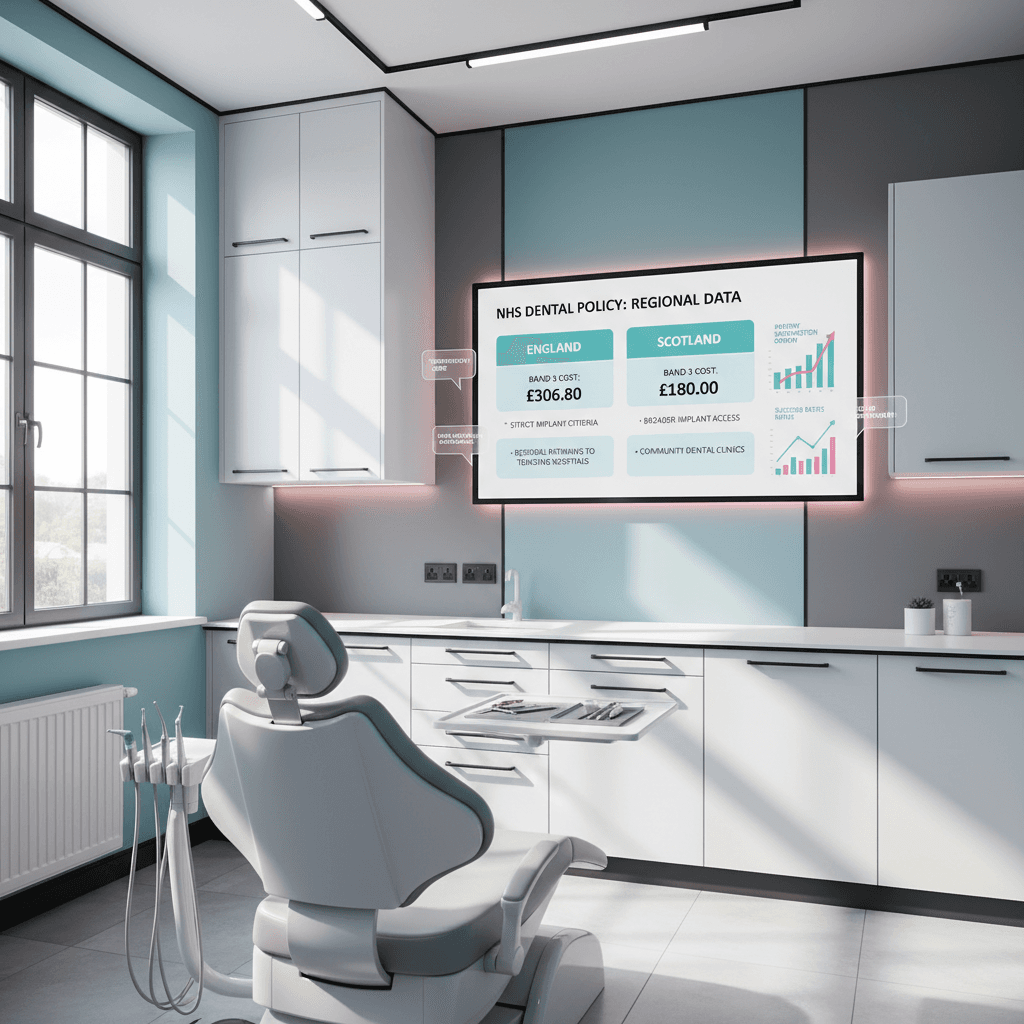
Each UK nation operates distinct NHS dental policies affecting both costs and implant accessibility for those seeking how to get free dental implants on NHS.
| Region | Band 3 Cost | Implant Policy | Referral Pathway |
|---|---|---|---|
| England | £306.80 | Strictest criteria | Teaching hospitals |
| Scotland | 80% NHS subsidy | Similar restrictions | Health board specialists |
| Wales | £233.00 | Slightly more accessible | Regional health boards |
| Northern Ireland | Two-band system | Hospital-based assessment | Trust dental services |
Scotland’s Distinct Approach
Scotland eliminates patient charges for eligible adults but maintains similar medical necessity thresholds for implants. The £17.10 registration fee provides 80% treatment subsidies, making conventional alternatives more affordable than other UK regions.
Wales’ Enhanced Accessibility
Welsh health boards demonstrate marginally higher approval rates for complex dental procedures. Lower Band 3 charges (£233 vs £306.80 in England) reduce financial barriers, though implant eligibility criteria remain restrictive.
Making Informed Treatment Decisions
Realistic assessment of NHS implant prospects enables better treatment planning and timeline management for tooth replacement needs.
For further insights on how dental practices can improve their online presence and attract more patients, see these SEO tips for dentists.
When to Pursue the NHS Route
Continue NHS applications only if you meet core qualifying criteria: documented cancer treatment affecting facial structures, severe trauma requiring maxillofacial reconstruction, or congenital conditions causing multiple missing teeth from birth. General tooth loss scenarios have near-zero approval probability.
Private Treatment Timing Considerations
Delaying tooth replacement for 12-24 months while pursuing unlikely NHS approval causes bone loss, complicating future private treatment. Immediate bone grafting costs £800-1,200 but prevents more extensive reconstruction needs later.
Finance options make private implants accessible: 0% APR for 12 months is standard, with extended terms at 9.9% APR spreading costs over 60 months. Monthly payments of £45-65 per implant make treatment manageable for most budgets.
For authoritative information on NHS dental treatment eligibility, visit the NHS official guide to free dental treatment. To learn more about available dental treatments, see the NHS dental treatments overview.
Frequently Asked Questions
What are the strict medical criteria required to qualify for free dental implants on the NHS?
To qualify for free dental implants on the NHS, patients must meet stringent medical criteria demonstrating exceptional clinical need. This typically includes severe conditions such as significant jaw bone loss from head and neck cancer treatment, major facial trauma, or congenital deformities that impair oral function. Routine tooth loss due to decay, gum disease, or age does not meet these criteria.
Why do approximately 95% of NHS dental implant applications get rejected?
Approximately 95% of NHS dental implant applications are rejected because most patients do not meet the strict eligibility requirements focused on exceptional clinical need. Many applications involve routine tooth loss cases, which NHS policies exclude, and regional variations in commissioning further limit approvals. The high threshold ensures implants are reserved for cases where conventional treatments cannot restore basic oral function.
Who is automatically eligible for free NHS dental treatment and does this include dental implants?
Certain groups are automatically eligible for free NHS dental treatment, including children under 18, pregnant women, and those receiving specific income-related benefits. However, this automatic eligibility does not extend to dental implants, which require separate, strict clinical justification due to their complexity and cost.
What alternatives are available for patients who do not qualify for NHS-funded dental implants?
Patients who do not qualify for NHS-funded dental implants can explore private treatment options, which typically cost between £2,000 and £3,500 per tooth. Additionally, some may seek charitable funding, dental payment plans, or alternative restorative treatments such as bridges or dentures. Dental practices can also support patients by providing clear information and flexible financing solutions to improve access to implant care.