
Top Invisalign UK Dental Marketing Agencies: Grow Now
On this page
Why Generic Marketing Fails for Invisalign PracticesThe £150,000 Revenue Opportunity You’re MissingThe Three Costly Mistakes Practices MakeHow AI-Powered Qualification Changes EverythingWhat Separates the Best Agencies from the Rest24/7 Patient Qualification (Not Just Contact Forms)Synchronised Campaigns Across Four PlatformsGDC Compliance Without BureaucracyReal-Time Dashboards (Not Monthly PDFs)Real UK Practices, Real Revenue GrowthCase Study: Manchester Practice Adds £84,000 in 90 DaysYour 90-Day Timeline: What Actually HappensThe Only Three Metrics That Actually MatterThe Four Channels That Actually Generate ConsultationsGoogle Ads: Capturing Active SearchersFacebook and Instagram: Building Trust Before They SearchLanding Pages That Convert (Not Just Collect Emails)How to Allocate Your Budget Across ChannelsHow to Choose Your Invisalign Marketing PartnerThe Five Questions That Expose Amateur AgenciesRed Flags That Scream “Run Away”What a Strong Proposal Actually IncludesYour Next Steps: Getting StartedFrequently Asked QuestionsWho is the best dental marketing agency for Invisalign in the UK?How should UK dental practices advertise Invisalign effectively?Why do general dental marketing approaches fail for Invisalign?What makes a specialist Invisalign marketing agency different from a general one?How quickly can a practice see results from specialist Invisalign marketing?What kind of return can a UK dental practice expect from investing in specialist Invisalign marketing?Before you read on. Want to know which dentist AI recommends in your town, and whether it is you?
Get your free AI Visibility CheckRecommended dental marketing agencies for Invisalign in UK.
You’ve invested thousands in Invisalign certification. Your team’s trained. Your treatment plans are competitive. But consultation slots stay empty.
Here’s why: Generic dental marketing attracts tyre-kickers researching “clear aligner cost” across 15 practices. Your reception team wastes hours fielding questions from prospects who’ll never book. Meanwhile, motivated patients ready to start £3,000–£5,000 treatments slip through because you’re not speaking their language.
Specialist Invisalign marketing agencies solve this problem. They filter out price shoppers, nurture serious prospects through targeted education, and deliver qualified consultations—not just enquiry forms.
Why Generic Marketing Fails for Invisalign Practices
The £150,000 Revenue Opportunity You’re Missing
Adults aged 25–45 research clear aligners for months before committing. They’re comparing practices, reading reviews, calculating finance options. One dentist offering Invisalign can generate £50,000–£150,000 additional annual revenue—if marketing reaches them at decision-making moments.
But here’s what actually happens: Broad “cosmetic dentistry” campaigns attract curiosity seekers. Enquiries flood in. Conversion rates stay below 10%. Your team can’t distinguish between someone genuinely interested and someone comparing prices at 15 clinics before choosing the cheapest.
The Three Costly Mistakes Practices Make
Mistake #1: Treating Invisalign like a hygiene appointment. High-value treatments need education, trust-building, and reassurance. Generic ads skip this entirely.
Mistake #2: No qualification system. Every enquiry gets the same response. No filtering. No prioritisation. Reception teams drown in unqualified leads whilst motivated patients receive no meaningful follow-up.
Mistake #3: Wrong channels, wrong messaging. Facebook ads showing “cosmetic dentistry” attract everyone. Invisalign-specific campaigns targeting adults concerned about workplace appearance attract buyers. That specificity matters.
Specialist dental SEO services directly target patient intent, improving lead quality from the first click.
The numbers don’t lie: Practices working with Invisalign marketing specialists report 40–60% consultation booking rates from qualified leads. Generic campaigns? 8–15%. The difference is targeting, messaging, and automated qualification before human contact.
How AI-Powered Qualification Changes Everything
Imagine a website visitor lands on your Invisalign page at 10 PM. An AI chatbot engages immediately: “How soon are you looking to straighten your teeth?” “What’s your biggest concern about clear aligners?” “Have you researched payment options?”
Within 90 seconds, the system knows if they’re serious. Qualified prospects get instant appointment booking links. Others enter educational sequences explaining treatment duration, finance plans, and expected outcomes—before requesting your team’s time.
Result? Reception staff speak only with prospects who understand pricing and commitment levels. Conversion efficiency jumps 3–5x. For example, Dominate Dental’s Invisalign Lead Generation Service uses this exact approach.
What Separates the Best Agencies from the Rest
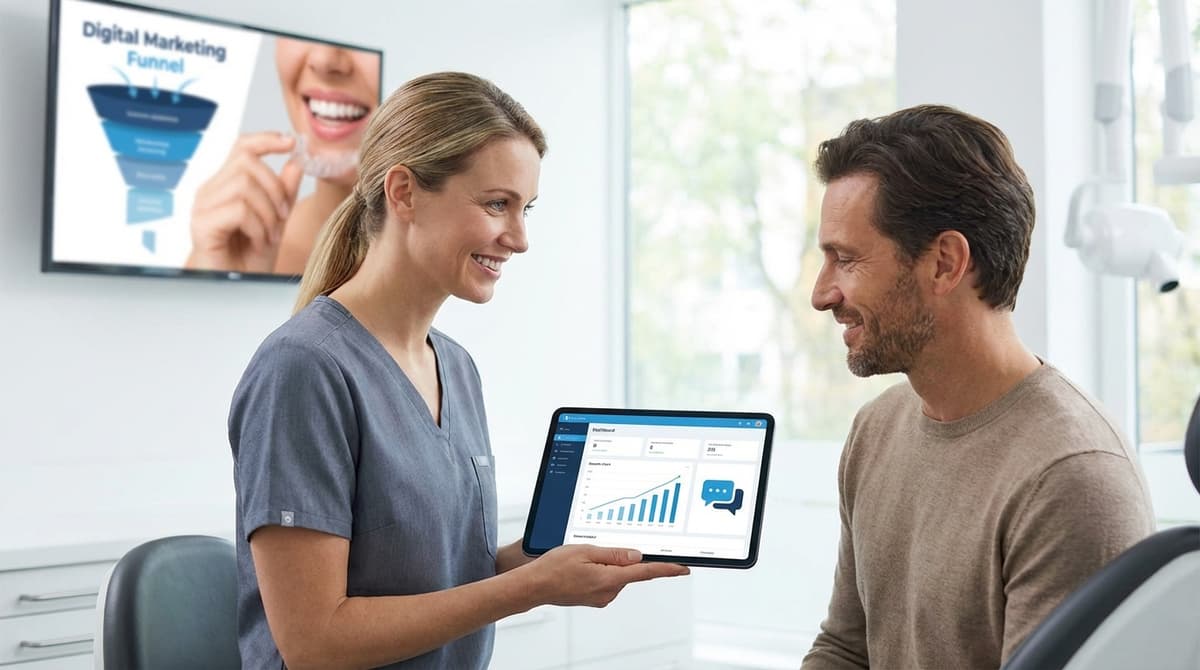
24/7 Patient Qualification (Not Just Contact Forms)
Standard agencies collect name, email, phone number. Then what? Your reception team plays phone tag for three days.
Advanced systems ask targeted questions immediately: Budget expectations. Treatment urgency. Specific smile concerns. This isn’t a survey—it’s conversational AI that operates whilst you sleep, capturing evening and weekend enquiries when most prospects research.
Qualified leads get appointment booking links. Others receive educational content via automated email and SMS sequences. No prospect falls through cracks. No reception time wasted on unqualified enquiries.
Synchronised Campaigns Across Four Platforms
Prospects don’t see one ad and book. They see your Google ad, watch a YouTube patient testimonial, scroll past your Instagram before-and-after, then search your practice name. That journey requires coordinated presence across platforms—not scattered, inconsistent messaging.
Top agencies synchronise campaigns across Google Search, YouTube, Facebook, and Instagram. Retargeting sequences follow prospects who viewed content but haven’t enquired, building the familiarity and trust needed for £5,000 decisions.
GDC Compliance Without Bureaucracy
Marketing must adhere to General Dental Council advertising standards. Claims need evidence. Before-and-after photos require consent documentation. Leading agencies handle this compliance without slowing campaigns, ensuring your marketing protects your professional registration.
They also integrate with practice management software like Dentally or SOE, connecting campaign data directly into your scheduling system. No manual data entry. No lost leads. For detailed orthodontic guidelines, visit the NHS orthodontics resource.
Real-Time Dashboards (Not Monthly PDFs)
Forget waiting for end-of-month reports. Best-in-class agencies provide client dashboards showing cost per lead, consultation booking rates, and treatment acceptance metrics updated daily.
Dedicated account managers conduct monthly strategy reviews, but you’re never in the dark between calls. They adjust campaigns based on what actually converts—not vanity metrics like impressions or clicks.
Wondering what AI tells patients about your practice? Free one page report in 48 hours. Where you are cited, where competitors win, and the gap.
Get your free AI Visibility CheckReal UK Practices, Real Revenue Growth
Case Study: Manchester Practice Adds £84,000 in 90 Days
Three dentists. Previously running generic “cosmetic dentistry” campaigns. Averaging 12 monthly enquiries, converting 2 into treatment starts.
They switched to specialist Invisalign marketing. First 90 days: 47 qualified consultation requests. 28 converted into treatment starts. That’s £84,000 in Invisalign revenue from a £6,500 marketing investment.
Reception team reported spending 70% less time answering basic questions because prospects arrived pre-educated through automated sequences.
A Birmingham practice tells a similar story. Previously spending £3,200 monthly with 12 enquiries. Within five months of switching, they achieved 38 qualified leads monthly whilst reducing spend to £2,800. Why? Because they stopped paying for unqualified traffic.
Your 90-Day Timeline: What Actually Happens
Realistic expectations matter. Here’s the typical progression:
Weeks 1–3: Campaign setup. Landing page creation. Compliance review. Audience research. No leads yet—this is foundation work.
Days 7–10 post-launch: First qualified leads arrive. Volume is low whilst algorithms learn. Expect 3–8 consultations.
Days 30–45: Consistent lead flow stabilises. Algorithms optimise based on conversion data. You’ll average 8–15 qualified consultations weekly.
Days 60–90: Treatment acceptance metrics become reliable indicators. Sufficient consultation volume allows meaningful analysis of what converts and what doesn’t.
Recent clinical studies support aligner effectiveness, giving both practices and patients confidence. Access more information in this clinical study.
The Only Three Metrics That Actually Matter
Forget impressions. Forget clicks. Track these:
1. Cost per qualified lead: £45–£85 for well-optimised campaigns. (Generic enquiries cost £15–£25 but convert at 10% instead of 50%.)
2. Cost per treatment start: Should stay below £350 for profitable campaigns. This is your true cost-of-acquisition.
3. Full-funnel conversion rate:
- Consultation booking rate: Target 50%+
- Consultation attendance: Target 75%+
- Treatment acceptance from consultations: Target 40%+
Hit these benchmarks? You’re generating 8:1 to 12:1 return on marketing investment.
The Four Channels That Actually Generate Consultations
Google Ads: Capturing Active Searchers
Someone searches “Invisalign cost Manchester” at 11 PM. High purchase intent. They’re comparing 3–5 practices tonight.
Your ad appears. They click. Landing page addresses their specific concern with before-and-after results from similar patients. Pricing calculator shows monthly payment options. Testimonial video from a 32-year-old professional—their exact demographic—plays automatically.
AI chatbot asks: “When would you like to start treatment?” Qualified prospect books consultation for Thursday.
Cost per click: £3–£8 depending on competition. Well-structured campaigns achieve 6–12% click-through rates and 15–25% landing page conversion rates. Patients often choose Invisalign for its discreet nature compared to traditional braces. Learn more about the technology on Wikipedia.
Facebook and Instagram: Building Trust Before They Search
Google captures demand. Social platforms create it.
Target 28-year-old marketing manager, household income £45,000+, follows dental and beauty accounts. She’s not actively searching yet, but she’s self-conscious about her smile in client meetings.
Your video ad appears: 60-second patient journey from consultation to final reveal. She watches. Doesn’t click. Three days later, she sees your before-and-after post. Two weeks later, your retargeting ad with financing options.
Now she searches your practice name directly. Books consultation. Social platforms planted the seed. Google captured the harvest.
Meta campaigns deliver lower cost per lead (£35–£65) than Google, but require longer nurture sequences. Budget for 8–12 touchpoints before conversion.
Landing Pages That Convert (Not Just Collect Emails)
High-converting landing pages include:
- Instant pricing calculator (transparency builds trust)
- Video testimonials from patients with similar concerns
- Clear next-step calls-to-action (not vague “learn more” buttons)
- AI qualification that engages within 10 seconds
Automated email and SMS sequences nurture prospects who don’t immediately book, providing educational content about treatment duration, payment plans, and expected outcomes. Multi-step follow-up converts 30–40% more enquiries than single-contact approaches.
How to Allocate Your Budget Across Channels
We’ve tested hundreds of campaigns. Here’s what works:
60% Google Search (immediate lead generation)
40% Meta platforms (awareness building)
Minimum effective spend: £2,000 monthly. Optimal range: £3,500–£5,000 for sufficient volume and meaningful optimisation.
Testing strategy: Focus on audience segments and offer variations, not constant creative changes. Give each test 30 days before major adjustments. Algorithms need data volume to optimise effectively.
How to Choose Your Invisalign Marketing Partner
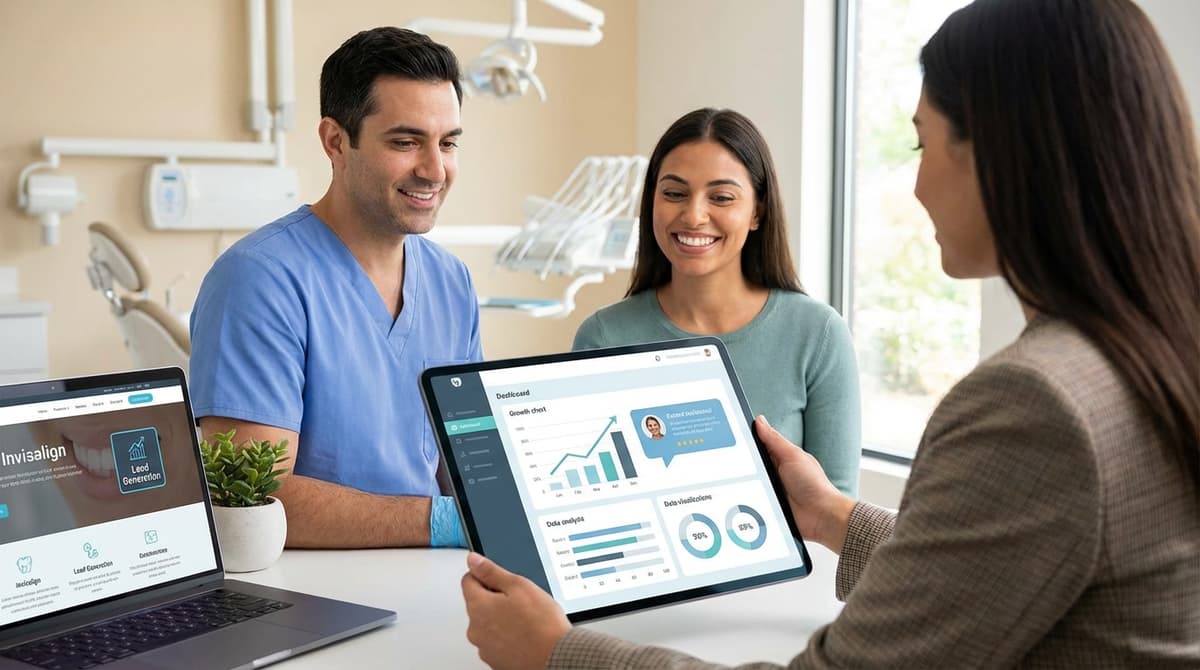
The Five Questions That Expose Amateur Agencies
Question 1: “Show me three case studies from UK dental practices similar to mine.” Demand specifics: practice size, treatment mix, actual numbers. Generic “we increased leads 300%” claims mean nothing without context.
Question 2: “Can I access your client dashboard before signing?” Real-time performance visibility matters. Monthly PDF reports hide problems for 30 days.
Question 3: “How does your AI qualification system work?” If they can’t explain the technology in detail, they don’t have it. “We use chatbots” isn’t an answer.
Question 4: “Who owns the campaign assets if we terminate?” Some agencies retain ownership of advertising accounts, landing pages, and patient data. You’re locked in. That’s intentional.
Question 5: “What’s your approach to GDC compliance?” If they hesitate or claim “we’re compliant,” they don’t understand dental advertising regulations. Demand specific examples of compliance protocols.
Red Flags That Scream “Run Away”
🚩 Guaranteed treatment starts or revenue figures. Conversion depends partly on your consultation skills, pricing, and patient experience. Ethical agencies acknowledge this.
🚩 12-month contracts before proving results. Best agencies offer 90-day trials or monthly rolling contracts after initial setup.
🚩 Unwilling to share existing client references. If their work is solid, clients happily provide testimonials.
Critical warning sign: Agencies claiming all leads are “high quality” lack sophisticated filtering. Expect detailed explanations of how they distinguish serious prospects from researchers. If they can’t explain this in technical detail, they’re generating enquiries, not qualified consultations.
🚩 Generic marketing background without dental specialisation. If they can’t discuss treatment coordinator training, payment plan messaging, or objection handling specific to Invisalign, they’ll generate enquiries that waste your reception team’s time.
What a Strong Proposal Actually Includes
Look for:
- Detailed audience targeting strategies (demographics, interests, behaviours)
- Example landing pages from similar practices (not generic templates)
- Transparent pricing breakdowns showing management fees versus ad spend
- First 90 days outlined with specific milestones
Management fees typically range 15–25% on advertising budgets between £2,000–£5,000 monthly. Proposals should explain what you’re paying for: strategy, campaign management, AI setup, reporting, account management.
Compare proposals based on qualification methodology, not projected lead volume. An agency promising 100 monthly leads at £30 each will deliver worse results than one targeting 40 qualified consultations at £75 each. Quality beats quantity every time.
Your Next Steps: Getting Started
Schedule strategy sessions with 2–3 agencies. Prepare this information:
- Current marketing spend and results
- Average Invisalign treatment value
- Current consultation conversion rates
- Practice goals (patient volume, revenue targets)
This baseline data helps agencies project realistic outcomes and identify improvement opportunities.
Most specialist agencies offer complimentary audits of current marketing performance. These typically reveal 30–50% of existing budget directed towards unqualified traffic or poorly optimised campaigns. Request a written strategy document outlining their recommended approach before signing anything.
Ready to Fill Your Invisalign Consultation Calendar? Dominate Dental specialises in generating qualified consultations for UK dental practices through AI-driven patient qualification and multi-channel campaigns. Our clients average 45+ qualified leads monthly with 50%+ consultation booking rates. Book a complimentary strategy session to review your current marketing performance and receive a customised growth plan.
The gap between empty consultation slots and a consistent pipeline of motivated patients? It’s not luck. It’s working with specialists who understand the unique challenges of marketing high-value dental treatments.
Practices that invest in expert guidance see measurable results within 60 days and achieve sustainable growth that shifts revenue mix towards more profitable private treatments. You’ve invested in Invisalign training. Now invest in the marketing expertise to fill those slots.
Frequently Asked Questions
Who is the best dental marketing agency for Invisalign in the UK?
The best dental marketing agencies for Invisalign in the UK specialize in the unique patient journey for high-value treatments. They use AI-driven qualification systems and multi-channel campaigns to attract serious prospects. Look for agencies that provide transparent reporting and integrate with your practice management software for seamless operations.
How should UK dental practices advertise Invisalign effectively?
To advertise Invisalign effectively, UK dental practices need specialist marketing that targets adults aged 25–45 researching online. This involves using AI-powered chatbots for patient qualification and synchronizing messaging across Google Search, YouTube, Facebook, and Instagram. Such an approach educates prospects and builds trust before they even book a consultation.
Why do general dental marketing approaches fail for Invisalign?
Generic dental marketing often attracts price shoppers and curiosity seekers, leading to low conversion rates for Invisalign. These broad campaigns do not provide the education and reassurance prospects need for a £3,000–£5,000 treatment. Specialist agencies filter out low-quality enquiries and nurture genuine prospects, saving practices time and resources.
What makes a specialist Invisalign marketing agency different from a general one?
Specialist Invisalign marketing agencies use AI-driven qualification to identify serious prospects and integrate multi-channel campaigns for consistent messaging. They ensure GDC compliance and connect marketing data with practice management software. This specialized approach results in significantly higher consultation booking rates compared to generic campaigns.
How quickly can a practice see results from specialist Invisalign marketing?
After an initial 2-3 week setup for landing pages and audience research, qualified Invisalign leads typically start arriving within 7-10 days of campaign launch. Practices should expect a consistent lead flow to stabilize within 30-45 days as algorithms optimize. Reliable treatment acceptance metrics usually become clear after 60-90 days.
What kind of return can a UK dental practice expect from investing in specialist Invisalign marketing?
Practices investing in specialist Invisalign marketing can see substantial returns, with some reporting 40-60% consultation booking rates from qualified leads. Case studies show significant increases in qualified consultation requests and additional Invisalign revenue within the first few months. This efficiency frees up reception teams to focus on serious prospects and patient care.
This is what we do for UK practices, done with you:
Real client results, not a promise. The number we commit to for your practice is agreed up front and written into the agreement.
Patients in the chair, not just leads. Guaranteed.
We own the whole journey to the attended consultation. New attended patient consultations in 90 days, or we work free until you hit them.Book a chat with Josie