
Best Marketing Dentists Comparison 2026: Grow Now
On this page
What “Best Marketing for Dentists” Really Means in 2025Defining “Best” for UK Dental Practices (Not Just “More Clicks”)The 3 Core Outcomes Every UK Practice Should Optimise ForKey Comparison Criteria Used in This GuideDigital vs Traditional Marketing for Dentists: What Works Best in the UK Now?Traditional Channels: When They Still Make Sense (and When They Don’t)Core Dental Marketing Channels: Side-by-Side Performance ComparisonSEO vs Google Ads (PPC) for DentistsGoogle Ads vs Meta (Facebook/Instagram) AdsOrganic Social Media vs Paid Social for Dental PracticesLocal SEO vs Buying Dental Leads from Third PartiesThe Role of Your Website: Conversion Engine vs “Online Brochure”What a High-Converting Dental Website Looks Like in 2025Website Redesign vs Conversion Rate Optimisation (CRO) on Existing SiteDental Website Design vs Generic Local Business Web DesignFrequently Asked QuestionsWhat are the key metrics UK dental practices should track to measure the success of their marketing campaigns?How can dental practices optimize their websites to improve the conversion rate from visitors to consultations?Why is focusing on qualified leads for high-value treatments like implants and Invisalign more effective than chasing vanity metrics?What combination of marketing channels and strategies is recommended for predictable patient acquisition in UK dental practices?About the AuthorBefore you read on. Want to know which dentist AI recommends in your town, and whether it is you?
Get your free AI Visibility CheckKey Takeaways
- The best marketing for dentists focuses on predictable patient acquisition rather than flashy tactics.
- Successful UK dental practices prioritize measurable outcomes over vanity metrics like website visits or social media followers.
- Qualified leads that convert to consultations are the key to profitable dental cases.
- Marketing efforts should aim to fill chairs with high-value cases such as implants, Invisalign, and cosmetic treatments.
Table of Contents
Best Marketing for Dentists: A Comparison Guide for UK Practices (With Real Results)
The best marketing for dentists comparison isn’t about choosing between flashy tactics—it’s about predictable patient acquisition that fills chairs with high-value cases. While most practices chase vanity metrics like website visits or social media followers, successful UK dental practices focus on measurable outcomes: qualified leads that convert to consultations and ultimately become profitable implant, Invisalign, and cosmetic cases.
This comparison guide evaluates marketing channels, strategies, and partners using real performance data from UK dental practices. You’ll discover which approaches deliver the highest ROI for practices with 3+ dentists spending £2,000+ monthly on marketing, and why the most effective strategy combines multiple channels under specialist management.
For practices looking to build a robust foundation, developing a comprehensive dental marketing plan is essential to ensure all channels work together for predictable growth.
What “Best Marketing for Dentists” Really Means in 2025
What is the best marketing for dentists right now? A coordinated approach combining SEO for long-term growth, conversion-optimised websites, targeted PPC for immediate leads, systematic review generation, and team training—all orchestrated by a specialist dental marketing agency that understands high-value treatment acquisition.
Defining “Best” for UK Dental Practices (Not Just “More Clicks”)
The best marketing for dentists comparison starts with defining “best” in revenue terms, not traffic metrics. Effective dental marketing generates predictable, profitable new patient flow that justifies chair time and laboratory costs. Four core metrics separate successful campaigns from budget drains:
Cost per qualified lead (CPL) measures efficiency—targeting under £60 for Invisalign enquiries and under £100 for implant cases in competitive UK markets. Website visitor-to-consultation conversion rates should exceed 12-15% for optimised sites, compared to 2-4% for generic dental websites. Treatment acceptance rates for high-value cases indicate lead quality, with well-qualified implant consultations converting at 60-80% versus 20-30% for poorly targeted leads. Finally, 90-day and 12-month ROI demonstrate sustainable growth rather than short-term spikes.
The 3 Core Outcomes Every UK Practice Should Optimise For
Outcome 1: 50+ qualified private treatment enquiries monthly focused on implants, Invisalign, and cosmetic cases. This volume ensures consistent case flow even accounting for no-shows and non-conversions. For a 3-dentist practice, this translates to 15-25 new high-value treatment starts monthly.
Outcome 2: Minimum 15% website-to-consultation conversion rate benchmarked against high-performing UK dental sites. This metric reveals whether your website functions as a conversion engine or expensive brochure. Poor-converting sites waste 80-90% of marketing spend by failing to capture qualified visitors.
Outcome 3: Sustainable cost per patient acquisition under £300 for implant cases and under £200 for Invisalign cases, including all marketing costs. These thresholds ensure healthy margins while accounting for consultation time, laboratory fees, and treatment complexity.
Key Comparison Criteria Used in This Guide
Six comparison criteria evaluate marketing channels throughout this best marketing for dentists comparison. Speed to results ranges from 24-72 hours for PPC to 3-6 months for SEO impact. Lead quality and show-up rates vary dramatically—emergency PPC leads show up 90%+ while social media leads often require multiple touch points. Predictability and scalability determine whether you can forecast monthly case volumes and adjust capacity accordingly.
| Channel | Speed to Results | Lead Quality | Predictability | Long-term Value |
|---|---|---|---|---|
| SEO | 3-6 months | High intent | Highly predictable | Compounds over time |
| Google Ads | 24-72 hours | High intent | Moderately predictable | Pay-to-play model |
| Meta Ads | 1-2 weeks | Variable quality | Less predictable | Requires ongoing creative |
| Local SEO | 6-12 weeks | Very high intent | Highly predictable | Excellent ROI |
Digital vs Traditional Marketing for Dentists: What Works Best in the UK Now?
Traditional Channels: When They Still Make Sense (and When They Don’t)
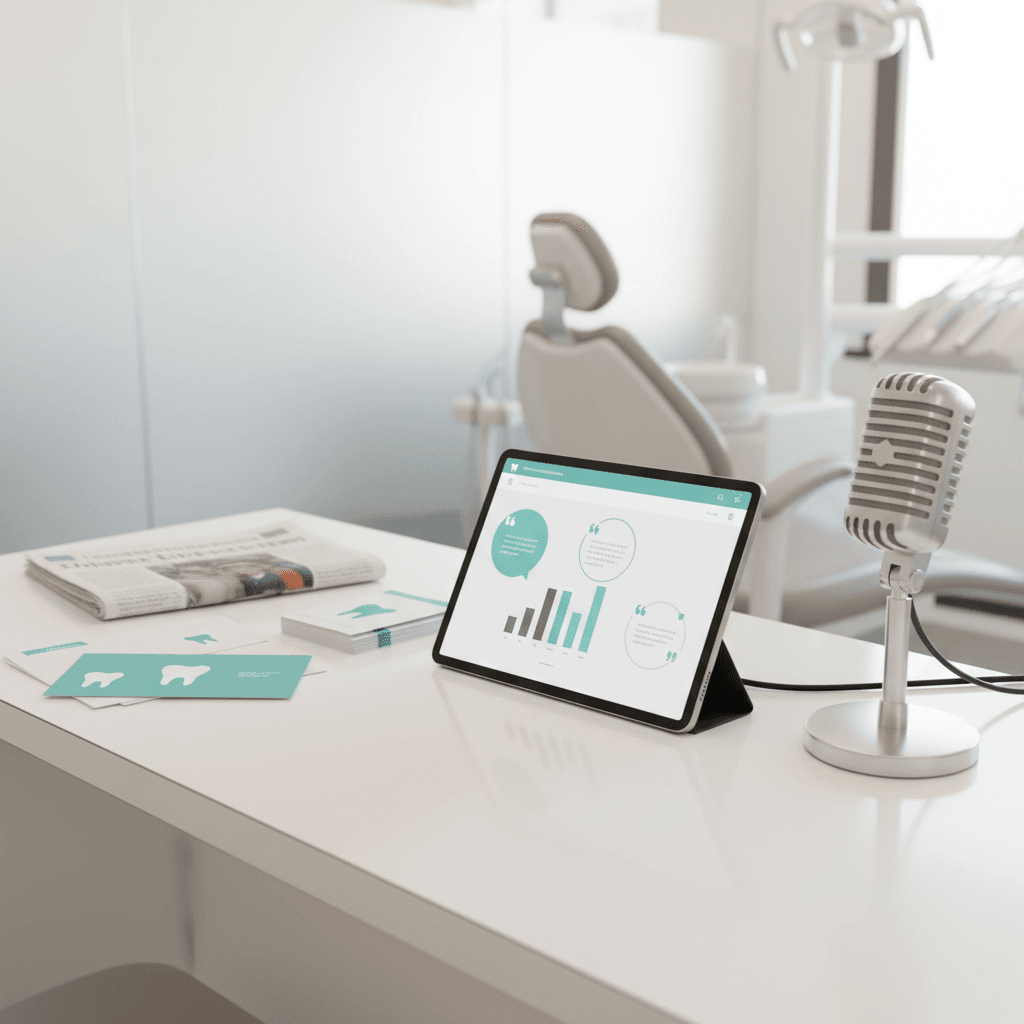
Traditional marketing—print mailers, local newspapers, radio sponsorships, and leaflet drops—delivers measurable results in specific scenarios. Leaflet drops cost £200-400 per 10,000 homes with typical response rates of 0.1-0.5%, requiring 4-6 weeks to evaluate effectiveness. Tracking results is essential to determine ROI and avoid wasted spend. However, traditional channels are rarely sufficient as a standalone strategy for high-value private patient acquisition in competitive UK cities. Instead, they work best as part of a multi-channel approach, supporting digital campaigns and reinforcing brand presence locally.
Wondering what AI tells patients about your practice? Free one page report in 48 hours. Where you are cited, where competitors win, and the gap.
Get your free AI Visibility CheckCore Dental Marketing Channels: Side-by-Side Performance Comparison
Understanding how individual marketing channels perform against consistent criteria enables informed budget allocation decisions. The best marketing for dentists comparison requires evaluating time-to-results, lead quality, cost stability, and scalability for high-value treatments like implants and Invisalign.
SEO vs Google Ads (PPC) for Dentists
SEO builds organic visibility for treatment-specific searches like “dental implants Manchester” while Google Ads delivers immediate placement for the same terms. Time to first 10 qualified enquiries differs dramatically: PPC generates leads within 24-48 hours, while SEO typically requires 3-6 months for meaningful volume. Cost-per-lead volatility favours SEO long-term—established rankings maintain £40-60 CPL compared to PPC’s £15-25 cost-per-click in competitive UK cities.
Long-term compounding versus pay-to-play dynamics create the fundamental difference. SEO rankings become practice assets, generating consistent traffic without ongoing click costs. PPC stops immediately when paused. Competitive protection varies: strong SEO positions resist competitor aggression, while PPC bidding wars can double costs overnight. Successful practices combine both: PPC for immediate results and testing, SEO for sustainable growth.
For actionable tips on improving your search rankings, see these SEO tips for dentists.
Google Ads vs Meta (Facebook/Instagram) Ads
Search intent versus interruptive social scrolling creates fundamentally different patient behaviors. Google Ads capture high-intent searches—”emergency dentist near me,” “Invisalign London prices,” “dental implants Manchester”—when patients actively seek solutions. Meta Ads interrupt social browsing, requiring compelling creative to generate interest in smile makeovers, Invisalign open days, or patient finance options.
Lead quality and no-show risk favor Google Ads significantly. Search-driven enquiries show 60-70% consultation attendance rates compared to 40-50% from social media leads. Meta Ads excel for visual storytelling—before/after transformations, patient testimonials, treatment process videos—but require immediate follow-up within 5-10 minutes. Creative production demands differ: Google Ads need compelling headlines and clear offers, while Meta requires professional photography, video content, and ongoing creative refresh.
For inspiration on engaging content, explore these dental social media ideas.
Organic Social Media vs Paid Social for Dental Practices
Organic social media builds trust and familiarity rather than generating direct volume of high-value cases. Realistic expectations include strengthening existing patient relationships, showcasing team personality, and providing educational content. A minimum posting schedule of 3 times weekly with one case-study post maintains engagement without overwhelming administrative burden.
Paid social becomes effective with clear offers, professional creatives, and structured follow-up scripts. Boost top-performing organic posts to audiences within 5-10 miles of the practice. Use 15-30 second vertical videos for treatment FAQs and mini before/after reveals. The combination approach—organic content for trust-building, paid promotion for reach amplification—delivers better results than either strategy in isolation.
Local SEO vs Buying Dental Leads from Third Parties
Local SEO focuses on map pack rankings and “near me” searches, with Google Business Profile optimization at the core. Lead brokers sell identical enquiries to multiple practices, creating immediate competition and diluted conversion rates. Ownership and exclusivity favor local SEO: practices control the patient relationship from first contact through treatment completion.
| Factor | Local SEO | Third-Party Lead Buying |
|---|---|---|
| Lead Exclusivity | 100% exclusive to your practice | Sold to 3-5 competing practices |
| Brand Recognition | Patients find and choose your practice | Generic lead, no brand preference |
| Long-Term Cost | Decreases as rankings improve | Fixed per-lead cost, often increasing |
| Dependency Risk | Owned asset, sustainable traffic | Stops immediately if relationship ends |
Implementation requires updating Google Business Profile completely (30 minutes), implementing review request workflows within one hour of appointments, and tracking calls separately from other channels. Local SEO delivers compounding returns: improved rankings reduce cost-per-lead while building practice equity unavailable through lead purchasing.
The Role of Your Website: Conversion Engine vs “Online Brochure”
High-converting dental websites function as active patient acquisition tools, not passive information displays. The best marketing for dentists comparison reveals that website optimization often delivers the highest marginal ROI by improving conversion rates from existing traffic before increasing advertising spend.
What a High-Converting Dental Website Looks Like in 2025
Load times under 3 seconds on 4G networks with mobile-first layouts form the technical foundation. Clear, persistent “Book Consultation” buttons and click-to-call numbers remain visible throughout scrolling. Treatment-specific landing pages for Invisalign, implants, composite bonding, and emergencies address distinct patient concerns rather than generic practice information.
Online booking systems with real-time availability and 60-second confirmation processes eliminate phone tag friction. AI chat integration or smart enquiry forms pre-qualify cases, routing emergency patients differently from cosmetic consultations. Well-optimized sites achieve 15%+ visitor-to-consultation conversion rates compared to 3-5% for basic practice websites.
For a deeper dive into why your website design matters, read why a smart dental website design is crucial for success.
Website Redesign vs Conversion Rate Optimisation (CRO) on Existing Site
Complete rebuilds require 8-12 weeks with significant upfront investment, while conversion rate optimization delivers improvements through 2-4 week testing sprints. Poorly managed redesigns risk losing SEO equity built over years—rankings can drop 20-40% during transitions without proper technical planning.
CRO methodology tests specific elements systematically: hero headlines, call-to-action placement, form field reduction, trust signal positioning. A/B testing hero messages for 30 days reveals which patient concerns resonate most. Adding treatment-specific FAQs reduces consultation friction by addressing price and process questions upfront. Simplifying enquiry forms to 4-6 essential fields can increase completion rates by 25-35%.
Dental Website Design vs Generic Local Business Web Design
Dental website design requires specialized understanding of clinical content, regulatory compliance, treatment photography, and patient finance integration. Generic local business designers lack familiarity with patient objections, treatment decision timelines, and dental practice management system integrations.
Dental-specific designers understand how to present before/after galleries compliantly, structure treatment information to address common fears, and integrate with regulatory guidance such as the GDC’s Marketing in Dentistry Guidance.
For more creative inspiration, you can also explore these dental blog post ideas to enhance your website’s content strategy.
For the latest data on the UK dental sector, see the GDC 2024 State of UK Dentistry Report.
Frequently Asked Questions
What are the key metrics UK dental practices should track to measure the success of their marketing campaigns?
UK dental practices should focus on cost per qualified lead (CPL), aiming for under £60 for Invisalign and under £100 for implants, website visitor-to-consultation conversion rates exceeding 12-15%, and treatment acceptance rates for high-value cases. Tracking these metrics ensures marketing efforts translate into profitable patient acquisition rather than just traffic or engagement.
How can dental practices optimize their websites to improve the conversion rate from visitors to consultations?
Optimizing dental websites involves creating a conversion-focused design with clear calls to action, streamlined booking processes, and content that highlights high-value treatments. Incorporating patient testimonials, trust signals, and mobile responsiveness also enhances user experience, driving visitor-to-consultation conversion rates well above the typical 2-4% seen in generic sites.
Why is focusing on qualified leads for high-value treatments like implants and Invisalign more effective than chasing vanity metrics?
Qualified leads for high-value treatments directly impact revenue by filling chairs with profitable cases, whereas vanity metrics like website visits or social media followers do not guarantee patient bookings. Prioritizing quality over quantity ensures marketing budgets deliver measurable ROI and sustainable practice growth.
What combination of marketing channels and strategies is recommended for predictable patient acquisition in UK dental practices?
A coordinated approach combining SEO for long-term visibility, conversion-optimised websites, targeted PPC campaigns for immediate leads, systematic review generation, and team training is recommended. Managing these channels under a specialist dental marketing agency ensures alignment and maximises patient acquisition for high-value treatments.
Real client results, not a promise. The number we commit to for your practice is agreed up front and written into the agreement.
Patients in the chair, not just leads. Guaranteed.
We own the whole journey to the attended consultation. New attended patient consultations in 90 days, or we work free until you hit them.Book a chat with Josie