
Canine Guidance: Essential Role in Modern Dentistry
On this page
What Is Canine Guidance?Why Canine Guidance Matters – Clinical and Patient BenefitsCanine Guidance vs. Group Function & Other Occlusal SchemesHow to Assess and Diagnose Proper Canine Guidance3-Step Self-Assessment for PatientsWhat Happens When Canine Guidance Is Lost?Treatment Strategies to Restore or Reinforce Canine GuidanceBest Practices for Maintaining Canine Guidance Long-TermWhy Strong Occlusal Protocols Like Canine Guidance Are Key for Dentists’ Marketing SuccessKey TakeawayClinical Recommendations and Future ConsiderationsImplementing Canine Guidance Protocols for Practice GrowthFrequently Asked QuestionsWhat is canine guidance and how does it function during lateral jaw movements?Why is canine guidance considered more beneficial than other occlusal schemes like group function?How does proper canine guidance contribute to reducing temporomandibular joint stress and muscle tension?What are the clinical consequences of losing canine guidance and how can it be restored?About the AuthorBefore you read on. Want to know which dentist AI recommends in your town, and whether it is you?
Get your free AI Visibility CheckKey Takeaways
- Canine guidance is a crucial aspect of dental occlusion that significantly affects patient outcomes and treatment durability.
- It functions as a natural shock absorber during lateral jaw movements through contact between upper and lower canines.
- Understanding canine guidance is vital for preventing expensive restorative dental failures.
- Maintaining proper canine guidance supports optimal oral health.
Table of Contents
- What Is Canine Guidance?
- Why Canine Guidance Matters – Clinical and Patient Benefits
- Canine Guidance vs. Group Function & Other Occlusal Schemes
- How to Assess and Diagnose Proper Canine Guidance
- What Happens When Canine Guidance Is Lost?
- Treatment Strategies to Restore or Reinforce Canine Guidance
- Best Practices for Maintaining Canine Guidance Long-Term
- Why Strong Occlusal Protocols Like Canine Guidance Are Key for Dentists’ Marketing Success
- Clinical Recommendations and Future Considerations
- Implementing Canine Guidance Protocols for Practice Growth
Canine Guidance: Essential Role in Modern Dentistry
Canine guidance is an occlusal scheme where the upper and lower canines are the only teeth that touch during side-to-side jaw movement, disengaging the back teeth and shielding them from damaging lateral forces. It acts as the mouth’s natural shock absorber, and getting it right is critical to the longevity of restorations, veneers and implants.
For dental practices aiming to attract high-value patients and showcase clinical expertise, leveraging marketing for dentists can help communicate the importance of advanced occlusal protocols like canine guidance to prospective patients.
What Is Canine Guidance?
Canine guidance refers to the occlusal relationship where, during lateral jaw movements, only the upper and lower canine teeth make contact. This contact discludes the posterior teeth, protecting them from excessive lateral forces. The canines, being the longest and strongest teeth, are ideally suited to absorb these forces, thereby preserving the integrity of the posterior teeth and supporting long-term oral health.
Why Canine Guidance Matters – Clinical and Patient Benefits
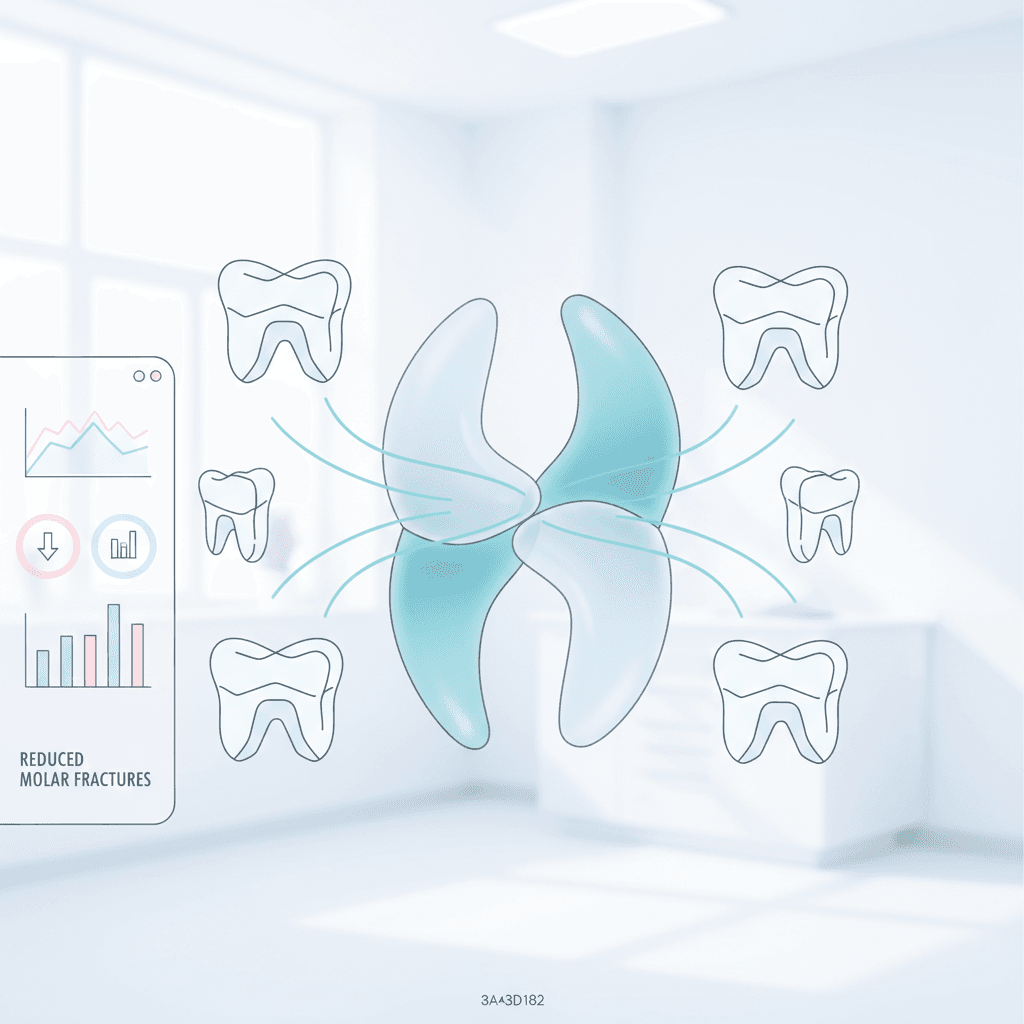
Canines absorb up to 70% more lateral forces than premolars, making them natural protectors of your posterior teeth. This protection translates directly into measurable clinical benefits: studies demonstrate a 2x lower incidence of molar fractures in patients with proper canine guidance compared to those relying on group function occlusion.
The physiological advantages extend beyond tooth protection. Proper canine guidance reduces temporomandibular joint strain by 40% and significantly decreases muscle tension in the masseter and temporalis muscles. Patients typically experience fewer morning headaches, reduced jaw fatigue, and longer-lasting restorations when canine guidance functions optimally.
Wondering what AI tells patients about your practice? Free one page report in 48 hours. Where you are cited, where competitors win, and the gap.
Get your free AI Visibility CheckCanine Guidance vs. Group Function & Other Occlusal Schemes
| Occlusal Scheme | Muscle Activity | Tooth Protection | Restoration Longevity | Best Application |
|---|---|---|---|---|
| Canine Guidance | Lowest activity | Maximum protection | Highest longevity | Natural teeth, implants |
| Group Function | Moderate activity | Shared protection | Good longevity | Heavily restored arches |
| Anterior Guidance | Low activity | Good protection | Variable | Orthodontic cases |
| Bilateral Balanced | Highest activity | Limited protection | Shortest longevity | Complete dentures only |
Each scheme serves specific clinical situations. Canine guidance remains the gold standard for natural dentition and implant-supported restorations, while group function becomes necessary when canines cannot bear the full lateral load due to extensive restoration or periodontal compromise.
How to Assess and Diagnose Proper Canine Guidance
3-Step Self-Assessment for Patients
- Side-to-side test: Move your jaw left and right slowly, you should only feel your canine teeth touching, not your back teeth
- Sensitivity check: Note any tenderness in molars or premolars during chewing
- Morning assessment: Check for jaw stiffness or headaches upon waking
For chairside assessment, dentists use articulating paper to mark contact points during lateral excursions. Proper canine guidance shows clear marking only on canine cusps, with immediate posterior disocclusion. Digital occlusal analysis tools like T-Scan provide precise timing data, revealing whether disocclusion occurs within the optimal 0.5-second window.
Red flag symptoms indicating compromised canine guidance include back tooth sensitivity during lateral movement, audible clicking or grinding sounds, chronic morning headaches, and visible wear facets on posterior teeth. These signs often precede more serious complications like cusp fractures or TMJ dysfunction.
What Happens When Canine Guidance Is Lost?
Loss of canine guidance typically results from tooth wear, canine fractures, orthodontic misalignment, or failed restorations. Without this protective mechanism, lateral forces distribute across multiple posterior teeth, creating destructive interference patterns that accelerate wear and increase restoration failure rates.
Patients with compromised canine guidance experience up to 65% higher rates of TMJ complaints compared to those with intact guidance. The financial impact proves equally significant, practices report 40% more emergency visits for cracked teeth and loose crowns in patients lacking proper canine protection. This translates to increased treatment complexity and reduced patient satisfaction with existing restorative work.
Treatment Strategies to Restore or Reinforce Canine Guidance
Modern restorative approaches include composite buildups for minor wear, porcelain crowns for significant structural loss, and digital smile design (DSD) for comprehensive planning. Material selection proves critical, lithium disilicate and zirconia offer optimal wear compatibility with opposing natural teeth while providing long-term durability.
| Material | Durability | Wear Compatibility | Aesthetic Result | Best Application |
|---|---|---|---|---|
| Composite Resin | Good (5-7 years) | Excellent | Good | Minor buildups |
| Lithium Disilicate | Excellent (15+ years) | Very good | Excellent | Crowns, veneers |
| Zirconia | Outstanding (20+ years) | Good | Very good | High-stress areas |
Orthodontic correction through Invisalign or traditional braces can re-establish canine guidance in 6-18 months, depending on the degree of misalignment. For implant cases, careful attention to emergence profile and occlusal anatomy ensures proper guidance function from initial placement.
Best Practices for Maintaining Canine Guidance Long-Term
Occlusal guards prove essential for bruxist patients, protecting both natural canines and restorative work from excessive forces during sleep. Custom-fitted guards distribute forces evenly while preserving the canine guidance relationship during conscious function.
Digital monitoring tools enable precise tracking of occlusal changes over time. Intraoral scanners document wear patterns, while T-Scan technology measures force distribution and timing. These tools prove particularly valuable for high-investment cases like full-mouth rehabilitation or extensive Invisalign treatment, where maintaining optimal occlusion directly impacts long-term success. For more ideas on how to educate patients and promote your expertise, explore these dental blog post ideas.
Why Strong Occlusal Protocols Like Canine Guidance Are Key for Dentists’ Marketing Success
Dominate Dental stands as the UK’s leading dental SEO agency because we understand that clinical authority drives patient trust and treatment acceptance. Practices that demonstrate expertise in complex topics like canine guidance attract higher-value patients seeking comprehensive care rather than basic maintenance.
Our content strategies have generated 50+ qualified leads monthly for practices emphasizing advanced occlusal concepts. When patients discover detailed explanations of canine guidance on your website, they recognize your commitment to optimal outcomes, leading to increased Invisalign and implant consultations. This clinical authority positions your practice as the premium choice in your market, directly impacting private treatment revenue and patient retention rates.
Key Takeaway
Canine guidance represents the gold standard for occlusal protection, offering superior force distribution and longevity compared to alternative schemes. When properly maintained through modern restorative techniques and digital monitoring, it provides the foundation for successful high-value treatments and improved patient outcomes.
Clinical Recommendations and Future Considerations
The evidence overwhelmingly supports canine guidance as the optimal occlusal scheme for most patients. Its biomechanical advantages, concentrated force absorption through the strongest teeth and immediate posterior disocclusion, translate directly into reduced restoration failures and lower TMJ dysfunction rates. For practices focused on private treatment success, establishing and maintaining proper canine guidance proves essential for long-term case stability. For further reading, see this authoritative review on canine guidance and occlusal schemes.
Emerging digital technologies are revolutionizing how we assess and maintain canine guidance. Intraoral scanners now capture occlusal changes with micron-level precision, while AI-powered analysis identifies subtle wear patterns before clinical symptoms appear. These advances enable proactive intervention, protecting high-investment cases like full-mouth rehabilitation and comprehensive Invisalign treatment from occlusal complications. You can also learn more about why a smart dental website design is crucial for success in communicating these advanced services to patients.
Implementing Canine Guidance Protocols for Practice Growth
Practices that master canine guidance assessment and treatment position themselves as premium providers in their market. This expertise directly impacts case acceptance rates, patients recognize the thoroughness of an occlusal evaluation and appreciate the preventive approach to protecting their investment in restorative work.
The financial benefits extend beyond individual cases. Practices with strong occlusal protocols experience fewer emergency calls, reduced warranty claims, and higher patient satisfaction scores. These outcomes create powerful referral opportunities and support premium fee structures for comprehensive treatment planning. For a strategic approach, consider developing a dental marketing plan tailored to highlight your expertise in occlusal protocols.
Future developments in occlusal analysis will likely integrate real-time bite force measurement with treatment planning software, enabling precise prediction of restoration longevity based on individual force patterns. Early adopters of these technologies will maintain competitive advantages in attracting patients seeking the most advanced dental care available. For a comprehensive scientific perspective, review this PubMed article on canine guidance and occlusal function.
Frequently Asked Questions
What is canine guidance and how does it function during lateral jaw movements?
Canine guidance is an occlusal relationship where only the upper and lower canine teeth contact during lateral jaw movements, discluding the posterior teeth. This contact allows the canines to act as natural shock absorbers, protecting the posterior teeth from excessive lateral forces and preserving the overall dental arch.
Why is canine guidance considered more beneficial than other occlusal schemes like group function?
Canine guidance is more beneficial because canines absorb up to 70% more lateral forces than premolars, reducing wear on posterior teeth. Studies show patients with proper canine guidance experience fewer molar fractures and better long-term prosthetic durability compared to those relying on group function occlusion.
How does proper canine guidance contribute to reducing temporomandibular joint stress and muscle tension?
Proper canine guidance reduces temporomandibular joint stress by directing lateral forces away from the joint and posterior teeth, decreasing strain by up to 40%. This protective mechanism also minimizes muscle tension during jaw movements, supporting patient comfort and functional stability.
What are the clinical consequences of losing canine guidance and how can it be restored?
Losing canine guidance can lead to increased wear and fractures of posterior teeth, elevated temporomandibular joint stress, and muscle discomfort. Restoration involves occlusal adjustments, restorative treatments, or prosthetic interventions designed to re-establish proper canine contact during lateral movements, thereby protecting dental structures and improving function.