
Dental Brand Reputation 2026: Top UK Practice Tips
On this page
What “Dental Brand Reputation” Really Means for UK PracticesDefinition – Beyond Logos and Star RatingsWhy Reputation Is Now a Core Growth Lever (Not a “Nice to Have”)Brand Reputation vs Practice Marketing – How They InterlockOnline vs Offline Reputation – Two Sides of the Same CoinCore Components of a Strong Dental Brand ReputationBrand Identity – Who You Are and Who You ServeBrand Promise and ProofPatient Experience as the Reputation EngineOperationalising Brand Reputation: Training Your Team to Live the BrandTurning Brand Values into Behaviour StandardsTraining Reception, TCOs and Clinicians on Reputation MomentsStandardising Patient Experience Across Multiple Dentists and HygienistsManaging Dental Brand Reputation Crises and Complex ScenariosNegative Viral Post or Media Coverage – First 72 HoursRegulatory Complaints, Malpractice History and Public RegistersOwnership Changes, Rebrands and Legacy ReputationPositioning for Competitive Markets: Standing Out in London, Manchester and BirminghamPremium vs Affordable Brand Positioning – Choosing a LaneCosmetic-Focused vs General Dentistry Brand StrategiesSingle-Site Practice vs Multi-Location Reputation StrategyLeveraging Content, Social Media and Email to Reinforce Brand ReputationContent That Demonstrates Expertise and TrustworthinessSocial Media Channels That Matter for Dental Brand ReputationEmail Marketing to Nurture Trust and Reactivate Lapsed PatientsMeasurement: KPIs and Dashboards for Dental Brand ReputationFrequently Asked QuestionsWhat are the key components that contribute to building a strong dental brand reputation in competitive UK markets?How does a strong dental brand reputation impact patient lead quality and treatment acceptance rates?What strategies can dental practices use to effectively manage and recover from reputation crises?How do dental brand reputation and dental practice marketing differ, and how can they work together to drive growth?About the AuthorBefore you read on. Want to know which dentist AI recommends in your town, and whether it is you?
Get your free AI Visibility CheckKey Takeaways
- Your dental brand reputation significantly influences patient choices for high-value treatments.
- Strong reputations help practices attract over 50 qualified leads each month in competitive UK cities.
- Practices with weak reputations often face low-quality enquiries and frequent no-shows.
- Building a solid brand reputation is essential for growth in markets like London, Manchester, and Birmingham.
Table of Contents
- What “Dental Brand Reputation” Really Means for UK Practices
- Core Components of a Strong Dental Brand Reputation
- Operationalising Brand Reputation: Training Your Team to Live the Brand
- Managing Dental Brand Reputation Crises and Complex Scenarios
- Positioning for Competitive Markets: Standing Out in London, Manchester and Birmingham
- Leveraging Content, Social Media and Email to Reinforce Brand Reputation
- Measurement: KPIs and Dashboards for Dental Brand Reputation
Dental Brand Reputation: The Definitive Playbook for Growth-Focused UK Practices
Your dental brand reputation directly determines whether potential patients choose your practice for high-value treatments like Invisalign and implants—or scroll past to your competitors. In competitive UK markets like London, Manchester, and Birmingham, practices with strong reputations generate 50+ qualified leads monthly while others struggle with poor-quality enquiries and frequent no-shows.
This comprehensive guide reveals how to build, manage, and leverage your dental brand reputation as a core growth engine, not just a “nice-to-have” marketing add-on. Marketing for dentists is a critical component in establishing and maintaining a strong reputation in today’s competitive landscape.
For practices looking to accelerate growth, partnering with a dental marketing agency can provide the expertise and resources needed to stand out in crowded urban markets.
What “Dental Brand Reputation” Really Means for UK Practices
Definition – Beyond Logos and Star Ratings
Dental brand reputation encompasses how patients feel, talk, and decide about your practice based on every touchpoint—from initial Google search through post-treatment follow-up. Unlike general brand awareness (people having heard of you), reputation reflects what they actually believe about your clinical quality, service standards, and value proposition.
True reputation extends across the entire patient journey: search results appearance, website experience, phone interactions, reception welcome, waiting room environment, chairside manner, treatment outcomes, billing transparency, and follow-up care. Each touchpoint either reinforces or undermines the reputation you’re building.
Why Reputation Is Now a Core Growth Lever (Not a “Nice to Have”)
Strong dental brand reputation directly drives commercial outcomes that matter most to practice owners. Practices with 4.7+ star ratings and consistent positive reviews experience higher Invisalign and implant case acceptance rates, fewer no-shows and tyre-kickers, and significantly higher average treatment values per patient.
Research indicates that doubling review volume typically increases website conversion rates by 15-25%, while practices with fewer than 50 recent reviews struggle to compete for high-value treatment enquiries in saturated urban markets. For practical strategies on collecting more reviews, see how to get patients to write reviews.
Brand Reputation vs Practice Marketing – How They Interlock
| Aspect | Dental Brand Reputation | Dental Practice Marketing |
|---|---|---|
| Primary Focus | Patient experience and perception | Lead generation and visibility |
| Timeframe | Long-term, compound growth | Immediate traffic and enquiries |
| Key Metrics | Star ratings, NPS, referral rates | Click-through rates, cost per lead |
| Controllability | Influenced through service delivery | Directly controlled through ad spend |
Ad spend without reputation foundation leads to poor ROI and persistent “lead quality complaints.” Patients research extensively before booking consultations for expensive treatments—your reputation determines whether they convert or continue searching.
Online vs Offline Reputation – Two Sides of the Same Coin
Online reputation includes Google reviews, social media presence, website experience, and local SEO visibility. Offline reputation encompasses chairside manner, reception experience, waiting room environment, and actual treatment outcomes. These interconnect within 24-72 hours of each patient visit.
Exceptional offline experiences naturally generate positive online reviews, while poor service experiences quickly manifest as negative ratings that damage future lead generation. The strongest practices systematically excel at both dimensions. For more ideas on boosting your online presence, explore these dental marketing ideas.
Core Components of a Strong Dental Brand Reputation

Brand Identity – Who You Are and Who You Serve
Clear brand identity includes four elements: positioning, promise, personality, and visual identity. Strong positioning examples include “Discreet Invisalign and cosmetic dentistry for city professionals” or “Family-friendly general dentistry with flexible evenings and weekends.” Unclear positioning leads to mixed reviews and confused patients who don’t understand your core strengths.
Your positioning should immediately communicate which treatments you excel at, which geographic area you serve, and which patient profile you’re designed for. This clarity helps attract ideal patients while filtering out poor-fit enquiries that often result in negative reviews.
Brand Promise and Proof
Your brand promise might be “pain-free, on-time, transparent pricing”—but this requires measurable standards to deliver consistently. Translate promises into specific targets: 90-95% on-time appointment rate, written estimates for all treatments over £300 within 24 hours, and standardised pain management protocols.
Proof elements include before/after photos, detailed case studies, patient testimonials, and clinical outcome data. Without evidence, promises become empty marketing claims that sophisticated patients easily identify and dismiss.
Patient Experience as the Reputation Engine
Clinical quality is assumed by patients—service quality drives review content. Most reviews mention wait times, staff friendliness, communication clarity, and billing transparency rather than technical clinical skills. Standardise key service touchpoints: response time to enquiries (within 1 business hour by phone), greeting scripts at reception, and post-treatment follow-up for high-value treatments within 24-48 hours.
Service quality variations between team members create inconsistent patient experiences that generate mixed reviews. Implement simple protocols ensuring every patient receives the same experience regardless of which dentist or hygienist they see. A standardised approach transforms dental brand reputation from an abstract concept into measurable daily behaviours that patients notice and review.
Wondering what AI tells patients about your practice? Free one page report in 48 hours. Where you are cited, where competitors win, and the gap.
Get your free AI Visibility CheckOperationalising Brand Reputation: Training Your Team to Live the Brand
Turning Brand Values into Behaviour Standards
Define 3-5 core values that differentiate your practice, then translate each into specific, observable behaviours. For example, “pain-aware” becomes “explain each step before touching the patient” and “offer topical anaesthetic for all scaling appointments.” “Financially transparent” translates to “provide written estimates for any treatment over £250 within 24 hours” and “explain payment options before starting treatment.”
Create a one-page “brand behaviours” reference sheet covering reception interactions, chairside manner, and phone protocols. Each behaviour should link directly to common review themes—punctuality, pain management, cost clarity, and staff friendliness consistently appear in patient feedback across UK dental practices.
Training Reception, TCOs and Clinicians on Reputation Moments
Implement monthly 45-60 minute training sessions focusing on high-impact patient interactions. Essential topics include welcoming nervous Invisalign consultations, discussing implant costs without triggering price objections, and timing review requests appropriately. Role-play scenarios help staff practice handling complaints professionally while maintaining patient confidentiality.
Develop scripts for critical moments: explaining treatment delays, managing payment discussions, and responding to patient concerns about previous negative experiences they’ve read online. Consistent messaging across all team members prevents the mixed signals that generate confused or frustrated reviews.
Standardising Patient Experience Across Multiple Dentists and Hygienists
Establish simple standard operating procedures for new patient journeys, including time-stamped steps from initial call to first treatment. Implement post-treatment follow-ups within 24 hours for high-value cases, then again at 7 days to address any concerns before they become negative reviews.
Use brief Net Promoter Score surveys after key appointments to identify variation between clinicians. Consistent 9-10 ratings across all team members indicate successful brand implementation, while significant variation reveals training gaps that could damage your overall reputation.
Managing Dental Brand Reputation Crises and Complex Scenarios
Reputation crises test whether your dental brand reputation has genuine substance or merely surface-level polish. A structured response protocol protects both your practice’s credibility and legal position while demonstrating the professionalism that builds long-term trust.
First 24 Hours in a Reputation Crisis
- Pause all advertising campaigns
- Document facts internally without speculation
- Draft holding statement avoiding clinical details
- Consult legal/regulatory advisors before public response
- Notify key team members of communication protocols
Negative Viral Post or Media Coverage – First 72 Hours
Stop all paid advertising immediately to prevent driving traffic to negative content. Conduct internal fact-finding while documenting everything objectively—avoid defensive language or speculation about motives. Draft a holding statement that acknowledges the situation without discussing specific clinical details, which could breach patient confidentiality.
Decide response timing and channels strategically. Sometimes immediate response amplifies negative attention, while delayed response appears defensive. Focus on demonstrating your commitment to patient care standards rather than arguing specifics with critics.
Regulatory Complaints, Malpractice History and Public Registers
Address past issues by emphasising corrective actions rather than defending previous decisions. Highlight updated protocols, additional training investments, and new systems implemented since any incidents. Frame improvements as ongoing professional development rather than responses to specific problems.
Maintain factual, patient-focused language when discussing regulatory matters. Avoid defensive tones that suggest minimising patient concerns. Instead, demonstrate how experiences have strengthened your commitment to exceptional care standards. For official guidance, refer to the GDC’s ethical advertising and communication with patients.
Ownership Changes, Rebrands and Legacy Reputation
Communicate ownership transitions to existing patients within 30 days via email and posted letters. Clearly explain what’s changing and what remains consistent—staff, location, treatment standards, or appointment systems. Respect the legacy practice while establishing your own professional standards.
Retain positive elements of previous branding while distancing from any negative associations. This requires careful messaging that honours patient relationships built under previous ownership without accepting responsibility for past issues.
Positioning for Competitive Markets: Standing Out in London, Manchester and Birmingham
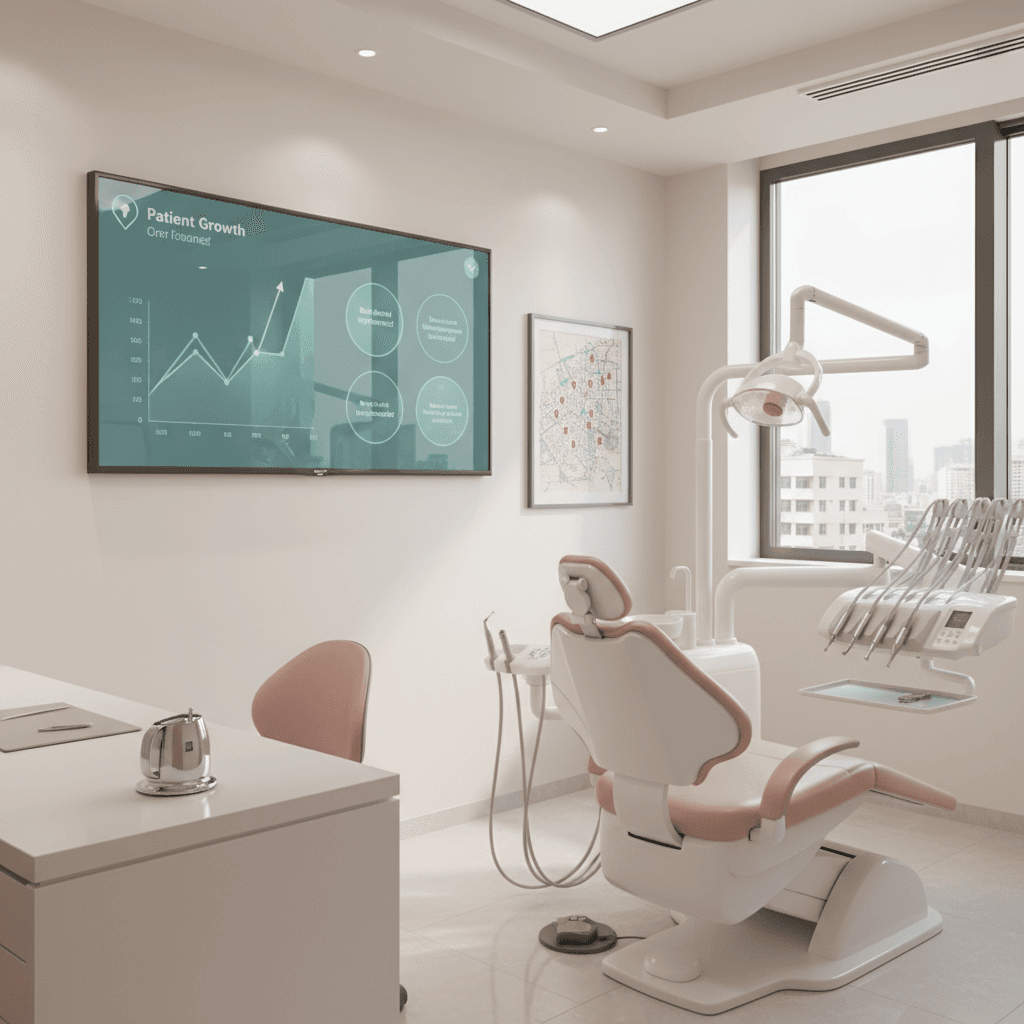
Saturated urban markets demand precise positioning that immediately communicates your unique value to high-value treatment seekers. Generic “friendly, professional dental care” messaging disappears among hundreds of similar practices competing for the same Invisalign and implant patients across major UK cities.
Premium vs Affordable Brand Positioning – Choosing a Lane
Choose either premium cosmetic positioning or accessible family dentistry—attempting both confuses patients and dilutes your dental brand reputation. Premium brands emphasise cutting-edge technology, luxury environments, and extensive consultation time. Affordable brands focus on efficiency, transparent pricing, and convenient scheduling options.
| Brand Type | Pricing Strategy | Environment | Messaging Focus | Service Expectations |
|---|---|---|---|---|
| Premium Cosmetic | 20-40% above market rate | Luxury finishes, private consultation rooms | Transformation, expertise, discretion | Extended consultations, concierge service |
| Accessible Family | Competitive with payment plans | Bright, welcoming, child-friendly | Convenience, value, comprehensive care | Efficient appointments, flexible scheduling |
Avoid “stuck in the middle” positioning that promises premium outcomes at budget prices. This creates unrealistic expectations that generate disappointed reviews and damage your dental brand reputation when delivery inevitably falls short of promises. If you’re developing your own approach, a dental marketing plan can help clarify your positioning and messaging.
Cosmetic-Focused vs General Dentistry Brand Strategies
Cosmetic-focused practices emphasise smile transformations, Invisalign outcomes, and aesthetic expertise through visual social proof. Content centres on before/after galleries, treatment journeys, and confidence-building stories. General dentistry brands highlight family loyalty, preventive care success, and long-term oral health relationships.
Channel strategies differ significantly—cosmetic practices invest heavily in Instagram and TikTok for visual impact, while general practices focus on Google local SEO and community presence. Avoid alienating NHS or plan patients when pushing private growth by maintaining separate messaging streams rather than abandoning existing patient relationships. For inspiration, check out these dental social media ideas.
Single-Site Practice vs Multi-Location Reputation Strategy
Single-site practices leverage personality and local community connections, featuring individual dentist expertise and neighbourhood involvement. Multi-site operations require standardised brand guidelines across locations while maintaining localised Google Business Profiles and community-specific content for each clinic.
Establish clear governance protocols determining who controls review responses and brand standards across multiple sites. Inconsistent messaging between locations confuses patients and weakens overall brand credibility in competitive markets.
Measurement: KPIs and Dashboards for Dental Brand Reputation
Effective dental brand reputation management requires robust measurement and clear KPIs. Leading UK practices track:
- Google review volume and average rating (target: 4.7+ stars, 100+ recent reviews)
- Net Promoter Score (NPS) by clinician and treatment type
- Referral rates (percentage of new patients from word-of-mouth)
- Website conversion rate (target: 15%+ from visitor to consultation booking)
- No-show and cancellation rates (should decrease as reputation improves)
- Lead quality metrics (percentage of high-value treatment enquiries)
Implement a dashboard that updates weekly, allowing you to spot trends and intervene early. Share key metrics with your team to reinforce the importance of reputation at every level of the practice. For practices aiming to generate 50+ qualified leads monthly, these KPIs are essential for sustainable growth and ROI.
Frequently Asked Questions
What are the key components that contribute to building a strong dental brand reputation in competitive UK markets?
Key components include delivering consistent, high-quality patient experiences across every touchpoint, proactive online reputation management, transparent communication, and a professional, welcoming environment. Additionally, training your team to embody the brand values and leveraging patient feedback to continuously improve are essential for standing out in markets like London, Manchester, and Birmingham.
How does a strong dental brand reputation impact patient lead quality and treatment acceptance rates?
A strong dental brand reputation attracts higher-quality, motivated leads who are more likely to book consultations and accept high-value treatments such as Invisalign and implants. It reduces no-shows and enhances patient trust, directly improving conversion rates and driving sustainable revenue growth in competitive UK dental markets.
What strategies can dental practices use to effectively manage and recover from reputation crises?
Effective strategies include promptly addressing negative feedback with empathy and transparency, implementing corrective actions to resolve issues, and actively encouraging satisfied patients to share positive reviews. Maintaining open communication internally and externally helps rebuild trust quickly and prevents long-term damage to the practice’s reputation.
How do dental brand reputation and dental practice marketing differ, and how can they work together to drive growth?
Dental brand reputation reflects patient perceptions shaped by every interaction, while dental practice marketing focuses on promoting services and attracting leads. Together, they create a powerful growth engine: marketing drives traffic and awareness, while a strong reputation converts leads into loyal patients and encourages referrals, maximizing ROI and long-term success.