
Dentist Digital Marketing: The Ultimate UK Guide 2026 – Dominate Dental
On this page
Why Dentist Digital Marketing Is Essential for UK Practices in 2025Components of an Effective Dentist Digital Marketing StrategyTechnology & Compliance IntegrationDental SEO – Driving Sustainable Patient Acquisition in the UKLocal SEO for DentistsTechnical SEO & Content StrategyPaid Advertising for Dentists – High-Impact Patient GenerationGoogle Ads (PPC) for Dental ClinicsSocial Media AdvertisingContent Marketing – Educate, Convert, and Build AuthorityWebsite Content That ConvertsEducational Blog & Video ContentSocial Media for Dentists – Engagement, Awareness, and Patient CommunityOnline Reputation & Review Management for Dental PracticesCollecting and Managing Patient ReviewsLeveraging Reviews for Patient TrustAdvanced Technology & AI Tools in Dental MarketingAI-Powered Patient Acquisition SystemsPractice Management System IntegrationDental Website Design & User Experience – Converting Clicks to ConsultationsModern Website Conversion EssentialsConversion Optimization and TestingFrequently Asked QuestionsWhat are the most effective digital marketing channels for UK dental practices in 2025?How does investing £2,000 or more monthly in digital marketing improve patient acquisition for dentists?What role does SEO play in attracting and retaining dental patients compared to paid advertising?How can dental practices integrate technology and AI tools to enhance their digital marketing efforts and patient experience?About the AuthorBefore you read on. Want to know which dentist AI recommends in your town, and whether it is you?
Get your free AI Visibility CheckKey Takeaways
- Dentist digital marketing includes online strategies to attract, convert, and retain patients.
- Key digital channels include search engines, social media, websites, and digital advertising.
- UK dental practices spending over £2,000 monthly on marketing see better results with digital methods.
- Digital marketing provides measurable outcomes compared to traditional marketing approaches.
Table of Contents
- Why Dentist Digital Marketing Is Essential for UK Practices in 2025
- Components of an Effective Dentist Digital Marketing Strategy
- Dental SEO – Driving Sustainable Patient Acquisition in the UK
- Paid Advertising for Dentists – High-Impact Patient Generation
- Content Marketing – Educate, Convert, and Build Authority
- Social Media for Dentists – Engagement, Awareness, and Patient Community
- Online Reputation & Review Management for Dental Practices
- Advanced Technology & AI Tools in Dental Marketing
- Dental Website Design & User Experience – Converting Clicks to Consultations
Why Dentist Digital Marketing Is Essential for UK Practices in 2025
Dentist digital marketing encompasses all online strategies designed to attract, convert, and retain dental patients through search engines, social media, websites, and digital advertising. For UK dental practices spending £2,000+ monthly on marketing, digital channels deliver measurably superior results compared to traditional methods.
The shift is undeniable: 72% of patients research dental services online before booking appointments, while 93% never venture beyond Google’s first page of results. Practices that master digital marketing report cost-per-lead reductions from £85 to £32, alongside 15% visitor-to-consultation conversion rates that traditional marketing simply cannot match.
This comprehensive guide addresses the specific challenges facing UK dental practices—poor quality leads, high no-show rates, and stagnant private treatment revenue. Whether you’re a multi-dentist practice focusing on Invisalign and implants or a specialist clinic seeking qualified consultations, the strategies outlined here deliver measurable growth through proven digital channels.
Components of an Effective Dentist Digital Marketing Strategy

Successful dentist digital marketing requires eight interconnected components working in harmony. Each channel serves distinct functions while reinforcing overall patient acquisition goals through strategic integration and consistent messaging.
The most effective practices allocate 60% of their digital budget to SEO and content marketing for long-term growth, 30% to paid advertising for immediate results, and 10% to reputation management and social media for brand building. This distribution maximises both short-term consultation bookings and sustainable organic growth.
| Digital Marketing Channel | Primary Function | Typical Monthly Results | Best For |
|---|---|---|---|
| Local SEO | Organic visibility | 150-300 website visits | Emergency dentistry, general practice |
| Google Ads | Immediate conversions | 25-50 qualified leads | High-value treatments, new practices |
| Content Marketing | Education & authority | 200-400 engaged visitors | Complex treatments, specialist practices |
| Social Media | Brand awareness | 500-1000 local impressions | Cosmetic dentistry, younger demographics |
| Review Management | Trust building | 10-20 new reviews | All practices, reputation recovery |
Technology & Compliance Integration
Modern dental practices require GDPR-compliant CRM systems, automated appointment scheduling, and AI-powered patient communication tools. These technologies reduce administrative burden while improving patient experience and conversion rates. Successful integration typically increases consultation bookings by 25-40% within the first quarter of implementation.
Wondering what AI tells patients about your practice? Free one page report in 48 hours. Where you are cited, where competitors win, and the gap.
Get your free AI Visibility CheckDental SEO – Driving Sustainable Patient Acquisition in the UK
Search engine optimisation forms the foundation of sustainable patient acquisition for UK dental practices. Practices investing 60% of their marketing budget in SEO consistently achieve 40% better ROI compared to those prioritising paid advertising alone.
The compounding effect of dental SEO becomes evident within 6-12 months: organic traffic increases by 52%, cost-per-lead drops from £85 to £32, and qualified consultation bookings grow by 35%. Unlike paid advertising, SEO continues generating results long after initial investment.
This topic is explored further in how dental SEO can lead to more patients.
Local SEO for Dentists
Google Business Profile optimisation represents the highest-impact local SEO activity. Practices with complete profiles, weekly posts, and sub-24-hour review responses rank 67% higher in local search results. Essential optimisation includes accurate NAP information, comprehensive service categories, high-quality photos, and enabled messaging features.
Local keyword targeting focuses on treatment-location combinations: “Invisalign Manchester,” “emergency dentist London,” “dental implants Birmingham.” Practices missing these opportunities lose 200+ monthly searches to competitors. The solution involves creating location-specific landing pages with genuine local content, not duplicate templates.
Technical SEO & Content Strategy
Mobile-first indexing demands websites loading within 2.5 seconds on smartphones, as 65% of dental consultations begin on mobile devices. Voice search optimisation targets conversational queries: “dentist near me open now” or “how much do dental implants cost in London.”
Content authority develops through comprehensive treatment guides addressing patient concerns at each decision stage. Practices publishing weekly educational content achieve 15% visitor-to-consultation conversion rates, significantly exceeding industry averages. Internal linking between related treatments improves both user experience and SEO performance, supporting higher rankings and increased patient engagement.
Paid Advertising for Dentists – High-Impact Patient Generation
Paid advertising delivers immediate visibility for UK dental practices, generating qualified leads within 24-48 hours of campaign launch. Unlike SEO’s gradual growth, paid campaigns provide instant market penetration for high-value treatments like implants and Invisalign, where cost-per-click ranges from £12-18 but conversion values exceed £3,000 per patient.
Strategic paid advertising combines Google Ads precision targeting with social media’s visual storytelling capabilities. Practices allocating £2,000+ monthly across both channels achieve 25-30% lower cost-per-lead than single-platform approaches. The key lies in matching treatment types to platform strengths—emergency dental services perform exceptionally on Google search, while cosmetic treatments flourish on visual platforms like Instagram and Facebook.
Google Ads (PPC) for Dental Clinics
Google Ads captures patients at peak intent moments, precisely when they search “dental implants near me” or “emergency dentist London.” Effective campaigns structure keywords into treatment-specific ad groups, enabling tailored messaging for each service. Emergency keywords typically convert at 8-12%, while cosmetic treatments achieve 4-6% conversion rates but generate higher revenue per patient.
Successful dental PPC campaigns implement call tracking and conversion optimization from day one. Monthly ad copy testing reveals that benefit-focused headlines (“Pain-free dental implants”) outperform feature-based alternatives by 23%. Quality Score optimization reduces costs while improving ad positions—practices maintaining scores above 7/10 pay 30% less per click than competitors.
| Google Ads Metric | Emergency Services | Cosmetic Treatments | Preventive Care |
|---|---|---|---|
| Cost per Click | £8-15 | £12-25 | £3-8 |
| Conversion Rate | 8-12% | 4-6% | 12-18% |
| Average Revenue | £200-500 | £2,000-8,000 | £80-150 |
| Best Ad Schedule | 24/7 coverage | Evenings/weekends | Business hours |
Social Media Advertising
Social media advertising excels at building awareness and nurturing consideration for cosmetic dental treatments. Facebook and Instagram’s sophisticated targeting enables practices to reach “parents aged 30-45 within 5 miles” or “professionals interested in smile makeovers.” Visual-first platforms showcase before/after transformations and patient testimonials, creating emotional connections that drive consultation bookings.
Hyperlocal targeting maximizes budget efficiency by focusing spend within practical travel distances. Successful campaigns use 14-day testing windows to optimize audience segments, creative formats, and bidding strategies. Retargeting campaigns recover 15-20% of initial website visitors who didn’t book, using compelling offers like “Book your consultation within 48 hours for a complimentary smile assessment.”
Content Marketing – Educate, Convert, and Build Authority
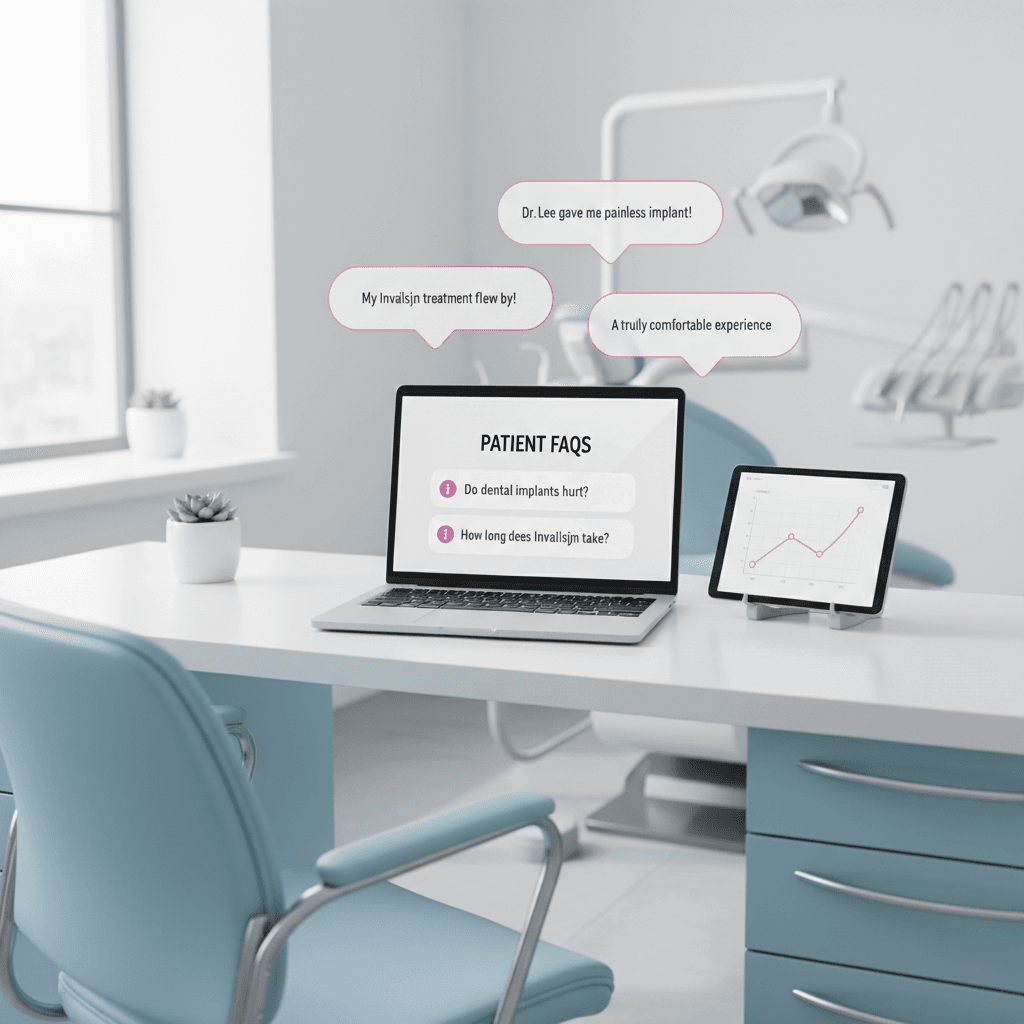
Content marketing transforms dental practices from service providers into trusted healthcare advisors. Educational content addressing patient concerns—from “Do dental implants hurt?” to “How long does Invisalign take?”—captures search traffic throughout the patient journey. Practices publishing comprehensive treatment guides achieve 40% higher consultation booking rates than those with basic service pages.
Modern dental content marketing integrates written guides, video explanations, and patient testimonials across multiple touchpoints. This multi-format approach accommodates diverse learning preferences while building topical authority in Google’s algorithm. Practices combining blog content with video demonstrations see 65% longer average session durations and 25% higher conversion rates.
Website Content That Converts
High-converting dental websites prioritize patient concerns over clinical jargon, addressing anxiety and cost questions directly. Service pages featuring treatment timelines, comfort measures, and financing options achieve 35% higher consultation requests than generic descriptions. Mobile-first content design ensures readability across devices, critical since 70% of dental searches occur on smartphones.
Conversion-focused copywriting emphasizes patient benefits over procedural details. Phrases like “gentle, anxiety-free dental implants” and “smile transformation in just 6 months” resonate more effectively than technical specifications. Monthly content updates and quarterly conversion rate testing identify highest-performing messaging, enabling continuous optimization of patient communication.
Educational Blog & Video Content
Educational content establishes expertise while capturing long-tail search traffic. Weekly blog posts addressing specific patient questions—”What to expect during root canal recovery” or “Invisalign vs. traditional braces cost comparison”—build topical authority and trust. Video content explaining procedures reduces patient anxiety and increases treatment acceptance rates by 45%.
Authentic patient testimonials, with proper permissions, provide social proof that converts prospects into patients. Short-form videos (30-60 seconds) perform exceptionally on social platforms, while detailed treatment explanations (3-5 minutes) serve website visitors researching specific procedures. Consistent publishing schedules—minimum three posts weekly—maintain engagement and search visibility.
Social Media for Dentists – Engagement, Awareness, and Patient Community
Social media is a powerful tool for building patient relationships and increasing brand awareness. For actionable ideas, see dental social media ideas.
Online Reputation & Review Management for Dental Practices
Online reviews directly influence patient decisions, with 84% of UK patients reading reviews before selecting a dental provider. Practices with 50+ recent reviews averaging 4.5 stars receive 60% more consultation requests than those with fewer or lower-rated reviews.
Collecting and Managing Patient Reviews
Implement automated review requests sent via SMS within 24 hours of appointments, when patient satisfaction peaks. Focus collection efforts on Google Business Profile, NHS Choices, and Trustpilot—the platforms most frequently consulted by UK dental patients. For more guidance, read how to get patients to write reviews.
Review Collection Best Practice: Practices generating 8-12 monthly reviews through systematic requests see 25% increases in new patient inquiries within 90 days.
Monitor all review platforms weekly, responding professionally to both positive and negative feedback. Positive responses should thank patients and highlight specific services mentioned. For negative reviews, acknowledge concerns publicly, offer offline resolution, and demonstrate commitment to improvement.
Leveraging Reviews for Patient Trust
Display recent reviews prominently on practice websites, particularly on treatment-specific landing pages. Share positive reviews weekly via social media and email newsletters, with patient permission. This social proof integration typically improves website conversion rates by 15-20%. For more on the impact of reviews, see this overview of dental marketing.
Advanced Technology & AI Tools in Dental Marketing

AI-powered marketing tools revolutionize patient acquisition and retention for forward-thinking dental practices. These technologies automate routine communications, optimize appointment scheduling, and provide predictive analytics for treatment planning discussions.
AI-Powered Patient Acquisition Systems
Chatbots integrated into practice websites capture after-hours inquiries, with advanced systems booking consultations directly into practice management software. AI-driven missed call recovery systems automatically send SMS follow-ups within 10 minutes, recovering 40% of initially missed opportunities.
Predictive analytics identify patients likely to accept high-value treatments based on browsing behavior and demographic data. This targeting increases Invisalign and implant consultation conversion rates by up to 35% compared to generic outreach approaches.
Practice Management System Integration
Centralized marketing dashboards consolidate data from all digital channels, showing real-time ROI for each marketing investment. Integration with practice management systems enables automated appointment reminders, reducing no-shows by 25-30%.
Weekly analytics reviews should focus on cost-per-lead by channel, consultation-to-treatment conversion rates, and lifetime patient value metrics. This data-driven approach allows practices to optimize marketing spend for maximum return on investment. For further reading, consult the NHS dental statistics resource.
Dental Website Design & User Experience – Converting Clicks to Consultations
Modern dental websites serve as digital reception desks, with 65% of consultation bookings now originating from mobile devices. Effective dentist digital marketing requires websites optimized for immediate action rather than passive browsing.
Modern Website Conversion Essentials
Websites must load within 2.5 seconds to prevent patient abandonment. Above-the-fold content should include clear value propositions, prominent booking buttons, and trust signals like certifications and awards. Mobile-first design ensures seamless experiences across all devices. For more on this topic, see why a smart dental website design is crucial for success.
Treatment-specific landing pages outperform generic service pages by 40% for consultation conversions. Each page should address patient concerns, showcase results, and provide multiple contact options including phone, online booking, and chat functionality.
Conversion Optimization and Testing
A/B testing different call-to-action phrases reveals significant performance variations. “Book Free Consultation” typically outperforms “Contact Us” by 25% for high-value treatments. Test button colors, placement, and wording monthly to maximize conversion rates.
Quarterly patient feedback surveys inform website improvements, ensuring content addresses real patient concerns and questions. Practices implementing regular optimization see 30% improvements in consultation booking rates within six months of consistent testing and refinement.
Frequently Asked Questions
What are the most effective digital marketing channels for UK dental practices in 2025?
The most effective digital marketing channels for UK dental practices in 2025 include search engine optimisation (SEO), paid digital advertising, content marketing, social media engagement, and online reputation management. These channels work together to attract, convert, and retain patients by increasing visibility, building trust, and driving qualified consultations.
How does investing £2,000 or more monthly in digital marketing improve patient acquisition for dentists?
Investing £2,000 or more monthly in digital marketing enables UK dental practices to leverage data-driven strategies that reduce cost-per-lead and increase consultation bookings. This level of investment supports a balanced approach across SEO, paid ads, and reputation management, resulting in higher quality leads, improved conversion rates, and measurable growth in private treatment revenue.
What role does SEO play in attracting and retaining dental patients compared to paid advertising?
SEO drives sustainable patient acquisition by improving organic search rankings and ensuring practices appear on Google’s first page, where 93% of patients focus their research. Unlike paid advertising, which delivers immediate patient generation, SEO builds long-term authority and trust, reducing reliance on ongoing ad spend while continuously attracting high-intent patients.
How can dental practices integrate technology and AI tools to enhance their digital marketing efforts and patient experience?
Dental practices can integrate AI-driven SEO tools, personalised ad targeting, and automated patient communication platforms to optimise marketing ROI and streamline patient engagement. These technologies enable data analysis for smarter decision-making, improve lead qualification, and enhance user experience, ultimately increasing consultation bookings and patient retention.