
Marketing Automation Dentists: The Ultimate 2026 ROI & Setup Guide
On this page
Why Marketing Automation Transforms Dental Practice GrowthUnderstanding Marketing Automation in Dental PracticeWhat Marketing Automation Actually Does for Your Dental PracticeHow Marketing Automation Integrates with Your Practice Management SystemThe Patient Retention Economics—Why Automation Justifies InvestmentThe Cost Advantage of Retention vs Acquisition Through AutomationBuilding Patient Lifetime Value Through Consistent Automated TouchpointsStrategic Email Automation Sequences Every Dental Practice NeedsThe Welcome & Onboarding Sequence (First 30 Days Post-Contact)SMS & Multi-Channel Automation StrategyImplementing SMS Automation Without Overwhelming PatientsAI & Predictive Automation—The Next GenerationMeasuring Automation Success—Beyond Vanity MetricsSetting Up Conversion Tracking & Attribution for Automation CampaignsImplementation Roadmap—From Planning to LaunchPhase 1 (Weeks 1-4): Audit, Strategy & Tool SelectionFrequently Asked QuestionsHow does marketing automation help dental practices increase appointment bookings and reduce no-shows?What types of patient interactions can be automated to improve communication efficiency in a dental practice?How does behavioral trigger-based automation differ from traditional email newsletters in dental marketing?What measurable benefits can a dental practice expect within the first 60 days of implementing marketing automation?About the AuthorBefore you read on. Want to know which dentist AI recommends in your town, and whether it is you?
Get your free AI Visibility CheckKey Takeaways
- UK dental practices lose significant revenue due to communication gaps.
- 78% of local dental searches convert to appointments within 24 hours.
- Most dental practices lack systematic follow-up to capture high-intent patients.
- Manual patient communication consumes 8-12 hours weekly per staff member.
- Time spent on manual communication could be better used for clinical care and improving patient experience.
Table of Contents
- Why Marketing Automation Transforms Dental Practice Growth
- Understanding Marketing Automation in Dental Practice
- The Patient Retention Economics—Why Automation Justifies Investment
- Strategic Email Automation Sequences Every Dental Practice Needs
- SMS & Multi-Channel Automation Strategy
- AI & Predictive Automation—The Next Generation
- Measuring Automation Success—Beyond Vanity Metrics
- Implementation Roadmap—From Planning to Launch
Why Marketing Automation Transforms Dental Practice Growth
UK dental practices are hemorrhaging revenue through communication gaps. While 78% of local dental searches convert to appointments within 24 hours, most practices lack the systematic follow-up to capture these high-intent patients. Marketing automation for dentists is a proven solution that addresses these issues head-on. Manual patient communication consumes 8-12 hours weekly per staff member—time that could be redirected to clinical care and patient experience.
Practices implementing marketing automation for dentists see measurable results within 60 days: 40% higher engagement rates, 20-35% reduction in no-shows, and increased consultation bookings. The difference lies in triggered, personalized communication that responds to patient behavior automatically—from initial inquiry through treatment completion and referral generation. Dental marketing agency support can further accelerate these results by providing expert guidance and tailored strategies.
This isn’t about replacing human connection; it’s about amplifying it. Automation handles routine touchpoints systematically while freeing your team to focus on complex patient needs and clinical excellence.
Understanding Marketing Automation in Dental Practice
What Marketing Automation Actually Does for Your Dental Practice
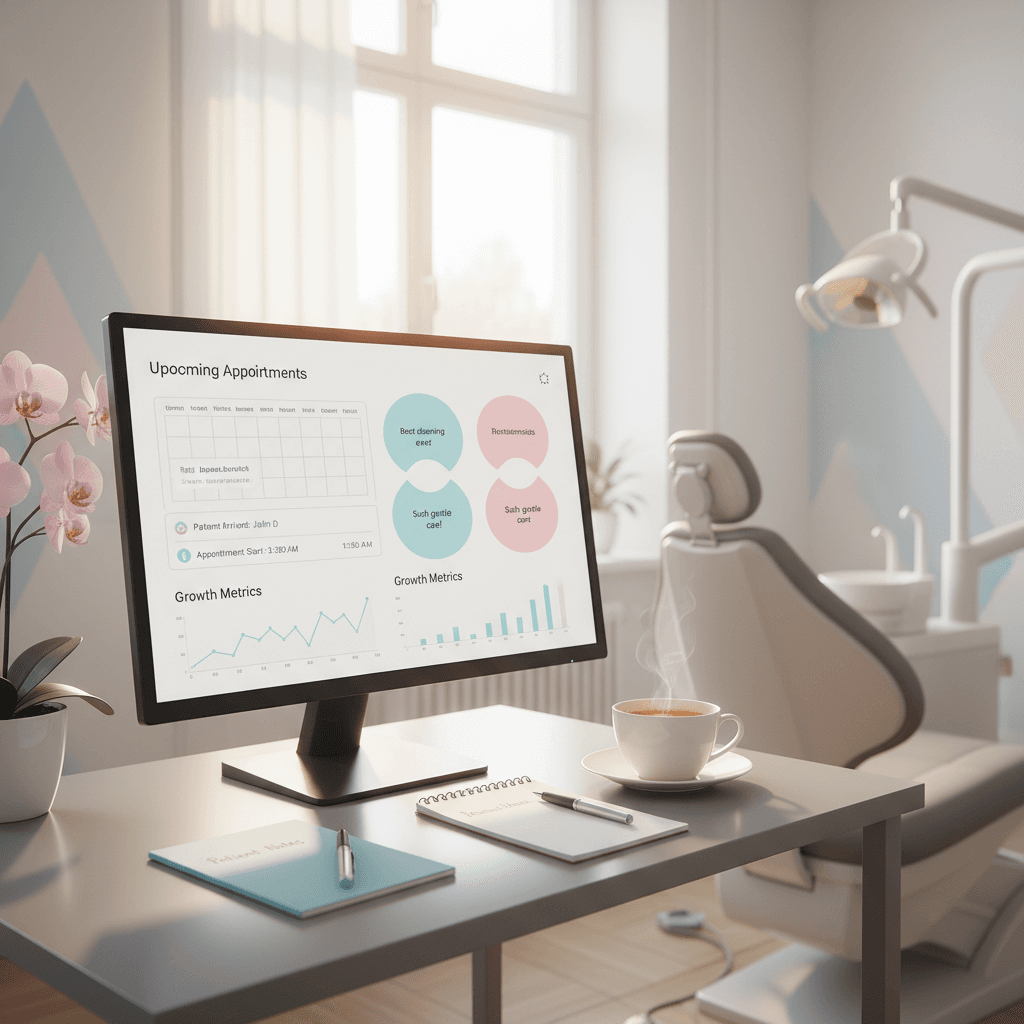
Marketing automation triggers specific actions based on patient behavior, not calendar dates. When a patient books an Invisalign consultation, the system automatically initiates a welcome email, followed by educational content about the treatment process, preparation instructions, and post-appointment follow-up—all without manual intervention.
This differs fundamentally from email newsletters, which broadcast the same message to everyone. Automation creates individualized patient journeys: abandoned treatment plan inquiries trigger objection-handling sequences, missed appointments activate re-engagement campaigns, and completed treatments initiate referral incentive programs.
The power lies in behavioral triggers. A patient who downloads your implant guide receives implant-focused content, while someone booking emergency appointments gets immediate response protocols. Each interaction shapes the next automated touchpoint, creating relevance that manual communication rarely achieves at scale.
For more inspiration on how to keep your dental content engaging, you might find these dental blog post ideas helpful.
Quick Implementation Audit: Identify three high-volume patient touchpoints currently handled manually (appointment confirmations, treatment plan follow-ups, review requests). Calculate team hours spent weekly on these tasks—this becomes your automation ROI baseline.
How Marketing Automation Integrates with Your Practice Management System
Modern marketing automation for dentists connects directly to your Practice Management System through API integration. When a patient confirms an appointment in your PMS, the automation platform receives this data in real-time, triggering the appropriate reminder sequence with correct dentist names, appointment times, and preparation instructions.
Data synchronization ensures accuracy without double-entry. Patient information flows seamlessly: contact details, appointment history, treatment preferences, and communication logs remain consistent across systems. This integration maintains GDPR compliance by centralizing data management and ensuring patient consent preferences are respected across all automated touchpoints.
The technical setup requires minimal disruption. Most established PMS platforms offer pre-built integrations with leading automation tools, enabling same-day deployment. Real-time sync means appointment changes, cancellations, or rescheduling immediately update automated sequences, preventing irrelevant communications.
Wondering what AI tells patients about your practice? Free one page report in 48 hours. Where you are cited, where competitors win, and the gap.
Get your free AI Visibility CheckThe Patient Retention Economics—Why Automation Justifies Investment
The Cost Advantage of Retention vs Acquisition Through Automation
Retaining existing patients costs 5-25 times less than acquiring new ones, yet most practices invest disproportionately in acquisition while losing patients through poor follow-up. Automated retention sequences reduce recall abandonment by 15-30% through systematic reminders, educational content, and re-engagement campaigns.
The mathematics are compelling: one retained patient represents £2,000-£5,000 lifetime value recovery for high-value treatments. A mid-size practice losing 50 patients annually to lapsed recalls risks £150,000 in treatment revenue. Marketing in dentistry typically costs £40-200 monthly—delivering ROI exceeding 2,000% when it prevents even modest patient attrition.
ROI Reality Check: Audit your last 12 months of patient attrition. Calculate lost revenue from lapsed recalls, then model automation ROI: tool cost versus recovered patient value. Most practices discover automation pays for itself by retaining just 2-3 patients annually.
Building Patient Lifetime Value Through Consistent Automated Touchpoints
Consistent communication builds trust and treatment acceptance. Automated sequences maintain regular contact without overwhelming patients: educational emails address treatment anxieties, progress check-ins ensure satisfaction, and strategic follow-ups reveal upsell opportunities naturally.
Segmentation amplifies effectiveness. Invisalign patients receive aligner-specific content, while implant candidates get bone health education and financing information. AI-driven personalization learns individual patient preferences, optimizing send times and content types for maximum engagement rates.
Post-treatment automation generates referrals systematically. Satisfied patients receive automated referral incentive programs with unique tracking codes, transforming one-time treatments into ongoing patient acquisition channels. This compound effect—retained patients becoming referral sources—multiplies automation ROI exponentially.
Strategic Email Automation Sequences Every Dental Practice Needs
The Welcome & Onboarding Sequence (First 30 Days Post-Contact)
The welcome sequence converts website inquiries into engaged patients through strategic timing and relevant content. Research shows conversion probability drops 70% after 48 hours without contact, making immediate automated response essential for practice growth.
Email 1 (within 2 hours): Confirmation
For more actionable ideas on boosting your dental marketing, explore these dental marketing ideas.
SMS & Multi-Channel Automation Strategy
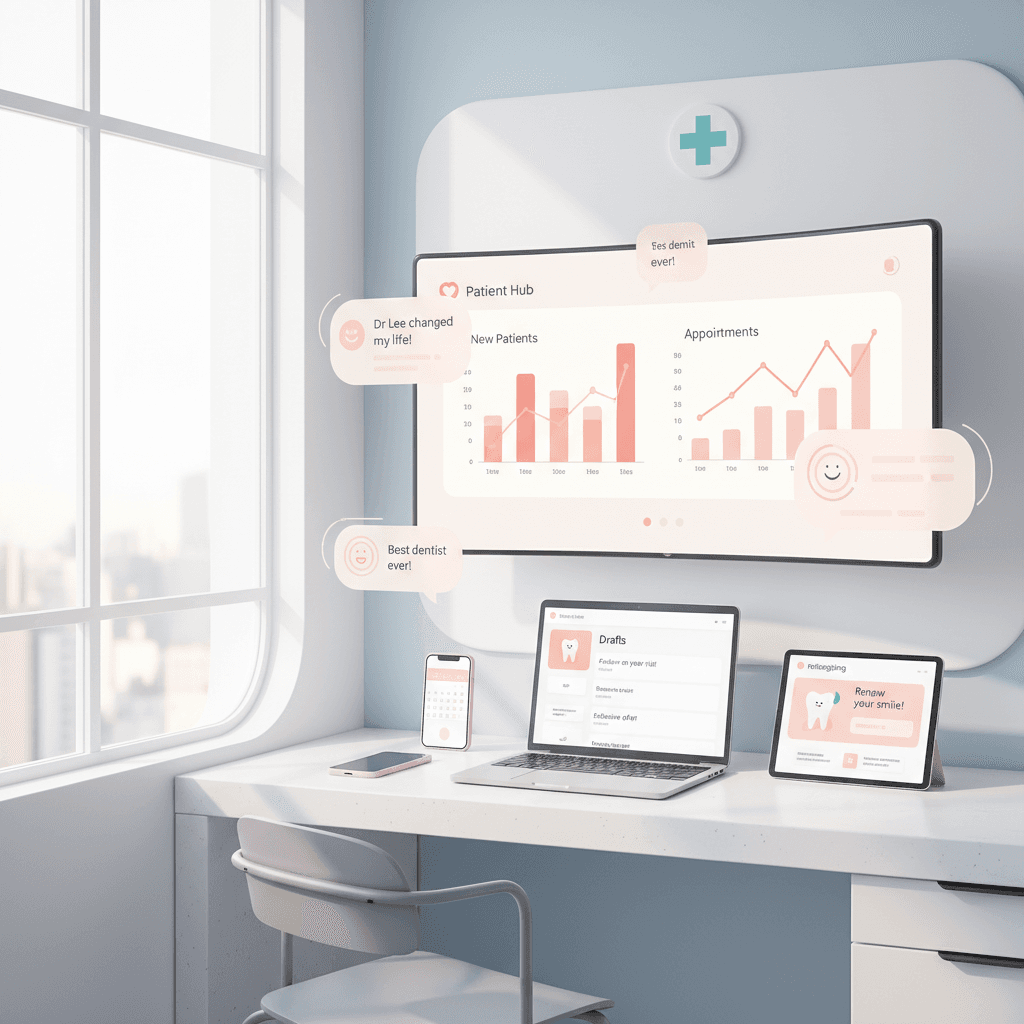
Email-only automation limits practice growth potential. Multi-channel approaches combining SMS, email, and retargeting ads create comprehensive patient engagement that drives measurable results.
Implementing SMS Automation Without Overwhelming Patients
SMS delivers 98% open rates but requires careful frequency management to maintain patient trust and GDPR compliance.
Frequency guidelines: Maximum 1-2 SMS messages per week per patient. Exceeding this threshold increases opt-out rates and damages practice reputation.
Optimal timing: 10 AM-2 PM weekdays generate highest engagement. Evening messages appear intrusive and reduce response rates.
Content structure: Keep messages under 160 characters with essential information plus action links. Example: “Hi [Name], reminder: your appointment with Dr. Smith is Wednesday 2 PM. Reschedule if needed: [link]”
| Communication Type | SMS Best For | Email Best For |
|---|---|---|
| Appointment reminders | 48-hour urgent reminders | 5-7 day advance notice |
| Educational content | Brief tips, links to resources | Detailed treatment information |
| Treatment follow-up | Quick check-ins, pain scales | Comprehensive care instructions |
| Referral programs | Instant reward notifications | Program details, terms |
GDPR compliance requires explicit SMS opt-in during patient onboarding. Automated systems must include clear unsubscribe options and honour removal requests within 24 hours.
AI & Predictive Automation—The Next Generation
Artificial intelligence transforms marketing automation for dentists from basic scheduled messaging to intelligent patient behaviour analysis and predictive engagement. AI-driven systems can identify patients at risk of no-shows, segment audiences based on treatment interest, and trigger hyper-personalised follow-ups that increase consultation bookings and treatment acceptance rates.
For practices looking to further enhance their online presence, leveraging SEO for dentists can significantly increase visibility and attract more high-intent patients.
Measuring Automation Success—Beyond Vanity Metrics
Email open rates and click-through percentages provide surface-level insights but fail to demonstrate financial impact. Meaningful automation measurement focuses on revenue-generating activities: consultation booking rates, treatment acceptance percentages, patient retention improvements, and lifetime value increases.
Successful practices track automation attribution from initial contact through treatment completion. This requires proper setup of conversion tracking, unique URL parameters, and CRM integration to connect automated touchpoints with actual revenue generation.
Setting Up Conversion Tracking & Attribution for Automation Campaigns
Implement unique tracking URLs for every automation sequence using UTM parameters. Welcome emails use “?utm_source=email_welcome”, appointment reminders use “?utm_source=sms_reminder”. Return on investment can then be accurately measured as Google Analytics 4 attributes website bookings and form submissions to specific automation sequences, revealing which campaigns drive actual consultations.
Call tracking software captures phone inquiries generated by automation links. When patients call after clicking an email link, the system logs the automation source and tracks conversion to appointment booking. This comprehensive attribution prevents undervaluing automation ROI by missing phone-based conversions.
| Metric Type | Vanity Metrics (Avoid) | Revenue Metrics (Track) |
|---|---|---|
| Email Performance | Open rates, click rates | Consultation bookings from emails |
| Patient Engagement | Email subscribers, social followers | Treatment acceptance rate |
| Retention Measurement | Email list growth | Recall appointment attendance |
| ROI Calculation | Cost per click | Revenue per automated patient |
Create monthly dashboards showing automation sequence performance: contacts reached, appointments booked, treatments accepted, and revenue attributed. A typical successful sequence shows: 500 contacts → 120 email clicks → 35 consultation bookings → 18 treatment acceptances = £54,000 revenue from £150 monthly tool investment.
For further reading on the importance of a strong website, see why a smart dental website design is crucial for success.
Implementation Roadmap—From Planning to Launch
Successful automation implementation follows a phased approach preventing team overwhelm while building momentum through early wins. Practices attempting to launch multiple complex sequences simultaneously often struggle with data quality issues and poor initial performance.
Phase 1 (Weeks 1-4): Audit, Strategy & Tool Selection
Begin with comprehensive communication audit documenting current manual processes. Track time spent on appointment reminders, follow-up calls, and treatment plan discussions. Identify immediate automation opportunities—typically appointment confirmations and new patient welcome sequences offer quickest ROI.
Map ideal patient journeys from initial inquiry through treatment completion and referral generation. This visualization reveals communication gaps where automation prevents patient drop-offs. Select automation platforms based on PMS integration capabilities rather than feature lists—seamless data synchronization ensures accurate personalization.
For authoritative information on dental care and compliance, visit the NHS dentistry resource.
Frequently Asked Questions
How does marketing automation help dental practices increase appointment bookings and reduce no-shows?
Marketing automation increases appointment bookings by delivering timely, personalized communications that engage high-intent patients immediately after their inquiry. It reduces no-shows through automated reminders and follow-ups, ensuring patients stay informed and committed without relying on manual staff intervention.
What types of patient interactions can be automated to improve communication efficiency in a dental practice?
Automated interactions include appointment confirmations and reminders, welcome messages, educational content delivery, treatment preparation instructions, post-appointment follow-ups, and referral requests. These streamline communication, saving 8-12 hours weekly per staff member and enhancing patient experience.
How does behavioral trigger-based automation differ from traditional email newsletters in dental marketing?
Behavioral trigger-based automation sends targeted messages based on specific patient actions, such as booking a consultation or completing a treatment stage, ensuring relevance and timeliness. In contrast, traditional newsletters broadcast the same content to all recipients regardless of individual patient behavior, resulting in lower engagement.
What measurable benefits can a dental practice expect within the first 60 days of implementing marketing automation?
Within 60 days, practices typically see a 40% increase in patient engagement, a 20-35% reduction in no-shows, and a significant rise in consultation bookings. These improvements translate into better resource allocation, higher revenue from private treatments, and enhanced patient retention.
Real client results, not a promise. The number we commit to for your practice is agreed up front and written into the agreement.
Patients in the chair, not just leads. Guaranteed.
We own the whole journey to the attended consultation. New attended patient consultations in 90 days, or we work free until you hit them.Book a chat with Josie