
Orthodontic Marketing Campaigns 2026 | Proven Lead Generation Guide
On this page
Essential Elements of High-Converting Orthodontic Marketing CampaignsAdvanced Audience Segmentation for Orthodontic PracticesBuilding Integrated Multi-Channel Orthodontic CampaignsLanding Page and Conversion Optimization for Orthodontic LeadsStrategic Content Marketing That Drives Orthodontic ConsultationsPerformance Metrics and ROI Optimization for Orthodontic MarketingTiming and Seasonal Optimization StrategiesIntegrating Referral Programs with Digital CampaignsContent Marketing and Lead Magnets for Orthodontic PracticesAutomated Nurture Sequences for Orthodontic ProspectsMobile-First Campaign Design and OptimizationAdvanced Retargeting and Remarketing StrategiesScaling Successful Campaigns for Practice GrowthFrequently Asked QuestionsWhy is it important to tailor orthodontic marketing campaigns separately for Invisalign and traditional braces?How can multi-channel marketing improve patient engagement and lead conversion in orthodontic practices?What role do retargeting sequences play in nurturing orthodontic prospects during their decision-making process?How does advanced audience segmentation based on demographics and geography enhance the effectiveness of orthodontic marketing campaigns?About the AuthorBefore you read on. Want to know which dentist AI recommends in your town, and whether it is you?
Get your free AI Visibility CheckKey Takeaways
- Effective orthodontic marketing campaigns use targeted messaging tailored to specific treatment types.
- Successful campaigns leverage multi-channel patient touchpoints to engage prospects.
- Conversion-optimized landing pages are essential for maximizing lead generation.
- Focusing separately on Invisalign and traditional braces improves campaign effectiveness.
- Retargeting sequences help nurture prospects through the typical 3-6 month decision timeline.
Table of Contents
- Essential Elements of High-Converting Orthodontic Marketing Campaigns
- Advanced Audience Segmentation for Orthodontic Practices
- Building Integrated Multi-Channel Orthodontic Campaigns
- Landing Page and Conversion Optimization for Orthodontic Leads
- Strategic Content Marketing That Drives Orthodontic Consultations
- Performance Metrics and ROI Optimization for Orthodontic Marketing
- Timing and Seasonal Optimization Strategies
- Integrating Referral Programs with Digital Campaigns
- Content Marketing and Lead Magnets for Orthodontic Practices
- Automated Nurture Sequences for Orthodontic Prospects
- Mobile-First Campaign Design and Optimization
- Advanced Retargeting and Remarketing Strategies
- Scaling Successful Campaigns for Practice Growth
Essential Elements of High-Converting Orthodontic Marketing Campaigns
Effective orthodontic marketing campaigns combine targeted messaging for specific treatment types, multi-channel patient touchpoints, and conversion-optimized landing pages. The most successful campaigns focus on Invisalign and traditional braces separately, use before-and-after visual content, and implement retargeting sequences that nurture prospects through the 3-6 month decision timeline typical for orthodontic treatments.
Successful orthodontic marketing campaigns require a fundamentally different approach than general dental marketing. Orthodontic patients typically invest 18-24 months in treatment, making their decision process more deliberate and research-intensive. Your campaigns must address specific concerns like treatment duration, aesthetic impact during treatment, and long-term results. Dental marketing agency expertise can be invaluable in crafting campaigns that resonate with these unique patient journeys.
The foundation of effective orthodontic marketing campaigns lies in treatment-specific messaging. Invisalign campaigns should emphasize discretion and convenience for adult professionals, while traditional braces campaigns can focus on comprehensive correction capabilities and value for families. This segmentation allows you to craft compelling narratives that resonate with each audience’s primary motivations and concerns.
Advanced Audience Segmentation for Orthodontic Practices

Orthodontic practices serve distinctly different patient demographics, each requiring tailored campaign approaches. Adult patients seeking Invisalign prioritize discretion and professional appearance, while parents researching treatment for teenagers focus on effectiveness, duration, and cost considerations.
Key Insight: Practices that segment their audiences by age and treatment type see 40% higher consultation booking rates compared to generic orthodontic campaigns.
Geographic segmentation adds another crucial layer to orthodontic marketing campaigns. Urban professionals often respond to convenience-focused messaging about flexible appointment scheduling and discreet treatment options. Suburban families typically prioritize comprehensive treatment plans and payment flexibility. Your campaign messaging, imagery, and even ad scheduling should reflect these demographic preferences.
Wondering what AI tells patients about your practice? Free one page report in 48 hours. Where you are cited, where competitors win, and the gap.
Get your free AI Visibility CheckBuilding Integrated Multi-Channel Orthodontic Campaigns
Effective orthodontic marketing campaigns orchestrate multiple touchpoints to guide prospects through extended decision timelines. Google Ads capture immediate intent, while Facebook and Instagram campaigns build awareness and showcase treatment transformations through visual storytelling.
Email nurture sequences play a critical role in orthodontic marketing campaigns, addressing common concerns over multiple touchpoints. Your sequence should include treatment comparison guides, financing information, and patient success stories delivered over 4-6 weeks. This extended nurturing accommodates the longer consideration period typical for orthodontic investments.
Retargeting campaigns become essential when prospects don’t convert immediately. Website visitors who viewed specific treatment pages should receive targeted ads featuring relevant before-and-after cases, patient testimonials, and consultation incentives. This sustained engagement keeps your practice top-of-mind during their extended research phase.
Landing Page and Conversion Optimization for Orthodontic Leads
Orthodontic landing pages must immediately address the primary concern driving each visitor’s search. Invisalign-focused pages should lead with discretion and convenience benefits, while general orthodontic pages should emphasize comprehensive treatment capabilities and patient transformation results.
Visual elements drive conversion success in orthodontic marketing campaigns more than any other dental specialty. Before-and-after galleries, virtual consultation previews, and treatment timeline visualizations help prospects envision their transformation journey. These visual elements should be prominently featured above the fold and throughout your landing page experience.
Expert Tip: Include interactive elements like treatment duration calculators or smile assessment tools. These engagement features increase time-on-page by 60% and provide valuable lead qualification data for your consultation process.
Strategic Content Marketing That Drives Orthodontic Consultations

Content marketing for orthodontic practices should address the comprehensive questions prospects research before committing to treatment. Create detailed guides comparing Invisalign versus traditional braces, treatment timeline expectations, and maintenance requirements during active treatment phases. For more inspiration, explore these dental blog post ideas to enhance your content strategy.
Video content performs exceptionally well in orthodontic marketing campaigns, particularly patient journey documentaries and treatment explanation videos. These longer-form content pieces build trust and demonstrate expertise while addressing the detailed questions prospects need answered before scheduling consultations.
Educational webinars targeting parents of teenagers or adult professionals considering treatment create high-value lead generation opportunities. These sessions allow you to demonstrate expertise, address common concerns in real-time, and naturally transition attendees toward consultation bookings through exclusive offers or priority scheduling.
Performance Metrics and ROI Optimization for Orthodontic Marketing
Orthodontic marketing campaigns require different success metrics than general dental marketing due to higher treatment values and longer decision cycles. Focus on consultation booking rates, consultation-to-treatment conversion percentages, and lifetime patient value rather than simple click-through rates or website traffic volume.
| Metric Type | Primary KPI | Target Benchmark | Optimization Focus |
|---|---|---|---|
| Lead Generation | Cost per consultation | £80-120 | Audience targeting refinement |
| Conversion Quality | Consultation show rate | 85%+ | Pre-consultation nurturing |
| Treatment Conversion | Consultation to start rate | 65%+ | Consultation process optimization |
| Campaign Type | Key Metrics | Benchmark Targets |
|---|---|---|
| Google Ads (Search) | Cost per consultation, consultation booking rate | £80-120 per consultation, 8-12% conversion rate |
| Facebook/Instagram | Engagement rate, video completion rate, lead cost | 4-6% engagement, 75% video completion, £25-40 per lead |
| Email Nurturing | Open rate, click-through rate, consultation conversion | 35-45% open rate, 8-12% CTR, 15-25% consultation rate |
Track patient lifetime value alongside acquisition costs to understand true campaign ROI. Orthodontic patients typically generate £3,000-8,000 in treatment revenue, making higher acquisition costs justifiable when campaigns consistently deliver quality leads. This long-term value perspective allows for more aggressive bidding strategies and premium placement investments.
Attribution tracking becomes complex with orthodontic marketing campaigns due to multiple touchpoints over extended timeframes. Implement UTM parameters across all channels and use phone call tracking to capture offline conversions. Many orthodontic consultations result from combined digital touchpoints, making proper attribution essential for budget optimization decisions. For a deeper dive into dental SEO and its impact on patient acquisition, see how dental SEO can lead to more patients.
Timing and Seasonal Optimization Strategies
Orthodontic marketing campaigns benefit significantly from strategic seasonal timing aligned with natural decision-making patterns. Back-to-school periods in August and September generate increased parent interest in teen orthodontic treatment, while January campaigns capitalize on new year health resolutions and flexible spending account renewals.
Summer months present optimal timing for adult Invisalign campaigns, as professionals often prefer starting discreet treatment during vacation periods when social interactions may be reduced. Holiday seasons require adjusted messaging focusing on gift certificates or treatment planning consultations rather than immediate treatment starts.
Budget allocation should reflect these seasonal patterns, with 35-40% of annual campaign budgets concentrated during peak inquiry periods. This concentrated approach maximizes visibility when prospects are actively researching treatment options, improving overall campaign efficiency and consultation booking rates.
Integrating Referral Programs with Digital Campaigns

Orthodontic marketing campaigns achieve maximum effectiveness when digital acquisition efforts integrate seamlessly with referral generation strategies. Existing patients become powerful campaign amplifiers through social media sharing incentives and referral tracking systems that reward successful recommendations. Practices can further enhance their reach by leveraging social media for dentists to encourage patient advocacy and organic sharing.
Create shareable content specifically designed for patient advocacy, including treatment progress celebrations and milestone achievements. These authentic patient moments generate organic social proof while providing existing patients with natural sharing opportunities that extend your campaign reach without additional advertising costs.
Campaign Integration Tip: Practices that combine digital campaigns with structured referral programs see 25% higher consultation volumes and 30% lower overall acquisition costs compared to purely digital approaches.
Referral tracking technology should connect offline recommendations with digital campaign attribution, providing comprehensive understanding of how word-of-mouth amplifies your orthodontic marketing campaigns. This integrated approach reveals the true multiplier effect of satisfied patients on your overall marketing performance and ROI calculations.
Content Marketing and Lead Magnets for Orthodontic Practices
Orthodontic marketing campaigns require compelling lead magnets that address specific patient concerns and decision-making stages. Treatment timeline guides, cost calculators, and “Am I a Candidate?” assessments capture contact information while providing immediate value to prospects researching orthodontic options.
Educational webinars focusing on adult orthodontics or teen treatment options generate high-quality leads by positioning your practice as the trusted authority. These live sessions allow prospects to ask questions directly, building rapport before the consultation appointment while demonstrating clinical expertise and treatment outcomes.
Video content series documenting actual patient transformations create powerful emotional connections that drive consultation bookings. Weekly progress updates, patient testimonials, and before-after reveals generate organic sharing while showcasing your practice’s capabilities to potential patients at various research stages. For more ideas, check out these dental marketing ideas to boost your campaign creativity.
Lead Magnet Performance: Orthodontic practices using treatment timeline calculators as lead magnets see 40% higher email capture rates and 28% more consultation bookings compared to generic contact forms.
Automated Nurture Sequences for Orthodontic Prospects
Effective orthodontic marketing campaigns extend beyond initial contact through sophisticated email automation that guides prospects toward consultation booking. Multi-touch sequences addressing common concerns like treatment duration, discomfort levels, and payment options maintain engagement during extended decision-making periods.
Segmented automation based on age demographics allows personalized messaging for teen parents versus adult patients. Teen-focused sequences emphasize school schedules, sports participation, and social considerations, while adult sequences highlight professional appearance, treatment discretion, and flexible appointment scheduling.
Behavioral triggers within email sequences respond to specific prospect actions, such as downloading cost information or viewing treatment options. These automated responses deliver relevant follow-up content immediately when prospects demonstrate heightened interest, increasing consultation booking probability by maintaining momentum during the research phase.
Mobile-First Campaign Design and Optimization
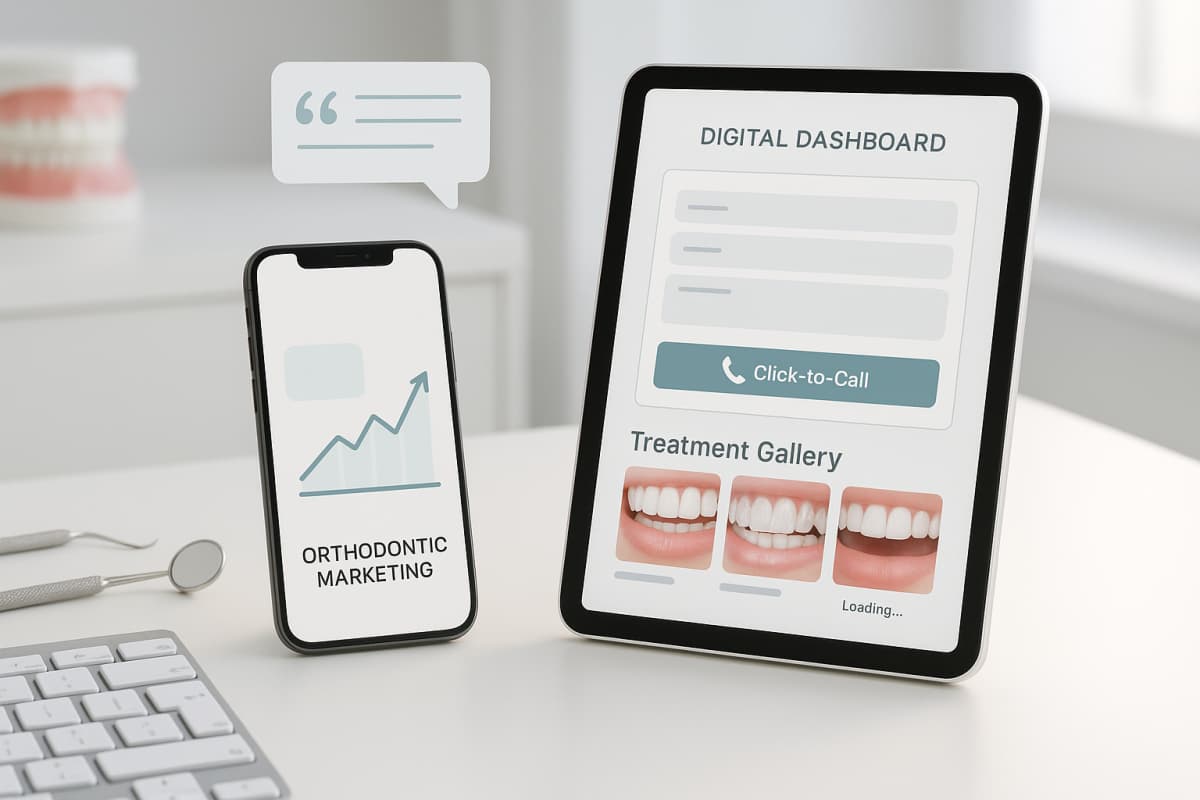
Orthodontic marketing campaigns must prioritize mobile experience as 70% of orthodontic research occurs on smartphones and tablets. Mobile-optimized landing pages with simplified forms, click-to-call buttons, and fast-loading treatment galleries ensure seamless user experience across all devices and platforms. Practices looking to improve their local search presence should consider local SEO for dentists to attract nearby patients on mobile devices.
Location-based mobile targeting captures prospects searching for “orthodontist near me” during commute times or while visiting nearby businesses. Geofenced campaigns around schools, shopping centers, and dental offices reach parents and adults when they’re physically positioned to consider orthodontic treatment options.
Mobile-specific ad formats, including carousel showcases of treatment results and video testimonials optimized for vertical viewing, generate higher engagement rates than desktop-adapted content. These native mobile experiences feel natural within social media feeds, improving click-through rates and consultation conversion performance.
Advanced Retargeting and Remarketing Strategies
Sophisticated retargeting within orthodontic marketing campaigns addresses the extended consideration period typical of orthodontic treatment decisions. Dynamic remarketing displays specific treatment options viewed by prospects, maintaining top-of-mind awareness while they research alternatives and compare practices over weeks or months. For more on the fundamentals of orthodontics, see the Wikipedia entry on orthodontics.
Sequential retargeting campaigns deliver progressive messaging that acknowledges the prospect’s research stage. Initial retargeting focuses on treatment benefits, followed by patient testimonials, then consultation scheduling incentives, creating a logical progression that guides prospects toward booking decisions.
Cross-platform retargeting ensures consistent messaging whether prospects encounter your campaigns on Google, Facebook, or other digital channels. This omnipresent approach reinforces your practice’s expertise and availability while prospects navigate their treatment research across multiple platforms and devices.
Scaling Successful Campaigns for Practice Growth
Orthodontic marketing campaigns that demonstrate consistent ROI require systematic scaling approaches to maximize growth potential. Successful campaign elements should be expanded gradually, increasing budgets by 20-30% monthly while monitoring quality metrics to ensure lead standards remain consistent during growth phases.
Geographic expansion allows proven campaigns to reach new patient populations in adjacent areas or demographics. Testing campaigns in similar markets with adjusted messaging for local preferences enables practices to multiply successful strategies while minimizing risk through controlled expansion approaches.
Campaign diversification reduces dependence on single channels while maximizing reach across different patient segments. Practices achieving success with Google Ads should systematically test Facebook, Instagram, and YouTube campaigns using proven messaging frameworks adapted for each platform’s unique audience behaviors and content formats.
Long-term orthodontic marketing campaigns success requires continuous optimization based on changing patient preferences, seasonal patterns, and competitive landscape shifts. Regular campaign audits, A/B testing protocols, and performance benchmarking ensure sustained growth while adapting to evolving digital marketing opportunities and patient acquisition challenges. For official guidance on professional standards, consult the General Dental Council’s standards for the dental team.
Frequently Asked Questions
Why is it important to tailor orthodontic marketing campaigns separately for Invisalign and traditional braces?
Tailoring campaigns separately allows you to address the distinct motivations and concerns of each patient group. Invisalign marketing can highlight discretion and convenience for adult professionals, while traditional braces campaigns focus on comprehensive correction and family value, resulting in more relevant messaging and higher engagement.
How can multi-channel marketing improve patient engagement and lead conversion in orthodontic practices?
Multi-channel marketing reaches prospects across various platforms—social media, email, search, and more—creating multiple touchpoints that reinforce your message. This consistent presence increases awareness, builds trust, and drives higher conversion rates by meeting patients where they are in their decision journey.
What role do retargeting sequences play in nurturing orthodontic prospects during their decision-making process?
Retargeting sequences keep your practice top-of-mind throughout the typical 3-6 month decision timeline for orthodontic treatments. By delivering timely, relevant content, these sequences nurture prospects, address their concerns, and guide them steadily toward booking a consultation.
How does advanced audience segmentation based on demographics and geography enhance the effectiveness of orthodontic marketing campaigns?
Advanced segmentation enables campaigns to deliver highly relevant messaging tailored to specific patient profiles and local market nuances. This precision improves engagement, reduces wasted spend, and increases the likelihood of converting leads into consultations by resonating with the unique needs of each segment.
This is what we do for UK practices, done with you:
Real client results, not a promise. The number we commit to for your practice is agreed up front and written into the agreement.
Patients in the chair, not just leads. Guaranteed.
We own the whole journey to the attended consultation. New attended patient consultations in 90 days, or we work free until you hit them.Book a chat with Josie