
Orthodontic Practice Marketing: Top UK Growth Guide 2026
On this page
Why Orthodontic Practice Marketing Matters in the UK – Core Definition and ROI ImpactUnderstanding the Orthodontic Patient Journey – From Awareness to Lifetime RetentionDefining Your Orthodontic USP and Brand PositioningPositioning vs General Dentists and Corporate ChainsBuilding Your Orthodontic Marketing Plan – Step-by-Step FrameworkLocal SEO Mastery for Orthodontic Practices – Dominate “Braces Near Me”High-Converting Orthodontic Website Design and OptimizationContent Marketing and Video Strategies – Educate to ConvertPaid Ads Mastery: Google vs Facebook for Ortho LeadsFrequently Asked QuestionsHow does orthodontic practice marketing differ from general dental marketing in targeting patients?What are the key digital strategies orthodontic practices in the UK should use to attract and retain patients?How can orthodontic practices effectively reduce patient no-show rates during the consultation stage?Why is local SEO important for orthodontic practices, and how does it impact new patient acquisition?About the AuthorBefore you read on. Want to know which dentist AI recommends in your town, and whether it is you?
Get your free AI Visibility CheckKey Takeaways
- Orthodontic practice marketing uses targeted strategies to attract, convert, and retain patients seeking braces, Invisalign, and clear aligners.
- It leverages digital channels, local SEO, and patient education campaigns to reach potential patients effectively.
- Orthodontic marketing differs from general dental marketing by focusing on aesthetic transformation and long treatment journeys.
- The patient base includes distinct segments such as concerned parents and image-conscious adults.
Table of Contents
- Why Orthodontic Practice Marketing Matters in the UK – Core Definition and ROI Impact
- Understanding the Orthodontic Patient Journey – From Awareness to Lifetime Retention
- Defining Your Orthodontic USP and Brand Positioning
- Building Your Orthodontic Marketing Plan – Step-by-Step Framework
- Local SEO Mastery for Orthodontic Practices – Dominate “Braces Near Me”
- High-Converting Orthodontic Website Design and Optimization
- Content Marketing and Video Strategies – Educate to Convert
- Paid Ads Mastery: Google vs Facebook for Ortho Leads
Why Orthodontic Practice Marketing Matters in the UK – Core Definition and ROI Impact
Orthodontic practice marketing encompasses targeted strategies designed to attract, convert, and retain patients seeking braces, Invisalign, and clear aligners through digital channels, local SEO, and patient education campaigns. Unlike general dental marketing, orthodontic marketing focuses on aesthetic transformation, treatment journeys spanning 12-24 months, and distinct patient segments from concerned parents to image-conscious adults.
UK orthodontists require strategic marketing because 72% of patients research treatment options online before booking consultations, and practices ranking in the top 3 Google positions generate 300% more enquiries than those on page two. With average private treatment values reaching £4,000-6,000 per case, effective marketing can drive £100,000+ in additional annual revenue for established practices.
ROI Reality Check: Consistent orthodontic practice marketing delivers 25-50% revenue increases within 6 months for practices implementing comprehensive digital strategies.
Calculate your baseline ROI by multiplying new patient acquisitions by average treatment value, then audit current lead conversion rates—successful practices achieve 20% conversion from initial enquiries to treatment starts. A London practice recently doubled their Invisalign case starts from 8 to 16 monthly by implementing targeted local SEO and conversion-optimized landing pages.
Understanding the Orthodontic Patient Journey – From Awareness to Lifetime Retention
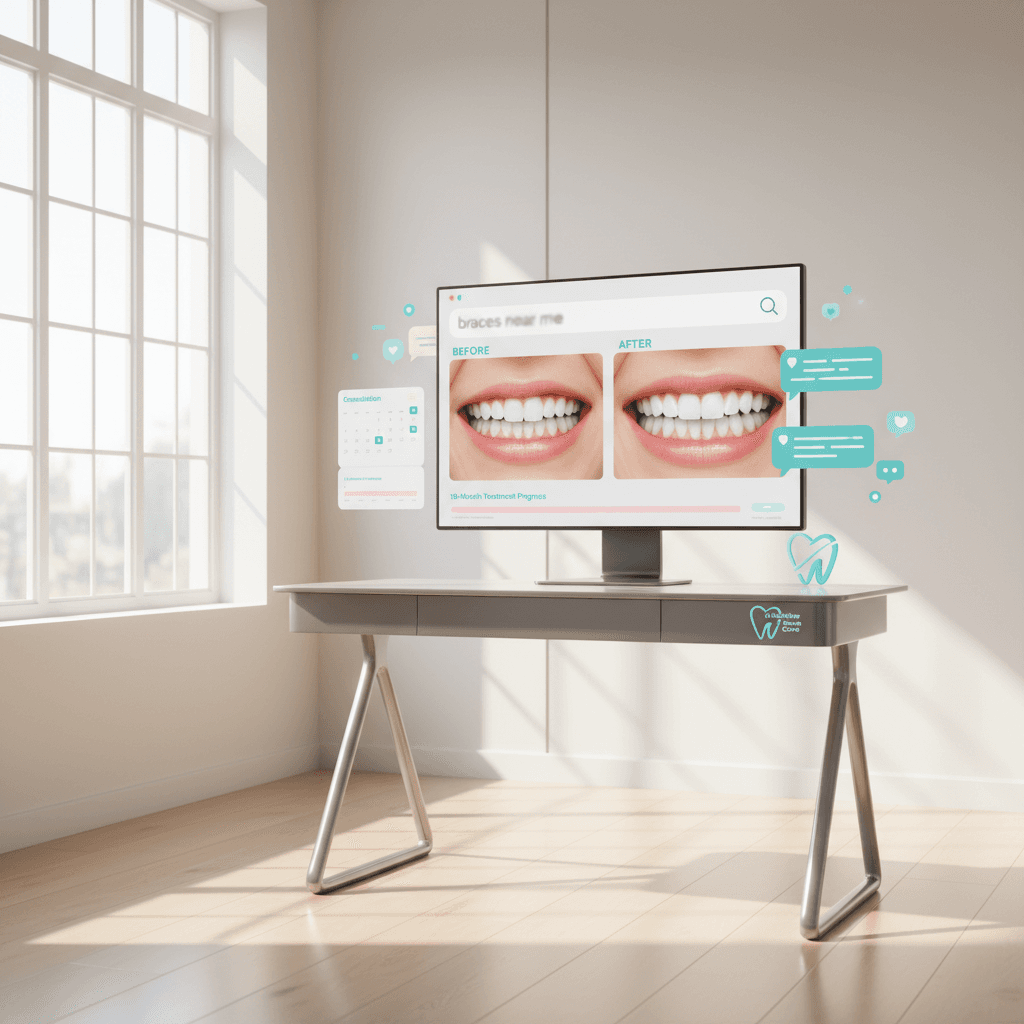
The orthodontic patient journey spans five distinct stages: Awareness (searching “braces near me” or “Invisalign cost”), Consideration (comparing before/after galleries and reading reviews), Decision (booking free consultations), Treatment (maintaining compliance during 18-month journeys), and Retention (generating referrals and family treatment).
Marketing must address that 80% of orthodontic decisions involve parents choosing for children and teens, while adult patients prioritize discretion and convenience. Patient drop-off peaks at the consultation stage, with 30% no-show rates plaguing practices without proper nurturing systems.
Create detailed patient personas such as “Busy Manchester parent, aged 35-45, £50,000 household income, researching teen braces during evening hours” to guide content creation and ad targeting. Each persona requires different messaging—parents focus on results and payment plans, while adults emphasize treatment discretion and speed.
Build journey-specific landing pages targeting searches like “Invisalign for adults Birmingham” and implement 7-day email nurture sequences following consultation bookings. Track patient progression using Google Analytics 4 events, monitoring form submissions, phone calls, and consultation attendance rates.
A Birmingham practice reduced no-show rates by 40% through automated SMS reminder campaigns sent 48 hours before appointments, combined with personalized pre-consultation videos explaining what to expect during the initial visit.
Wondering what AI tells patients about your practice? Free one page report in 48 hours. Where you are cited, where competitors win, and the gap.
Get your free AI Visibility CheckDefining Your Orthodontic USP and Brand Positioning
Develop a compelling unique selling proposition that differentiates your practice from general dentists offering basic orthodontics and corporate chains competing on price. Examples include “Fastest Invisalign results in Greater London using AI smile simulations” or “Only Manchester practice offering same-day aligner adjustments with 3D printing technology.”
Position against competitors by emphasizing personalized care, advanced technology, and specialist credentials that DSOs and corporate chains cannot match. Highlight specific outcomes like “95% on-time treatment completion rates” or “Average 6 months faster than traditional braces” to create measurable differentiation.
Communicate your USP consistently across all touchpoints—website headlines, social media bios, Google Business Profile descriptions, and patient consultation materials. Ensure messaging complies with GDC advertising guidelines while remaining compelling and evidence-based.
Run a 15-minute team workshop to identify five unique differentiators, then create a 60-second USP video for your website’s about page. Test different value propositions through A/B testing Facebook ad headlines to determine which resonates most with your target audience.
Positioning vs General Dentists and Corporate Chains
Emphasize specialist orthodontic credentials, personalized treatment planning, and boutique practice experience that general dentists and volume-focused chains cannot provide. Showcase advanced technology investments and continuing education that demonstrate commitment to orthodontic excellence.
Building Your Orthodontic Marketing Plan – Step-by-Step Framework
Implement a structured 7-step marketing plan: audit current performance (week 1), establish KPIs targeting 15 new treatment starts monthly, allocate £2,000-5,000 monthly budgets, prioritize channels, create content calendars, implement tracking systems, and schedule 90-day sprint reviews.
Structure prevents the 70% of practices that fail due to inconsistent marketing efforts and unclear success metrics. Set specific targets such as achieving under £50 cost per lead, maintaining 15% website conversion rates, and generating 20% of new patients through referrals.
| Budget Allocation | Percentage | Monthly Investment | Expected Outcome |
|---|---|---|---|
| SEO & Content | 40% | £800-2000 | Long-term visibility |
| Paid Advertising | 30% | £600-1500 | Immediate leads |
| Referral Programs | 20% | £400-1000 | Trust building |
| Community Engagement | 10% | £200-500 | Brand awareness |
Allocate marketing budgets with 60% digital focus, 20% referral programs, and 20% community engagement. Create 12-month content calendars with monthly themes such as “Teen Smile Transformations” (September, back-to-school timing) and “Adult Invisalign Success Stories” (January, New Year confidence boost).
Use the free orthodontic marketing template to map quarterly goals, track monthly cost per lead under £50, and schedule team review meetings every 90 days. Prioritize high-ROI channels initially—local SEO and Google Ads typically deliver fastest results within 30-60 days.
| Marketing Channel | Budget Allocation | Timeline to Results | Average CPL | Best For |
|---|---|---|---|---|
| Local SEO | 40% | 3-6 months | £25-40 | Long-term growth |
| Google Ads | 30% | 2-4 weeks | £45-65 | Immediate leads |
| Facebook Ads | 15% | 4-8 weeks | £30-50 | Parent targeting |
| Referral Programs | 10% | Ongoing | £15-25 | Trust building |
| Content Marketing | 5% | 6-12 months | £20-35 | Education/SEO |
A new Manchester practice implemented this framework and achieved 10 consultations weekly by Month 2, starting from zero online presence. They prioritized Google Business Profile optimization and local directory listings before launching paid advertising campaigns.
Local SEO Mastery for Orthodontic Practices – Dominate “Braces Near Me”
Optimize your Google Business Profile to 100% completion with 20+ high-quality photos, complete service descriptions, and sub-24-hour review responses. Target location-specific keywords like “orthodontic practice marketing London,” “Invisalign Manchester,” and long-tail phrases such as “adult braces cost Birmingham” that indicate high purchase intent.
Ensure NAP (Name, Address, Phone) consistency across 50+ online directories including Yell, NHS Choices, and local business listings. Implement orthodontist-specific schema markup to trigger rich snippets showing treatment types, consultation availability, and practice credentials in search results.
Claim and optimize your Google Business Profile within 15 minutes, focusing on complete categories, accurate hours, and compelling business descriptions. Post weekly updates showcasing “Free aligner consultations this week” or “New 3D scanning technology” to maintain active profile status.
Build 10 local citations monthly through partnerships with dental suppliers, local business associations, and healthcare directories. Target mobile PageSpeed scores above 90 and aim for 25% organic traffic increases within 3 months through consistent local SEO implementation.
Local Search Impact: Practices ranking in Google’s top 3 local results generate 300% more consultation enquiries than those appearing on page two.
Monitor local ranking positions for target keywords using tools like BrightLocal or SEMrush, tracking progress for “orthodontist near [your city]” and treatment-specific searches. Respond to all Google reviews within 24 hours, using personalized responses that demonstrate genuine patient care.
Leverage patient success stories through Google Posts, sharing before/after transformations (with proper consent) and treatment milestone celebrations. Create location-specific landing pages for surrounding areas, such as “Invisalign in Stockport” if you’re Manchester-based, to capture broader geographical searches.
High-Converting Orthodontic Website Design and Optimization
Design mobile-first websites with under 3-second load times, prominent online booking CTAs on every page, and treatment-specific landing pages for Invisalign, traditional braces, and adult orthodontics. Include AI-powered chatbots for instant query responses and treatment cost calculators to engage visitors immediately.
Implement conversion-focused features because 37% of visitors abandon slow-loading sites, while optimized orthodontic websites convert 15% of visitors to consultation leads. Include trust signals such as GDC registration numbers, patient testimonials with photos, and before/after galleries prominently displayed above the fold.
Add five treatment-specific landing pages targeting “Invisalign [your city],” “teen braces,” and “adult orthodontics” with unique value propositions for each audience. A/B test call-to-action buttons comparing “Book Free Consultation” versus “Get Your Smile Assessment” to determine highest-converting language.
Compress all images by 70% using tools like TinyPNG while maintaining quality, implement lazy loading for faster page speeds, and ensure mobile responsiveness across all devices. Include patient portal access, financing information, and clear treatment timelines to address common consultation questions proactively.
Address high traffic but low conversion scenarios by adding social proof elements, patient video testimonials, and prominent display of credentials and certifications. Include interactive elements like smile simulation tools or treatment duration calculators to increase engagement and consultation booking rates. For more inspiration, see why a smart dental website design is crucial for success.
Content Marketing and Video Strategies – Educate to Convert
Create a monthly content calendar featuring 4 blog posts targeting search queries like “Invisalign vs braces 2025 guide,” “adult orthodontics cost breakdown,” and “teen braces timeline expectations.” Focus on question-based content that AI overviews favor, addressing specific patient concerns throughout their decision-making journey.
Video content boosts engagement rates by 5x compared to static posts, making it essential for orthodontic practice marketing success. Produce 30-second TikTok Reels addressing common FAQs three times weekly, showcasing real patient progress updates, and explaining treatment processes in digestible segments.
Develop before/after transformation galleries with proper GDC consent forms, ensuring ethical presentation without treatment guarantees. Include detailed case studies showing treatment duration, patient age, and specific challenges overcome to build trust with prospective patients researching similar concerns.
Guest appearances on local podcasts and health-focused YouTube channels expand your reach beyond traditional marketing channels. Target parenting podcasts for teen orthodontics discussions and lifestyle content for adult Invisalign awareness, positioning yourself as the local expert authority.
Implement content distribution across multiple platforms: LinkedIn articles for professional credibility, Instagram carousels for visual treatment explanations, and YouTube longer-form content for comprehensive treatment guides. Track engagement metrics weekly, focusing on content that generates consultation bookings rather than vanity metrics. For more ideas, check out these dental social media ideas.
| Content Type | Platform | Frequency | Primary Goal | Average Engagement |
|---|---|---|---|---|
| Before/After Stories | 2x weekly | Social proof | 8-12% engagement | |
| Educational Reels | TikTok/Instagram | 3x weekly | Awareness | 15-25% reach |
| Treatment Guides | Blog/YouTube | 4x monthly | SEO/Education | 3-5 min watch time |
| Patient Q&As | Facebook Live | 2x monthly | Trust building | 50+ live viewers |
Repurpose single pieces of content across multiple formats: transform one patient success story into a blog post, Instagram carousel, YouTube short, and email newsletter feature. This maximizes content ROI while maintaining consistent messaging across all touchpoints. For further inspiration, explore these dental blog post ideas.
Paid Ads Mastery: Google vs Facebook for Ortho Leads
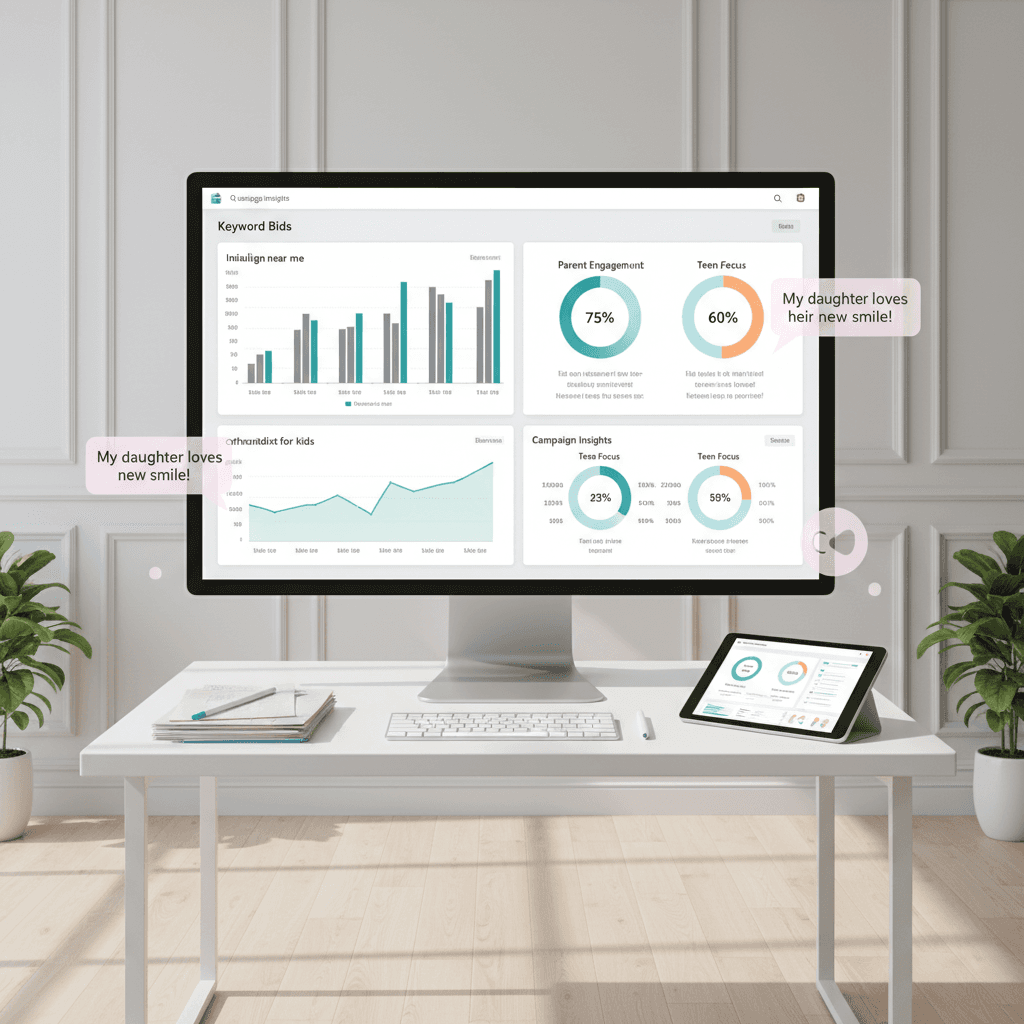
Set up Google Ads campaigns targeting high-intent keywords like “Invisalign near me” with £2-5 cost-per-click expectations, while Facebook Ads excel at parent demographic targeting with typically lower costs and higher engagement rates for orthodontic practice marketing campaigns.
Google Ads deliver immediate visibility for searchers actively seeking treatment, converting at 12% average rates with £40-60 cost per lead. Facebook Ads require longer nurturing but achieve 18% conversion rates with £30-50 cost per lead through precise demographic targeting of parents aged 35-50 with household incomes above £40,000.
| Platform | Average CPL | Conversion Rate | Scale Speed | Best For |
|---|---|---|---|---|
| Google Ads | £40-60 | 12% | Immediate | High-intent searches |
| Facebook Ads | £30-50 | 18% | 7-14 days | Parent targeting |
| Instagram Ads | £35-55 | 15% | 5-10 days | Visual transformations |
| LinkedIn Ads | £60-80 | 8% | 10-21 days | Professional adults |
Start with £500 test budgets across platforms, tracking return on ad spend above 4x to ensure profitable campaigns. Implement retargeting pixels to capture website visitors who didn’t book initially, serving them patient testimonials and limited-time consultation offers within 24-48 hours.
Use real patient photography instead of stock images to achieve 2x higher click-through rates on orthodontic advertisements. Create separate ad sets for different treatment types: teen braces targeting parents, adult Invisalign focusing on professionals, and early intervention targeting families with young children.
Optimize underperforming campaigns by pausing low-converting keywords weekly, adjusting audience targeting based on demographic data, and testing different landing page combinations. Monitor quality scores on Google Ads and relevance scores on Facebook to maintain cost-effective campaign performance. For more on digital marketing strategies, see this investment strategies and digital presence for dental marketing success.
Frequently Asked Questions
How does orthodontic practice marketing differ from general dental marketing in targeting patients?
Orthodontic practice marketing focuses specifically on aesthetic transformation and long-term treatment journeys, targeting distinct patient segments such as concerned parents and image-conscious adults. Unlike general dental marketing, it emphasizes personalized content and patient education tailored to treatments like braces and Invisalign, addressing the unique motivations and timelines of orthodontic patients.
What are the key digital strategies orthodontic practices in the UK should use to attract and retain patients?
Effective digital strategies include targeted local SEO to capture high-intent searches like “braces near me,” conversion-optimized websites, patient testimonial campaigns, and multi-channel engagement through social media and PPC ads. Additionally, educational content and video marketing help build trust and guide patients through their treatment journey, improving retention and lifetime value.
How can orthodontic practices effectively reduce patient no-show rates during the consultation stage?
Reducing no-shows involves clear communication through automated reminders, personalized follow-ups, and flexible booking options. Educating patients on the value and process of orthodontic treatment before consultations also increases commitment, while offering easy rescheduling and leveraging SMS or email confirmations enhances attendance rates.
Why is local SEO important for orthodontic practices, and how does it impact new patient acquisition?
Local SEO is critical because most orthodontic patients research treatment options online and prefer nearby providers. Ranking in the top Google positions for local searches significantly increases visibility and enquiries, directly boosting new patient acquisition. Practices mastering local SEO can see up to 300% more enquiries and substantial revenue growth by capturing high-intent local traffic.
This is what we do for UK practices, done with you:
Real client results, not a promise. The number we commit to for your practice is agreed up front and written into the agreement.
Patients in the chair, not just leads. Guaranteed.
We own the whole journey to the attended consultation. New attended patient consultations in 90 days, or we work free until you hit them.Book a chat with Josie