
PPC Campaign Structure 2026: Proven Growth Strategies
On this page
Why PPC Campaign Structure is Your Dental Practice’s Revenue AcceleratorCore Components of PPC Campaign Structure: Campaigns, Ad Groups, and Keywords ExplainedCampaigns as Budget and Goal ContainersAd Groups for Thematic RelevanceKeywords and Match Types HierarchyPlanning Your Dental PPC Account Structure Before Launch: Step-by-Step BlueprintDefine Business Goals and Funnel AlignmentKeyword Research Tailored to UK Dental ServicesNaming Conventions and Documentation TemplateBuilding Tightly Themed Ad Groups and Ads for Maximum RelevanceKeyword Grouping by Theme and IntentCrafting Responsive Ads That Convert Dental LeadsNegative Keywords Hierarchy for EfficiencyAdvanced Structures for Dental Practices: Brand, Geo, and Treatment SegmentationBrand vs Non-Brand vs Competitor CampaignsGeo and Device-Based StructuresTreatment and Funnel StructuresPPC Campaign Structure Comparisons: Manual vs Automated for Dental ROIBudgeting, Bidding, and Reporting: Leveraging Structure for ControlBudget Strategies by Dental GoalReporting and Optimization CadenceCommon PPC Structure Pitfalls in Dental Marketing and FixesDiagnosing Messy AccountsFrequently Asked QuestionsHow does a well-structured PPC campaign improve the return on investment for dental practices, specifically for treatments like Invisalign and dental implants?What are the core components of PPC campaign structure and how do they impact Quality Score and ad relevance for dental marketing?Why is it important to separate campaigns by treatment type or patient intent, such as emergency dental care versus cosmetic treatments, in PPC advertising?What common mistakes do dental practices make in PPC campaign structure, and how can these be fixed to prevent wasted budget?About the AuthorBefore you read on. Want to know which dentist AI recommends in your town, and whether it is you?
Get your free AI Visibility CheckKey Takeaways
- UK dental practices often waste 40% of their PPC budgets due to poorly structured campaigns.
- Properly organised PPC accounts can generate three times the return on investment for Invisalign and dental implant leads.
- PPC campaign structure involves a hierarchical organisation of campaigns, ad groups, keywords, and ads.
- Effective campaign structure maximises Quality Score and ad relevance.
- Well-structured PPC campaigns lead to increased patient bookings for dental practices.
Table of Contents
- Why PPC Campaign Structure is Your Dental Practice’s Revenue Accelerator
- Core Components of PPC Campaign Structure: Campaigns, Ad Groups, and Keywords Explained
- Planning Your Dental PPC Account Structure Before Launch: Step-by-Step Blueprint
- Building Tightly Themed Ad Groups and Ads for Maximum Relevance
- Advanced Structures for Dental Practices: Brand, Geo, and Treatment Segmentation
- PPC Campaign Structure Comparisons: Manual vs Automated for Dental ROI
- Budgeting, Bidding, and Reporting: Leveraging Structure for Control
- Common PPC Structure Pitfalls in Dental Marketing and Fixes
Why PPC Campaign Structure is Your Dental Practice’s Revenue Accelerator
UK dental practices waste 40% of their PPC budgets on poorly structured campaigns, while properly organised accounts generate 3x ROI for Invisalign and dental implant leads. The difference lies in understanding ppc campaign structure – the hierarchical organisation of campaigns, ad groups, keywords, and ads that maximises Quality Score, relevance, and patient bookings.
For Greater London and Manchester practices spending £2,000+ monthly, proper structure separates emergency dental marketing from high-value composite bonding campaigns, reducing no-shows by 25% and ensuring budget flows to profitable treatments. Structured campaigns align with patient intent, preventing budget bleed where Invisalign keywords trigger irrelevant emergency ads.
If you’re looking to maximise your return on investment and streamline your approach, consider working with a dental marketing agency that specialises in PPC campaign structure. Additionally, for those wanting a comprehensive strategy, a tailored dental marketing plan can help align your PPC efforts with overall business goals.
Core Components of PPC Campaign Structure: Campaigns, Ad Groups, and Keywords Explained
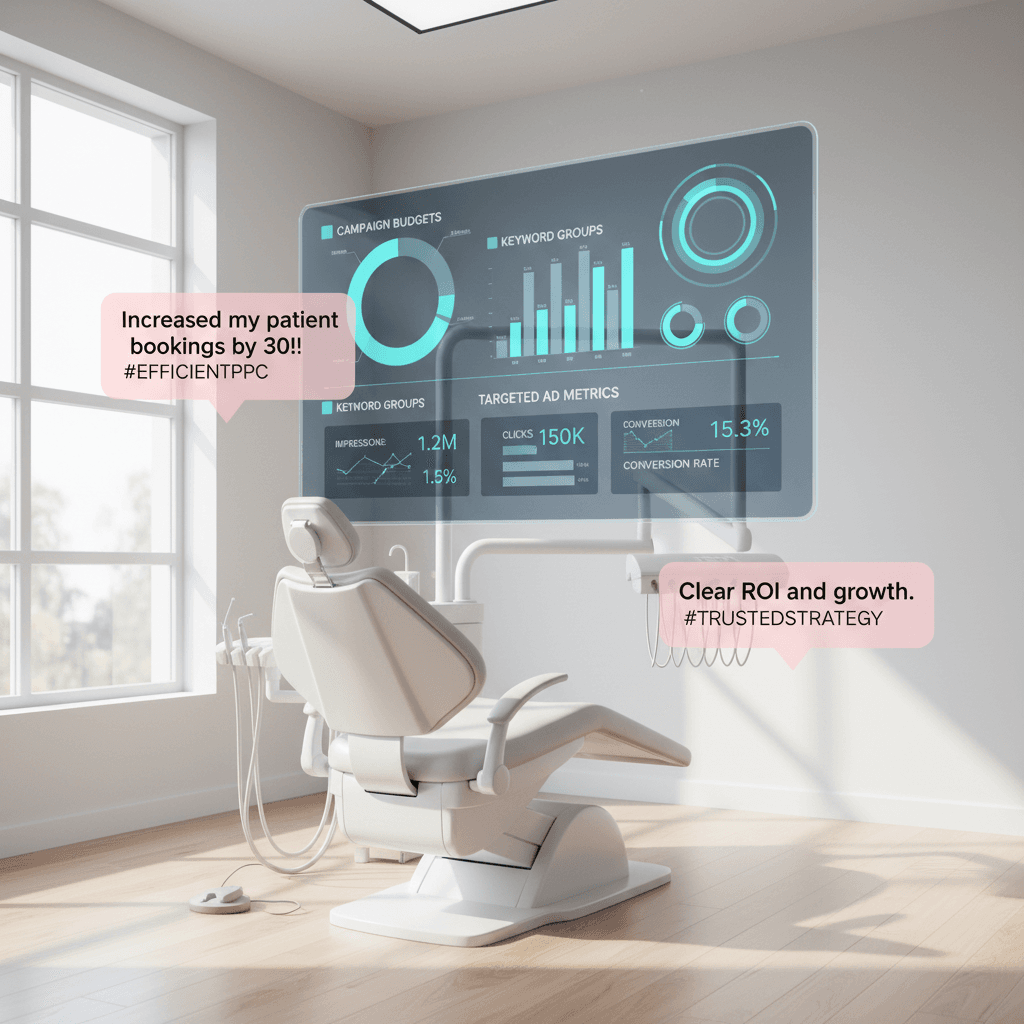
PPC campaign structure operates on three levels: campaigns (budget holders and targeting containers), ad groups (themed keyword clusters), and keywords/ads (specific targeting elements). This hierarchy impacts Quality Score by 20-30%, directly affecting cost-per-click and ad positioning for dental practices.
Poor structure causes budget inefficiency – emergency dental keywords triggering Invisalign ads, or broad match terms draining budgets on irrelevant searches. Structured setups align with patient journey stages, from awareness to booking consultations.
For those seeking to improve their Google Ads results, exploring Google Ads for dentists can provide actionable insights and best practices tailored to the dental industry.
Campaigns as Budget and Goal Containers
Campaigns control daily budgets, geographic targeting, and network selection. Each campaign should focus on a single business objective – brand awareness, emergency bookings, or high-value treatments like implants.
Manchester implant clinics typically allocate £100 daily budgets per campaign, generating 15 qualified leads weekly at £25 cost-per-lead. Key actions: Set daily budgets £50-£200 for testing (scaling to £500+), use campaign-level location targeting for specific cities, and separate Search from Performance Max networks.
Ad Groups for Thematic Relevance
Ad groups contain 5-20 tightly themed keywords sharing identical search intent. “Invisalign London cost” and “Invisalign London price” belong together, while “emergency dentist London” requires separate grouping.
Effective grouping requires single intent focus – separate “cost” queries from “provider” searches. Immediately add 3-5 negative keywords (-free, -NHS, -cheap) and limit groups to specific treatment phases.
Keywords and Match Types Hierarchy
Start with exact match for high-value terms like “dental implants Birmingham”, expand to phrase match after gathering data, then broad match for discovery. SKAGs (Single Keyword Ad Groups) work effectively for premium dental treatments.
Begin with 10 exact match keywords per ad group, expand to phrase match after 7 days of data collection, and monitor search term reports daily for negative keyword opportunities.
Wondering what AI tells patients about your practice? Free one page report in 48 hours. Where you are cited, where competitors win, and the gap.
Get your free AI Visibility CheckPlanning Your Dental PPC Account Structure Before Launch: Step-by-Step Blueprint
Effective ppc campaign structure begins with goal-first planning. Define specific targets – 20 Invisalign consultations monthly, 15 implant leads weekly – then map campaigns via spreadsheet before building accounts.
Planning prevents keyword overlap, ensures scalability for multi-location groups, and establishes clear budget allocation across treatment types. Rushed setups create structural problems requiring expensive rebuilds.
For a deeper dive into content strategies that support your PPC efforts, check out these dental blog post ideas to enhance your website’s relevance and authority.
Define Business Goals and Funnel Alignment
Map campaigns to patient journey stages: TOFU (awareness via dental SEO content), MOFU (remarketing to website visitors), and BOFU (direct booking campaigns with strong CTAs).
Allocate 40% budget to TOFU awareness, 30% to MOFU remarketing, and 30% to BOFU conversion campaigns. Create funnel-specific campaigns within initial setup and track via Google Analytics 4 for dental conversion goals.
Keyword Research Tailored to UK Dental Services
Target keywords with 500-5,000 monthly searches and manageable competition. “Invisalign Manchester” averages £2-£5 cost-per-click, while “dental implants London” commands £8-£15.
| Service | Monthly Searches | Average CPC | Competition Level |
|---|---|---|---|
| Invisalign London | 2,400 | £4.50 | High |
| Dental Implants Birmingham | 1,900 | £12.00 | Very High |
| Emergency Dentist Manchester | 8,100 | £3.00 | High |
Birmingham practices typically target 50 keywords across 5 ad groups, using Google Keyword Planner for volume estimates and competitor analysis. Focus on location-specific terms with commercial intent.
| Keyword Type | Monthly Volume | CPC Range | Competition | Best Campaign Use |
|---|---|---|---|---|
| Invisalign Manchester | 1,200 | £2-£5 | Medium | Brand awareness |
| Dental implants London | 2,400 | £8-£15 | High | High-value leads |
| Emergency dentist Birmingham | 3,600 | £3-£8 | High | Immediate bookings |
| Composite bonding cost | 800 | £4-£9 | Medium | Price-conscious leads |
Naming Conventions and Documentation Template
Consistent naming prevents confusion during optimization. Use format: [Location]_[Service]_[MatchType]_[Goal] (example: London_Invisalign_Exact_BOFU).
Create Google Sheet documentation with columns for campaign name, daily budget, target CPA, and performance metrics. Share with practice coordinators for transparency.
Build comprehensive tracking spreadsheet within 15 minutes, review naming conventions weekly, and maintain documentation for team access and performance analysis.
Building Tightly Themed Ad Groups and Ads for Maximum Relevance
Tightly themed ad groups group keywords by specific intent and treatment type. Group “composite bonding cost Manchester” separately from “composite bonding dentist Manchester” to maximize Quality Score and ad relevance.
Proper theming boosts Quality Scores to 8/10+, reducing cost-per-click by 15-20% while improving ad positioning for dental practices competing in expensive markets.
To further enhance your digital marketing, integrating social media for dentists can complement your PPC campaigns and expand your reach to new patient segments.
Keyword Grouping by Theme and Intent
Avoid mixing treatment types – separate emergency dental marketing from implant campaigns entirely. Each ad group should contain 8-12 keywords sharing identical search intent and commercial purpose.
Use search term reports from Day 3 to refine groupings, test Single Keyword Ad Groups (SKAGs) for top-performing Invisalign terms, and maintain strict thematic boundaries between treatment categories.
Crafting Responsive Ads That Convert Dental Leads
Create 15 headlines including unique selling propositions, pricing indicators, and location specificity. “London Invisalign from £2000 – Book Free Consultation” combines value proposition with clear call-to-action.
Pin 3 headlines for brand consistency, A/B test 2 responsive search ads weekly, and direct traffic to treatment-specific landing pages (/invisalign-london, /dental-implants-manchester) for maximum relevance.
Include emotional triggers (“Transform Your Smile”), social proof (“500+ Happy Patients”), and urgency (“Limited Consultation Slots”) across headline variations to appeal to different patient motivations.
Negative Keywords Hierarchy for Efficiency
Implement negative keywords at campaign level (broad exclusions), ad group level (specific refinements), and shared lists (account-wide blocks). This hierarchy prevents irrelevant traffic while maintaining keyword discovery opportunities.
Essential dental negatives include: -free, -NHS, -cheap, -DIY, -home, -kit, -student, -training, -course, -jobs to focus budget on private treatment seekers willing to invest in quality care.
Advanced Structures for Dental Practices: Brand, Geo, and Treatment Segmentation

Brand vs Non-Brand vs Competitor Campaigns
Separate brand campaigns protect against competitor bidding while controlling costs. Brand campaigns typically convert at 15-25%, justifying 2x bidding compared to non-brand terms.
Launch brand protection campaigns immediately, create competitor campaigns targeting “best implants Manchester alternative,” and monitor impression share to prevent competitor encroachment on practice name searches.
For a broader perspective on digital strategies, you might also find value in these dental marketing ideas to diversify your approach beyond PPC.
Geo and Device-Based Structures
Create dedicated campaigns for primary service areas – Greater London practices often separate Central London (premium pricing) from outer boroughs (value positioning). Geographic bid adjustments range from -20% to +50% based on patient value.
Emergency dental campaigns in Greater Manchester average £1.50 cost-per-click with geographic targeting, while Harley Street practices command £8+ for cosmetic procedures due to location premium.
Treatment and Funnel Structures
Dedicate campaigns to high-priority services with sufficient search volume. Invisalign and implant campaigns warrant separate structures due to different patient profiles, consultation processes, and lifetime values.
| Structure Type | Dental ROI Example | Setup Time | Best For | Quality Score Impact |
|---|---|---|---|---|
| Invisalign TOFU | £45 CPL awareness | 2 hours | Brand building | 7-8/10 |
| Implants BOFU | £32 CPL consultations | 3 hours | High-value conversions | 8-9/10 |
| Emergency immediate | £18 CPL bookings | 1 hour | Urgent appointments | 6-7/10 |
Implement funnel-specific campaigns within 48 hours of account setup, create remarketing layers for consultation no-shows, and allocate 40% budget to awareness, 30% to consideration, 30% to conversion stages.
PPC Campaign Structure Comparisons: Manual vs Automated for Dental ROI
Manual campaign structures provide granular control over bidding, targeting, and budget allocation – essential for dental practices managing high-value treatments with varying profit margins. Automated structures sacrifice control for AI optimization speed.
The choice between manual and automated ppc campaign structure depends on practice size, marketing expertise, and monthly advertising spend. Practices investing £2,000+ monthly typically benefit from hybrid approaches combining manual oversight with automated bidding.
For those interested in the technical background of pay-per-click advertising, you can learn more from this Wikipedia article on pay-per-click.
| Structure Approach | Dental ROI Example | Control Level | Best For Practices | Setup Complexity |
|---|---|---|---|---|
| Manual SKAGs | £32 CPL implant leads | Maximum | High-value specialists | High |
| Multi-Keyword Groups | £45 CPL Invisalign | Moderate | General practices | Medium |
| Performance Max | 2.5x ROAS mixed | Limited | New practice launches | Low |
| Hybrid Manual-Auto | 3.2x ROAS optimized | Balanced | Established multi-location | Medium |
Manual structures excel for dental SEO-PPC integration, allowing precise keyword overlap management and landing page alignment. Performance Max campaigns suit practices prioritizing simplicity over granular optimization control.
Test both approaches for 14 days minimum, implement hybrid structures using manual core campaigns with Performance Max acceleration, and migrate gradually over 7-day periods to preserve historical performance data.
Budgeting, Bidding, and Reporting: Leveraging Structure for Control
Proper ppc campaign structure enables precise budget allocation across treatment types, preventing emergency dental campaigns from consuming implant marketing budgets. Campaign-level controls ensure high-value services receive adequate investment.
If you want to further boost your organic visibility alongside PPC, investing in SEO for dentists can help attract more qualified leads and improve your overall marketing ROI.
Budget Strategies by Dental Goal
Allocate £100 daily minimum per campaign to gather sufficient data for optimization. Shared budgets work for multi-location practices, while individual campaign budgets suit single-practice operations targeting distinct patient segments.
Forecast monthly requirements using Google Keyword Planner – typical Greater London practices need £1,500 monthly for 50 qualified leads across Invisalign, implants, and emergency services combined.
Reporting and Optimization Cadence
Weekly search term reviews identify negative keyword opportunities and expansion possibilities. Structured campaigns enable treatment-specific performance tracking, revealing which services generate highest patient lifetime value.
Use Google Ads Editor for bulk optimizations, Google Sheets for custom dental KPI dashboards, and integrate with practice management software for complete patient journey tracking from click to treatment completion.
Monitor Quality Score weekly, adjust bids based on appointment show rates, and optimize ad scheduling around practice availability to maximize consultation bookings during operational hours.
Common PPC Structure Pitfalls in Dental Marketing and Fixes

Keyword cannibalization occurs when multiple campaigns compete for identical search terms, inflating costs and reducing overall account performance. Poor structure wastes 40% of dental PPC budgets through overlap and irrelevant traffic.
For more on the impact of online targeting and advertising, see this Ofcom report on online targeting of advertising and marketing.
Diagnosing Messy Accounts
Warning signs include declining Quality Scores, increasing cost-per-acquisition, and multiple campaigns triggering for branded Invisalign searches. Audit accounts quarterly using search term overlap reports and impression share analysis.
Account Health Checklist:
- Zero keyword overlap between campaigns
- Quality Scores above 7/10 average
- Consistent cost-per-lead within target range
- Clear segmentation by treatment and location
- Regular negative keyword updates
Frequently Asked Questions
How does a well-structured PPC campaign improve the return on investment for dental practices, specifically for treatments like Invisalign and dental implants?
A well-structured PPC campaign organises keywords, ad groups, and campaigns to maximise ad relevance and Quality Score, which lowers cost-per-click and improves ad positioning. For treatments like Invisalign and dental implants, this targeted approach generates higher-quality leads, resulting in up to three times the ROI by efficiently directing budget to patient searches with strong purchase intent.
What are the core components of PPC campaign structure and how do they impact Quality Score and ad relevance for dental marketing?
PPC campaign structure consists of campaigns (budget and targeting containers), ad groups (themed keyword clusters), and keywords/ads (specific targeting elements). This hierarchy directly influences Quality Score by 20-30%, enhancing ad relevance and lowering costs, which is critical for dental marketing to attract the right patients and improve conversion rates.
Why is it important to separate campaigns by treatment type or patient intent, such as emergency dental care versus cosmetic treatments, in PPC advertising?
Separating campaigns by treatment type or patient intent ensures budget allocation aligns with patient needs and search intent, preventing irrelevant ads from triggering and reducing wasted spend. For example, isolating emergency dental care from cosmetic treatments like Invisalign improves ad relevance, reduces no-shows by 25%, and increases bookings for high-value services.
What common mistakes do dental practices make in PPC campaign structure, and how can these be fixed to prevent wasted budget?
Common mistakes include mixing broad keywords across unrelated treatments, causing budget bleed and low ad relevance, and failing to segment campaigns by patient intent. Fixing these involves building tightly themed ad groups, separating campaigns by treatment type, and regularly reviewing keyword performance to optimise Quality Score and ensure budget efficiency.