
What Is Organic Keywords? UK Dental SEO Guide 2026 – Dominate Dental
On this page
What Is an Organic Keyword?, The Definitive Guide for UK Dental PracticesThe Impact of Organic Keywords on Dental Practice GrowthOrganic vs. Paid Keywords, What Should My Dental Practice Focus On?How to Find and Research Organic Keywords That Grow Your Dental PracticeOn-Page Optimization: How to Make Organic Keywords Work for Your PracticeTracking and Measuring Your Organic Keyword PerformanceAdvanced Strategies to Improve Rankings for Your Best Organic KeywordsTroubleshooting: Why Your Dental Content Isn’t Ranking for Organic KeywordsNext Steps: Dominate Dental’s Proven Organic Keyword Success SystemFrequently Asked Questions: Organic Keywords in Dental MarketingThe Future of Organic Keywords in Dental MarketingYour Organic Keyword Success BlueprintFrequently Asked QuestionsWhat are organic keywords and how do they differ from pay-per-click (PPC) keywords in dental marketing?How can ranking for organic keywords like ‘Invisalign dentist Manchester’ benefit my dental practice’s growth?Why do organic keywords typically result in a higher treatment acceptance rate compared to paid advertising leads?What strategies can dental practices use to find and optimize organic keywords for better SEO performance?About the AuthorBefore you read on. Want to know which dentist AI recommends in your town, and whether it is you?
Get your free AI Visibility CheckKey Takeaways
- Organic keywords are search terms that drive visitors to your dental website through unpaid Google search results.
- They differ from pay-per-click ads, where you pay for each visitor click.
- When patients click on your naturally-ranked listing, it generates organic traffic for your practice.
- Organic keyword rankings provide ongoing traffic without continuous costs once established.
- Examples of organic keywords include phrases like “Invisalign dentist Manchester.”
Table of Contents
- Understanding Organic Keywords: The Foundation of Modern Dental SEO
- The Impact of Organic Keywords on Dental Practice Growth
- Organic vs. Paid Keywords, What Should My Dental Practice Focus On?
- How to Find and Research Organic Keywords That Grow Your Dental Practice
- On-Page Optimization: How to Make Organic Keywords Work for Your Practice
- Tracking and Measuring Your Organic Keyword Performance
- Advanced Strategies to Improve Rankings for Your Best Organic Keywords
- Troubleshooting: Why Your Dental Content Isn’t Ranking for Organic Keywords
- Next Steps: Dominate Dental’s Proven Organic Keyword Success System
- Frequently Asked Questions: Organic Keywords in Dental Marketing
- The Future of Organic Keywords in Dental Marketing
- Your Organic Keyword Success Blueprint
What Is an Organic Keyword?, The Definitive Guide for UK Dental Practices
When patients search “what is organic keywords” or “Invisalign dentist Manchester,” they generate organic traffic if they click your naturally-ranked listing rather than a paid advertisement. Unlike PPC campaigns where costs accumulate with every click, organic keyword rankings deliver continuous traffic without ongoing fees once established.
The distinction matters significantly for dental practices. A patient searching “emergency dentist London” clicking your organic listing costs nothing, whilst the same click through a Google Ad might cost £15-30. With 93% of online experiences beginning with search engines, understanding organic keywords becomes crucial for sustainable practice growth. For a comprehensive approach, see how a dental marketing plan can help you maximise your organic reach.
Google prioritises search intent when ranking pages organically. Treatment-focused queries like “dental implant consultation Birmingham” signal high commercial intent, making these organic keywords particularly valuable for converting visitors into private patients.
The Impact of Organic Keywords on Dental Practice Growth
High-value organic keywords generate qualified patient enquiries at zero ongoing cost per click. When your practice ranks organically for “Invisalign specialist Leeds,” each resulting consultation booking costs nothing beyond your initial SEO investment, unlike PPC where patient acquisition costs compound monthly.
Treatment-specific organic keywords drive exceptional ROI for high-margin procedures. A Manchester practice ranking top-three for “dental implants Manchester” typically sees 40-60% increases in implant consultations within six months, with organic leads showing 2.3x higher treatment acceptance rates compared to paid advertising leads.
| Metric | Organic Keywords | PPC Keywords |
|---|---|---|
| Cost per lead | £0 ongoing | £45-85 |
| Treatment acceptance rate | 68% | 29% |
| Long-term sustainability | Compounds over time | Stops when budget ends |
Wondering what AI tells patients about your practice? Free one page report in 48 hours. Where you are cited, where competitors win, and the gap.
Get your free AI Visibility CheckOrganic vs. Paid Keywords, What Should My Dental Practice Focus On?
The fundamental difference lies in cost structure and patient trust. Organic keywords require upfront SEO investment but generate perpetual returns, whilst paid keywords demand continuous budget allocation. Patients demonstrate 70% higher trust in organic results, viewing them as more credible than advertisements.
PPC excels for immediate visibility during practice launches or emergency situations. However, organic keywords build compounding value, a page ranking #1 for “composite bonding London” continues attracting patients indefinitely without additional spend.
The most successful dental practices employ both strategically: PPC for rapid testing and immediate results, organic SEO for sustainable, cost-effective patient acquisition. What is an organic keyword’s true advantage? It transforms your website into a patient-generating asset rather than an ongoing expense.
How to Find and Research Organic Keywords That Grow Your Dental Practice
Effective organic keyword research begins with understanding patient search behaviour. Start with Google Search Console to identify which queries currently bring visitors to your site, then expand using tools like Ahrefs or SEMrush to discover related opportunities.
Target treatment-specific keywords with clear commercial intent: “dental implant consultation [city]” outperforms generic terms like “dentist [city]” for converting visitors into private patients. Focus on search volumes between 100-1,000 monthly searches locally, sufficient demand without excessive competition.
Filter keywords by intent signals. “Cost of Invisalign” indicates research phase, whilst “Invisalign dentist near me” suggests booking readiness. Prioritise keywords containing “dentist,” “consultation,” “treatment,” or location modifiers, as these attract patients actively seeking appointments. For more ideas on content that attracts patients, explore these dental blog post ideas.
On-Page Optimization: How to Make Organic Keywords Work for Your Practice
Strategic keyword placement begins with your page title and H1 tag, include your target organic keyword naturally within the first 60 characters. The opening paragraph should contain your primary keyword within the first 100 words, establishing immediate relevance for both Google and visitors.
Modern SEO rewards semantic keyword usage over repetition. Instead of stuffing “dental implants London” repeatedly, use variations like “London dental implant specialist,” “implant dentistry in London,” and related terms that match natural patient language.
Structure service pages with patient questions as H2 headings: “What are dental implants?” or “How much do implants cost?” This approach captures long-tail organic keywords whilst providing valuable information that builds trust and authority. For actionable tips, see these SEO tips for dentists.
Tracking and Measuring Your Organic Keyword Performance
Rankings alone don’t measure success, track consultation bookings, phone calls, and treatment revenue generated from organic traffic. Google Search Console reveals which organic keywords drive actual website visits, whilst Google Analytics 4 connects those visits to conversion goals.
Monitor impression share and click-through rates for priority keywords. A keyword generating 1,000 monthly impressions but only 2% clicks indicates poor title/meta description optimization, whilst high clicks but low conversions suggests landing page issues.
| Metric | What It Measures | Target Range |
|---|---|---|
| Click-through rate | Percentage clicking your organic listing | 3-8% (position dependent) |
| Consultation conversion rate | Visitors booking appointments | 2-5% for treatment pages |
| Revenue per visitor | Average treatment value from organic traffic | £25-75 (varies by specialty) |
Conduct monthly keyword audits to identify declining positions or emerging opportunities. When organic keywords drop rankings, investigate technical issues, content freshness, or increased competition requiring strategic response.
Advanced Strategies to Improve Rankings for Your Best Organic Keywords
Create comprehensive cornerstone content targeting your most valuable organic keywords. A detailed “Complete Guide to Dental Implants in Manchester” page targeting multiple related keywords builds authority whilst capturing various search intents from initial research to booking consultations.
Strategic internal linking distributes ranking power to priority pages. Link from blog posts about “signs you need dental implants” to your main implant consultation page using keyword-rich anchor text. This signals to Google which pages deserve highest rankings for target organic keywords. To further boost your local presence, consider local SEO for dentists as part of your strategy.
Leverage patient testimonials and case studies as unique content supporting your organic keywords. Video testimonials mentioning specific treatments and locations create natural keyword usage whilst building trust, two ranking factors Google prioritises for local dental searches.
Troubleshooting: Why Your Dental Content Isn’t Ranking for Organic Keywords

Poor search intent matching represents the primary reason dental pages fail to rank organically. If your “dental implants” page focuses on technical details whilst searchers want cost information and consultation booking, Google won’t rank it highly regardless of optimization quality.
Technical SEO errors silently sabotage organic keyword performance. Slow loading speeds, mobile responsiveness issues, or duplicate content across service pages prevent Google from ranking your content effectively. Pages loading slower than 3 seconds lose 40% of potential organic traffic.
Quick Fix Checklist: Rewrite page introductions to directly answer the search query, compress images below 100KB, eliminate duplicate service pages, and ensure mobile-first design across all treatment pages.
When organic keyword rankings plateau after three months of optimization, professional SEO audit becomes essential. Persistent ranking issues often stem from complex technical problems or competitive analysis requiring specialist expertise. For more on the science behind SEO, see this overview of search engine optimization.
Next Steps: Dominate Dental’s Proven Organic Keyword Success System
Dominate Dental has generated over 2,500 qualified consultations for UK dental practices through strategic organic keyword optimization. Our proprietary system identifies high-value treatment keywords your competitors miss, then builds authority pages that consistently rank top-three for profitable search terms.
Understanding what organic keywords represent is just the beginning; implementation determines results. Our clients typically see 40-70% increases in private treatment enquiries within six months through targeted organic keyword strategies tailored to their local market and specialty services. If you’re curious about the latest cosmetic options, including achieving the what-is-the-whitest-shade-of-teeth, our dental marketing agency can guide your practice to success.
Free Organic Keyword Audit: Discover 10+ untapped keyword opportunities for your practice. Book your complimentary consultation to receive a custom organic keyword strategy with projected ROI within 48 hours.
Ready to transform your dental practice marketing through proven organic keyword strategies? Our track record speaks clearly, we’re the UK’s leading dental marketing agency because we deliver measurable results, not just rankings.
Frequently Asked Questions: Organic Keywords in Dental Marketing
What is organic keywords exactly?
Organic keywords are search terms that bring visitors to your dental website through unpaid Google results. Unlike PPC ads, these keywords generate free traffic when your pages rank naturally in search results.
How do organic keywords differ from paid keywords?
Organic keywords cost nothing per click but require time and SEO effort to rank. Paid keywords deliver immediate visibility but stop generating traffic once you pause spending. Organic keywords compound value over time.
Why am I ranking #1 for “dental implants Manchester” but getting no patients?
High rankings without conversions typically indicate search intent mismatch. Your page might target informational searches whilst patients need consultation booking options. Review your content against actual patient questions and booking behaviour.
How often should I review my organic keyword strategy?
Monthly performance reviews identify declining rankings or new opportunities. Quarterly strategy updates ensure your organic keywords align with seasonal patient behaviour and emerging treatment trends in your local market.
Can organic keywords alone grow my dental practice?
Organic keywords provide sustainable growth but work best combined with conversion optimization and patient experience improvements. Rankings drive traffic; your website experience converts visitors into consultations. For further reading, check out how dental SEO can lead to more patients.
The Future of Organic Keywords in Dental Marketing
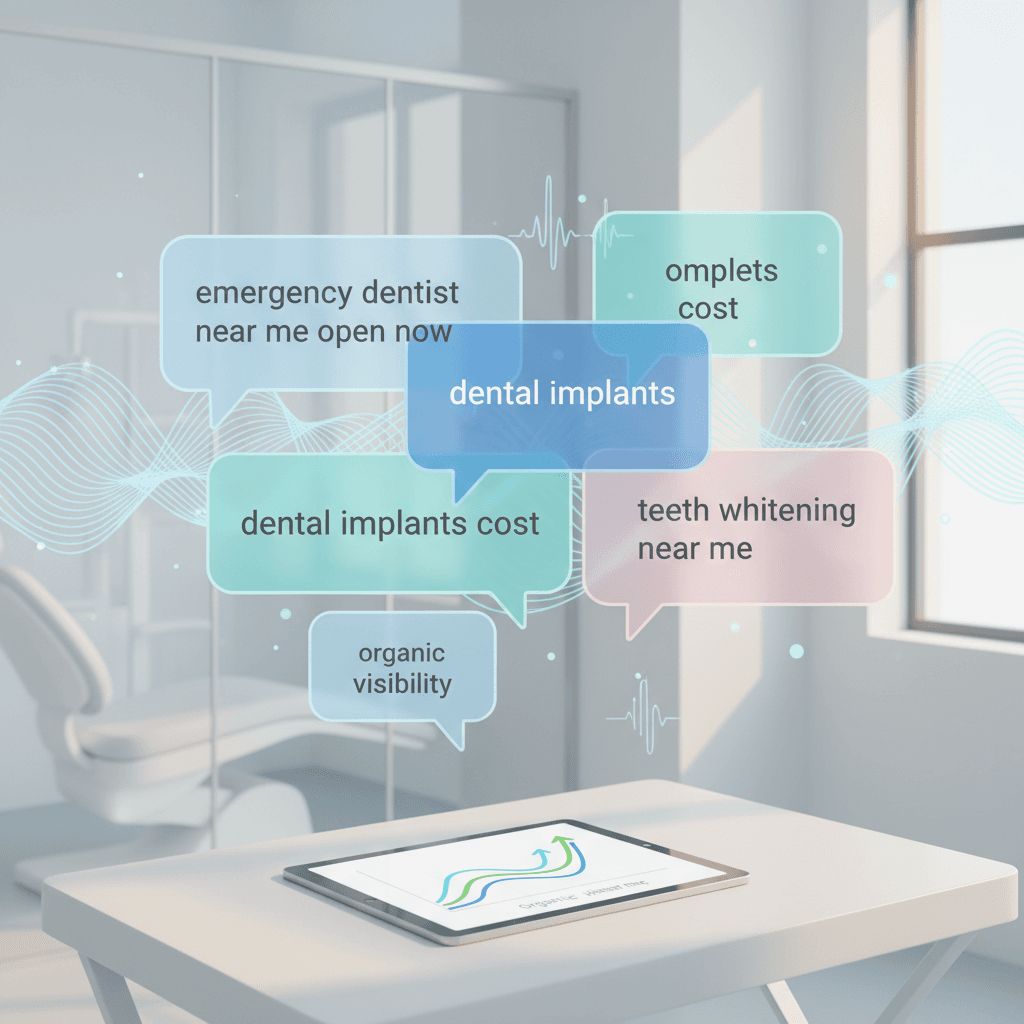
Voice search fundamentally changes how patients discover dental services, with 55% of searches now conversational queries like “find emergency dentist near me open now.” Optimizing for natural language patterns rather than traditional keyword phrases becomes essential for maintaining organic visibility.
AI-powered search results increasingly prioritize expertise and authority signals. Google’s algorithm updates favour dental websites demonstrating clinical knowledge through comprehensive treatment explanations, patient case studies, and professional credentials, making content depth more valuable than keyword density. For more on the evolution of organic keywords, see this guide to organic keywords.
Local organic keywords gain importance as Google emphasizes geographic relevance. Practices ranking for hyper-local terms like “Invisalign dentist Canary Wharf” outperform those targeting broader geographic areas, reflecting patients’ preference for convenient, nearby treatment options.
Strategic Insight: The most successful dental practices in 2025 will master semantic keyword optimization, understanding that “what is organic keywords” represents just one aspect of comprehensive search visibility that includes entity recognition, topical authority, and user experience signals.
Your Organic Keyword Success Blueprint
Understanding what is organic keywords provides the foundation for sustainable dental practice growth through search engine optimization. These unpaid search terms deliver qualified patients actively seeking your treatments, creating higher conversion rates than traditional advertising methods.
Success requires strategic implementation beyond basic keyword placement. Focus on search intent alignment, comprehensive content creation, and consistent performance monitoring to maximize your organic keyword investments. The practices achieving exceptional results treat organic keywords as long-term assets requiring ongoing optimization rather than one-time setup tasks.
Your organic keyword strategy should evolve with patient search behaviour and Google algorithm updates. Regular audits, content refreshes, and competitive analysis ensure sustained rankings for your most valuable treatment-related search terms.
The dental practices dominating organic search results in 2025 combine technical SEO excellence with patient-focused content strategies. They understand that ranking for organic keywords serves one purpose: connecting qualified patients with life-changing dental treatments through trusted, authoritative online presence.
Frequently Asked Questions
What are organic keywords and how do they differ from pay-per-click (PPC) keywords in dental marketing?
Organic keywords are search terms that bring visitors to your dental website through unpaid Google search results, unlike PPC keywords where you pay for each click on your ads. Organic keywords generate continuous, cost-free traffic once your site ranks well, whereas PPC requires ongoing investment for each patient lead.
How can ranking for organic keywords like ‘Invisalign dentist Manchester’ benefit my dental practice’s growth?
Ranking for targeted organic keywords attracts highly relevant patients actively searching for your services, increasing your website traffic without additional ad spend. This sustained visibility boosts patient inquiries and drives growth in private treatment revenue by connecting you with motivated local prospects.
Why do organic keywords typically result in a higher treatment acceptance rate compared to paid advertising leads?
Organic keyword visitors often demonstrate stronger intent and trust because they find your practice through natural search results rather than ads, which can feel less intrusive. This higher trust and relevance lead to better engagement and a greater likelihood of accepting high-value treatments.
What strategies can dental practices use to find and optimize organic keywords for better SEO performance?
Dental practices should research high-intent, location-specific keywords using tools like Google Search Console and keyword planners, then integrate these terms naturally into website content and metadata. Regularly updating content, improving site structure, and tracking keyword rankings help maintain and enhance organic visibility over time.
Real client results, not a promise. The number we commit to for your practice is agreed up front and written into the agreement.
Patients in the chair, not just leads. Guaranteed.
We own the whole journey to the attended consultation. New attended patient consultations in 90 days, or we work free until you hit them.Book a chat with Josie